

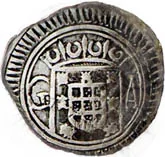
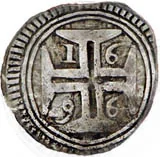
150 reis – Portuguese India
Add to wishlist
India
Context
Years: 1683–1700
Country: India
Issuer: Portuguese India
Currency:
(1580—1706)
Subdivision: 150 reis = ½ Pardao=¼ Rupia
Demonetized: Yes
Material
References
KM: #
Numista: #49787
Value
Bullion value: $15.08
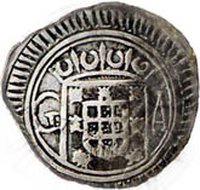
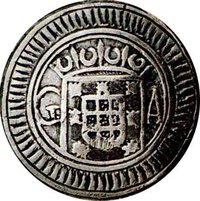
Obverse
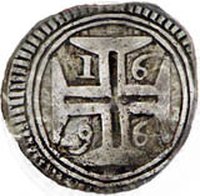
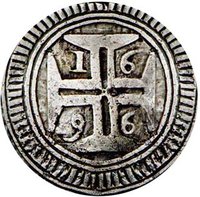
Reverse
Edge
Mintings
| Year | Mint Mark | Mintage | Quality | Collection |
|---|---|---|---|---|
| 1683 | G-A | — | ||
| 1684 | G-A | — | ||
| 1685 | G-A | — | ||
| 1686 | G-A | — | ||
| 1687 | G-A | — | ||
| 1688 | G-A | — | ||
| 1689 | G-A | — | ||
| 1690 | G-A | — | ||
| 1693 | G-A | — | ||
| 1694 | G-A | — | ||
| 1695 | G-A | — | ||
| 1696 | G-A | — | ||
| 1697 | G-A | — | ||
| 1699 | G-A | — | ||
| 1700 | G-A | — |
Historical background
In 1683, the currency situation in Portuguese India was a complex reflection of the Estado da India's declining economic power and its position within a dynamic Asian trading world. The official currency was the Portuguese real (plural: réis), but its circulation and authority were limited. The heart of commerce, especially in the capital of Goa, beat to the rhythm of a multitude of foreign coins. Gold mohurs and silver rupias from the Mughal Empire, Venetian ducats, Spanish pieces of eight (reales), and various other European and Asian coins circulated freely, their value determined by intrinsic metal content and market demand rather than Portuguese decree. This created a de facto multi-currency system where the state's own currency was often marginalised in high-value trade.
This monetary fragmentation was symptomatic of deeper problems. Portuguese control over trade routes had been severely eroded by the Dutch East India Company (VOC) and English East India Company (EIC), who had captured key territories and trade. Consequently, the Portuguese administration suffered from a chronic shortage of specie (coined money), struggling to pay soldiers and civil servants. Attempts to standardise currency, such as minting local silver xerafins, were hampered by a lack of bullion and widespread counterfeiting. The state's financial weakness was such that it often had to accept foreign coins for tax payments, further undermining its own monetary sovereignty.
The situation was particularly acute in 1683 due to a major military crisis. The Maratha Empire under Sambhaji laid siege to Goa itself, blockading the territory and severing trade links. This isolation exacerbated the currency shortage, crippling the local economy and the state's ability to fund its defence. In this context, the chaotic currency system was not merely an economic inconvenience but a direct threat to the colony's survival, highlighting the stark contrast between the Estado da India's lingering imperial pretensions and its precarious, cash-strapped reality.
This monetary fragmentation was symptomatic of deeper problems. Portuguese control over trade routes had been severely eroded by the Dutch East India Company (VOC) and English East India Company (EIC), who had captured key territories and trade. Consequently, the Portuguese administration suffered from a chronic shortage of specie (coined money), struggling to pay soldiers and civil servants. Attempts to standardise currency, such as minting local silver xerafins, were hampered by a lack of bullion and widespread counterfeiting. The state's financial weakness was such that it often had to accept foreign coins for tax payments, further undermining its own monetary sovereignty.
The situation was particularly acute in 1683 due to a major military crisis. The Maratha Empire under Sambhaji laid siege to Goa itself, blockading the territory and severing trade links. This isolation exacerbated the currency shortage, crippling the local economy and the state's ability to fund its defence. In this context, the chaotic currency system was not merely an economic inconvenience but a direct threat to the colony's survival, highlighting the stark contrast between the Estado da India's lingering imperial pretensions and its precarious, cash-strapped reality.
✨ Legendary