

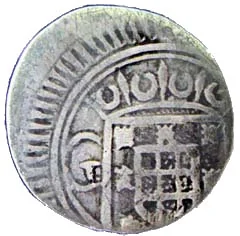
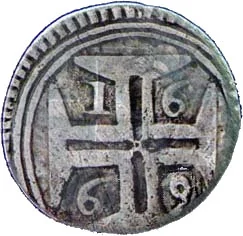
1 Xerafim – Portuguese India
India
Context
Years: 1669–1683
Country: India 
Issuer: Portuguese India
Ruler: Peter II
Currency:
(1580—1706)
Subdivision: 1 Xerafim = 300 Réis
Demonetized: Yes
Material
References
KM: #Click to copy to clipboard73
Numista: #49782
Value
Bullion value: $28.97
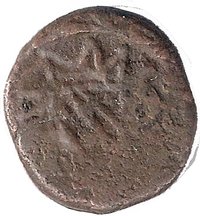
Obverse
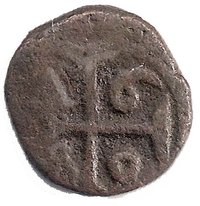
Reverse
Edge
Mintings
| Year | Mint Mark | Mintage | Quality | Collection |
|---|---|---|---|---|
| 1669 | G-A | — | ||
| 1671 | G-A | — | ||
| 1672 | G-A | — | ||
| 1673 | G-A | — | ||
| 1675 | G-A | — | ||
| 1676 | G-A | — | ||
| 1678 | G-A | — | ||
| 1681 | G-A | — | ||
| 1682 | G-A | — | ||
| 1683 | G-A | — |
Historical background
In 1669, the currency situation in Portuguese India was a complex tapestry of official Portuguese issues, pervasive local and regional coinage, and a chronic shortage of specie that hampered the Estado da India's economy. The official currency was the Portuguese real, with higher-value gold cruzados and silver tostões minted at the Crown mint in Goa. However, the production and authority of these coins were inconsistent, and they often circulated alongside a vast array of other currencies. The most dominant of these was the Mughal silver rupia (rupee), which served as the de facto standard for high-value trade across the Indian Ocean region due to its reliable silver content.
This monetary pluralism created significant challenges for the Portuguese administration. The value of coins was determined by their intrinsic metal content (gold, silver, or copper) rather than a fixed face value, leading to constant fluctuations, complex exchange rates, and widespread currency speculation. Furthermore, a persistent drain of silver and gold from Goa to Lisbon, combined with the colony's declining trade revenues, resulted in acute shortages of precious metals for minting. This forced authorities to frequently debase the coinage by reducing the precious metal content, which in turn eroded public trust in the official currency and further incentivized the use of Mughal rupees and other foreign coins.
Consequently, the monetary landscape was one of pragmatic hybridity and administrative weakness. While the Portuguese state struggled to assert its fiscal sovereignty, the market operated on a dual system: official Portuguese coins (often of suspect quality) were used for taxes and government transactions, while the more trusted Mughal rupees and smaller copper bazarucos (used for everyday petty trade) dominated the bustling markets of Goa, Damão, and Diu. This situation reflected the broader decline of Portuguese commercial power in the face of Dutch and English competition and their increasing financial and economic integration into—and dependence on—the surrounding Indian economies.
This monetary pluralism created significant challenges for the Portuguese administration. The value of coins was determined by their intrinsic metal content (gold, silver, or copper) rather than a fixed face value, leading to constant fluctuations, complex exchange rates, and widespread currency speculation. Furthermore, a persistent drain of silver and gold from Goa to Lisbon, combined with the colony's declining trade revenues, resulted in acute shortages of precious metals for minting. This forced authorities to frequently debase the coinage by reducing the precious metal content, which in turn eroded public trust in the official currency and further incentivized the use of Mughal rupees and other foreign coins.
Consequently, the monetary landscape was one of pragmatic hybridity and administrative weakness. While the Portuguese state struggled to assert its fiscal sovereignty, the market operated on a dual system: official Portuguese coins (often of suspect quality) were used for taxes and government transactions, while the more trusted Mughal rupees and smaller copper bazarucos (used for everyday petty trade) dominated the bustling markets of Goa, Damão, and Diu. This situation reflected the broader decline of Portuguese commercial power in the face of Dutch and English competition and their increasing financial and economic integration into—and dependence on—the surrounding Indian economies.
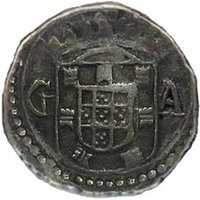
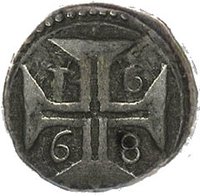
✨ Legendary