

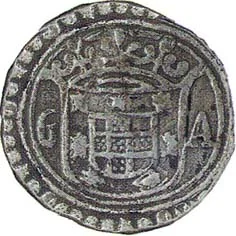
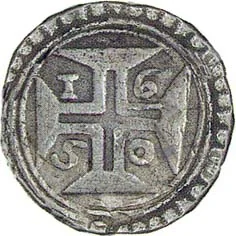
½ Xerafim – Portuguese India
India
Context

Material
References
KM: #Click to copy to clipboard72
Numista: #49766
Value
Bullion value: $14.99
Mintings
| Year | Mint Mark | Mintage | Quality | Collection |
|---|---|---|---|---|
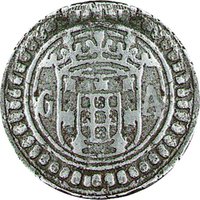
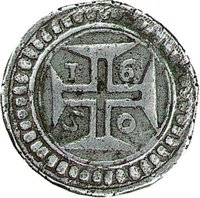
| 1650 | G-A | — | ||
| 1652 | G-A | — |
Historical background
By 1650, the currency situation in Portuguese India, centered at Goa, was a complex tapestry of local, regional, and international coinage, reflecting the Estado da India's declining economic power and its integration into wider Asian trade networks. The official Portuguese currency, the cruzado, remained the unit of account for government and church transactions, but its physical presence was often scarce. The Portuguese crown struggled to supply sufficient specie from Europe, leading to chronic liquidity problems. Consequently, the real economic lifeblood of the territory was a diverse array of foreign coins that circulated freely and were essential for commerce.
The most important of these was the Mughal silver rupia (rupee), which dominated high-value trade and served as the de facto standard for larger transactions across the Indian Ocean region. Alongside it, gold hun or pagodas from the neighboring Hindu kingdoms of the Deccan, particularly Vijayanagara and later Bijapur and Golconda, circulated for substantial mercantile deals. For smaller, everyday transactions, a plethora of low-value coins were used, including copper bazarucos minted locally by the Portuguese, lead dinhos, and a variety of small change from other Indian polities and even from Portuguese settlements like Malacca. This created a multi-tiered monetary system requiring constant exchange and expertise from merchants.
This monetary pluralism was a necessity but also a sign of weakness. The Portuguese authorities repeatedly, but with limited success, attempted to assert control by minting their own silver tangas and xerafins (worth roughly half a rupee) at the Goa mint, often with debased metal content to generate seigniorage revenue. However, the reliability and wide acceptance of the Mughal rupee made it the preferred currency for both local and international merchants. Thus, by 1650, Portuguese India operated within a monetary ecosystem it could not dominate, its fiscal health dependent on the inflow of foreign silver and the precarious balance of competing currencies in its bustling markets.
The most important of these was the Mughal silver rupia (rupee), which dominated high-value trade and served as the de facto standard for larger transactions across the Indian Ocean region. Alongside it, gold hun or pagodas from the neighboring Hindu kingdoms of the Deccan, particularly Vijayanagara and later Bijapur and Golconda, circulated for substantial mercantile deals. For smaller, everyday transactions, a plethora of low-value coins were used, including copper bazarucos minted locally by the Portuguese, lead dinhos, and a variety of small change from other Indian polities and even from Portuguese settlements like Malacca. This created a multi-tiered monetary system requiring constant exchange and expertise from merchants.
This monetary pluralism was a necessity but also a sign of weakness. The Portuguese authorities repeatedly, but with limited success, attempted to assert control by minting their own silver tangas and xerafins (worth roughly half a rupee) at the Goa mint, often with debased metal content to generate seigniorage revenue. However, the reliability and wide acceptance of the Mughal rupee made it the preferred currency for both local and international merchants. Thus, by 1650, Portuguese India operated within a monetary ecosystem it could not dominate, its fiscal health dependent on the inflow of foreign silver and the precarious balance of competing currencies in its bustling markets.
✨ Legendary