

1 tanga – Portuguese India
Add to wishlist
India
Context
Year: 1640
Country: India
Issuer: Portuguese India
Ruler: Philip III
Currency:
(1580—1706)
Demonetized: Yes
Material
References
KM: #
Numista: #49728
Value
Bullion value: $7.67
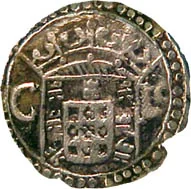
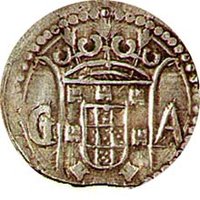
Obverse
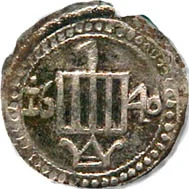
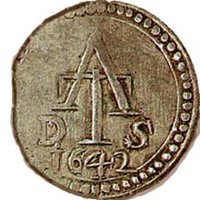
Reverse
Edge
Mintings
| Year | Mint Mark | Mintage | Quality | Collection |
|---|---|---|---|---|
| 1640 | C-Lº | — |
Historical background
By 1640, the currency situation in Portuguese India, centered in Goa, was one of profound complexity and transition, shaped by both regional dynamics and a seismic political shift in Europe. The Estado da Índia operated within the vibrant and sophisticated monetary ecosystem of the Indian Ocean, where its official Portuguese issues—like the cruzado and tostão—competed for authority with a plethora of circulating coins. Most dominant were the silver rupia of the Mughal Empire and various gold fanams from South Indian Hindu kingdoms, which were trusted by merchants for their consistent purity and weight. This created a de facto multi-currency system where trade and daily transactions relied heavily on these foreign and often superior coins, undermining Portuguese monetary sovereignty.
The year 1640 itself marked a critical juncture, as Portugal successfully revolted against the Habsburg Spanish crown, restoring its independence after sixty years of the Iberian Union. This political rupture had immediate and severe financial consequences for Goa. The vital annual subsidy from the Spanish Crown, the Real Situado—often delivered via Spanish silver from the Americas—was abruptly cut off. This loss plunged the Estado da Índia into a deep fiscal crisis, starving it of the essential bullion needed to mint its own currency and pay its garrisons and administrators. The financial lifeline that had sustained Portuguese operations in Asia was severed at a stroke.
Consequently, the administration in Goa faced a dire shortage of specie, forcing it to become even more dependent on the circulation and taxation of non-Portuguese currency to sustain its economy. Efforts to maintain the integrity of local coinage, such as the tangas, were hampered by chronic debasement and a lack of fresh silver. The currency situation thus reflected the broader decline of Portuguese power: a weakened state apparatus struggling to control its own monetary space, increasingly reliant on the economic systems of the very territories it sought to dominate, and isolated from its newly restored metropole which was itself financially exhausted and at war with Spain.
The year 1640 itself marked a critical juncture, as Portugal successfully revolted against the Habsburg Spanish crown, restoring its independence after sixty years of the Iberian Union. This political rupture had immediate and severe financial consequences for Goa. The vital annual subsidy from the Spanish Crown, the Real Situado—often delivered via Spanish silver from the Americas—was abruptly cut off. This loss plunged the Estado da Índia into a deep fiscal crisis, starving it of the essential bullion needed to mint its own currency and pay its garrisons and administrators. The financial lifeline that had sustained Portuguese operations in Asia was severed at a stroke.
Consequently, the administration in Goa faced a dire shortage of specie, forcing it to become even more dependent on the circulation and taxation of non-Portuguese currency to sustain its economy. Efforts to maintain the integrity of local coinage, such as the tangas, were hampered by chronic debasement and a lack of fresh silver. The currency situation thus reflected the broader decline of Portuguese power: a weakened state apparatus struggling to control its own monetary space, increasingly reliant on the economic systems of the very territories it sought to dominate, and isolated from its newly restored metropole which was itself financially exhausted and at war with Spain.
✨ Legendary