

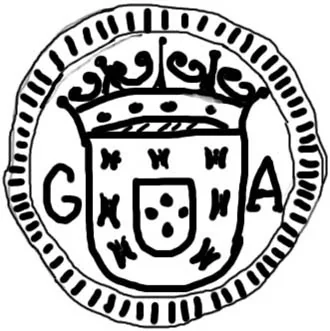

1 Xerafim – Portuguese India
India
Context
Years: 1580–1598
Country: India 
Issuer: Portuguese India
Ruler: Philip I
Currency:
(1580—1706)
Subdivision: 1 Xerafim = 300 Reais
Demonetized: Yes
Material
Diameter: 28 mm
Weight: 19.2 g
Silver weight: 19.20 g
Shape: Irregular round
Composition: Silver
Magnetic: No
References
KM: #Click to copy to clipboardA45
Numista: #49586
Value
Bullion value: $55.53
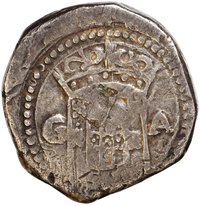
Obverse
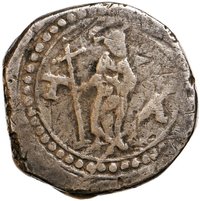
Reverse
Edge
Mintings
| Year | Mint Mark | Mintage | Quality | Collection |
|---|---|---|---|---|
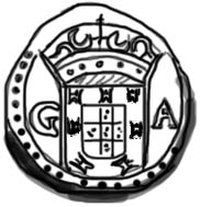
| — | G-A | — |
Historical background
In 1580, the currency situation in Portuguese India was complex and transitional, reflecting both local economic realities and the shifting fortunes of the Portuguese Empire. The Estado da Índia's monetary system was a hybrid, relying on a mix of locally minted coins, imported Portuguese currency, and a wide circulation of diverse foreign coins from the vast Indian Ocean trade network. Key among these were the gold pardau and the silver tangas minted at the Goa mint, but these competed with Mughal rupees, Venetian ducats, and various Arab and Persian coins, creating a challenging environment for trade and taxation.
This monetary plurality was exacerbated by a chronic shortage of precious metals, particularly silver, flowing from the metropolis. The Iberian Union of 1580, which saw the Portuguese crown pass to the Spanish Habsburg King Philip II, initially raised hopes for improved financial and military support. However, in practice, it drew Lisbon's focus and resources toward Spanish priorities in the Atlantic and Europe, further straining the supply of bullion to Goa. This scarcity led to frequent debasement of local coinage and heightened the intrinsic value of high-quality foreign currencies.
Consequently, the economic authority of the Portuguese administration was undermined by market forces. Merchants and the populace often valued coins by their intrinsic metal content and reliability rather than their face value, leading to a de facto bimetallic system where gold and silver fluctuated against each other. The state's struggle to impose a standardized currency in this environment highlighted the gap between its political ambitions and its economic fragility in a region dominated by powerful indigenous economies and intricate, centuries-old trading practices.
This monetary plurality was exacerbated by a chronic shortage of precious metals, particularly silver, flowing from the metropolis. The Iberian Union of 1580, which saw the Portuguese crown pass to the Spanish Habsburg King Philip II, initially raised hopes for improved financial and military support. However, in practice, it drew Lisbon's focus and resources toward Spanish priorities in the Atlantic and Europe, further straining the supply of bullion to Goa. This scarcity led to frequent debasement of local coinage and heightened the intrinsic value of high-quality foreign currencies.
Consequently, the economic authority of the Portuguese administration was undermined by market forces. Merchants and the populace often valued coins by their intrinsic metal content and reliability rather than their face value, leading to a de facto bimetallic system where gold and silver fluctuated against each other. The state's struggle to impose a standardized currency in this environment highlighted the gap between its political ambitions and its economic fragility in a region dominated by powerful indigenous economies and intricate, centuries-old trading practices.


✨ Legendary