

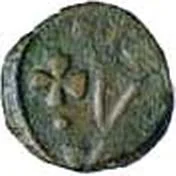
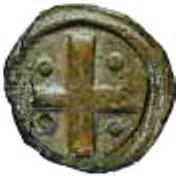
½ bazaruco – Portuguese India
Add to wishlist
India
Context
Years: 1522–1557
Country: India
Issuer: Portuguese India
Ruler: João III
Currency:
(1509—1580)
Subdivision: ½ bazaruco = 1 Real
Demonetized: Yes
Material
References
KM: #
Numista: #49543
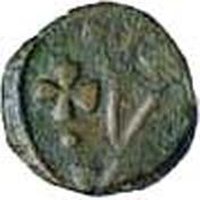
Obverse
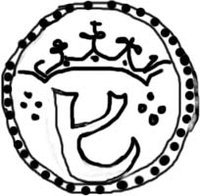
Description:
Gomes/2013: 04
Inscription:
*Y
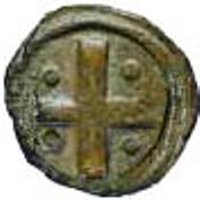
Reverse
Edge
Mintings
| Year | Mint Mark | Mintage | Quality | Collection |
|---|---|---|---|---|
| — | — | — |
Historical background
In 1522, the currency situation in Portuguese India was a complex tapestry of local, regional, and newly introduced European systems, reflecting the Estado da India's early and still-consolidating power. The Portuguese, based in their capital of Goa (captured in 1510), did not yet impose a unified monetary system across their territories. Instead, they operated within and alongside the vibrant pre-existing networks of Indian Ocean trade. The most important local currency was the gold hún (or pardau) and the silver tanga, minted by the neighbouring Sultanate of Bijapur. For high-value long-distance trade, the widely trusted gold ashrafi of the Mamluk Sultanate and the silver cruzado (a Portuguese coin) were also in active use.
The Portuguese crown sought to assert economic control primarily through the standardization of accounting and the collection of duties. All official transactions, taxes, and customs were calculated in a money of account called the real (plural: réis), even if physical payment was made in other coins. This created a constant need for currency exchange and established official conversion rates between the real, the tanga, the hún, and other circulating coins. The tanga, in particular, became a key workhorse coin for local transactions and was often counterstamped by Portuguese authorities to validate its continued use within their territories.
Despite these administrative efforts, the monetary landscape remained practically diverse and somewhat chaotic. A multitude of coins from Gujarat, the Deccan, the Arab world, and Portugal itself circulated in the markets of Goa, Cochin, and other feitorias. This plurality was essential for commerce but posed challenges for governance. Therefore, in 1522, the system was one of pragmatic coexistence, with Portuguese fiscal policy layered atop resilient indigenous monetary traditions, a full century before the eventual minting of distinct Portuguese-Indian coinage like the São Tomé tanga.
The Portuguese crown sought to assert economic control primarily through the standardization of accounting and the collection of duties. All official transactions, taxes, and customs were calculated in a money of account called the real (plural: réis), even if physical payment was made in other coins. This created a constant need for currency exchange and established official conversion rates between the real, the tanga, the hún, and other circulating coins. The tanga, in particular, became a key workhorse coin for local transactions and was often counterstamped by Portuguese authorities to validate its continued use within their territories.
Despite these administrative efforts, the monetary landscape remained practically diverse and somewhat chaotic. A multitude of coins from Gujarat, the Deccan, the Arab world, and Portugal itself circulated in the markets of Goa, Cochin, and other feitorias. This plurality was essential for commerce but posed challenges for governance. Therefore, in 1522, the system was one of pragmatic coexistence, with Portuguese fiscal policy layered atop resilient indigenous monetary traditions, a full century before the eventual minting of distinct Portuguese-Indian coinage like the São Tomé tanga.



✨ Legendary