

1 Bastardo – Portuguese Malacca
Malaysia
Context
Years: 1521–1557
Country: Malaysia 
Issuer: Portuguese Malacca
Currency:
(1509—1580)
Demonetized: Yes
Material
References
KM: #Click to copy to clipboard18
Numista: #49513
Obverse
Description:
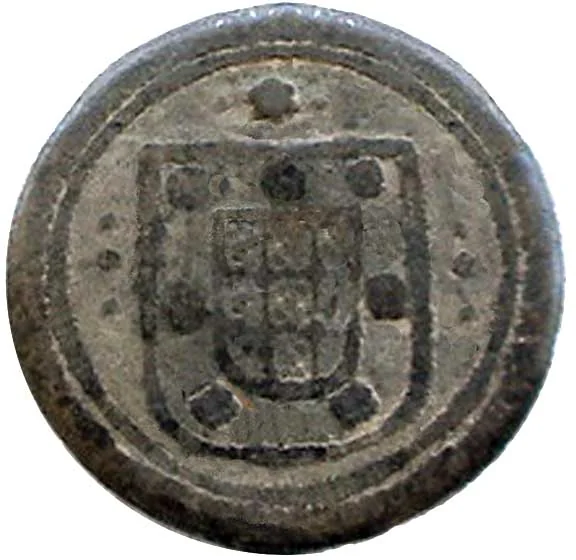
Portuguese arms between two dotted crosses.
Reverse
Description:
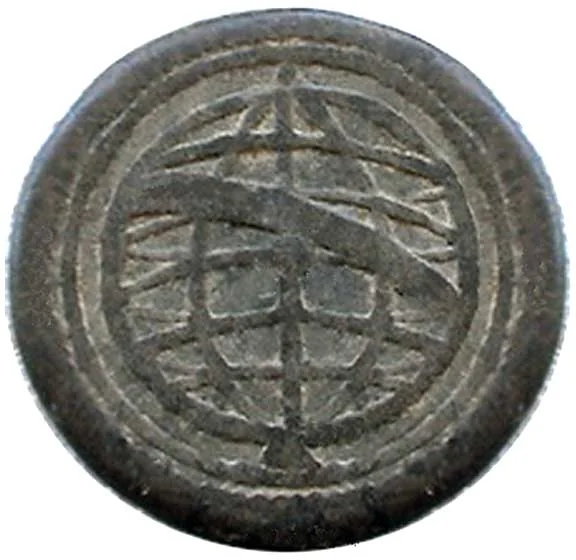
Astronomical model of celestial orbits.
Edge
Mints
| Name | Mark |
|---|---|
| Malacca | — |
Mintings
| Year | Mint Mark | Mintage | Quality | Collection |
|---|---|---|---|---|
| — | — | — |
Historical background
In 1521, Portuguese Malacca operated under a complex and evolving currency system, reflecting its status as a newly conquered but still commercially vibrant Southeast Asian entrepôt. The Portuguese, having seized the city from the Sultanate of Malacca in 1511, did not immediately impose a unified monetary standard. Instead, they pragmatically maintained the existing heterogeneous system to avoid disrupting the vital international trade that was the city's lifeblood. The marketplace remained a symphony of clinking coins from across the globe: silver Spanish reales and Portuguese cruzados, gold Venetian ducats and Ottoman sultani, and various Indian and Persian issues all circulated alongside local tin calains and Chinese copper cash.
The primary challenge for the Portuguese administration was establishing a reliable standard of value for taxation and official transactions, amidst this bewildering variety of coins of fluctuating weight and purity. The official anchor became the cruzado, a high-quality Portuguese gold coin, but its use was largely confined to state finance and long-distance trade. For daily local trade, the most important currency was silver, particularly the Mexican real, which began arriving via the Manila-Acapulco trade. The Portuguese also continued to mint small-denomination tin coinage (bazarucos) for local use, but these often suffered from debasement and low prestige.
Thus, the currency situation in 1521 was one of transitional instability. The Portuguese crown sought to project monetary authority and profit from seigniorage, yet it lacked the resources or control to fully replace the established Asian monetary networks. Merchants and moneychangers (sarrafs) therefore remained crucial, assessing the intrinsic metal value of each coin in a system where official face value and market value rarely aligned. This pragmatic, multi-currency reality underscored that while Portugal held the port by military force, the economic rhythms of Malacca still danced to a wider Asian and global tune.
The primary challenge for the Portuguese administration was establishing a reliable standard of value for taxation and official transactions, amidst this bewildering variety of coins of fluctuating weight and purity. The official anchor became the cruzado, a high-quality Portuguese gold coin, but its use was largely confined to state finance and long-distance trade. For daily local trade, the most important currency was silver, particularly the Mexican real, which began arriving via the Manila-Acapulco trade. The Portuguese also continued to mint small-denomination tin coinage (bazarucos) for local use, but these often suffered from debasement and low prestige.
Thus, the currency situation in 1521 was one of transitional instability. The Portuguese crown sought to project monetary authority and profit from seigniorage, yet it lacked the resources or control to fully replace the established Asian monetary networks. Merchants and moneychangers (sarrafs) therefore remained crucial, assessing the intrinsic metal value of each coin in a system where official face value and market value rarely aligned. This pragmatic, multi-currency reality underscored that while Portugal held the port by military force, the economic rhythms of Malacca still danced to a wider Asian and global tune.
💎 Extremely Rare