

1 bazaruco – Portuguese India
Add to wishlist
India
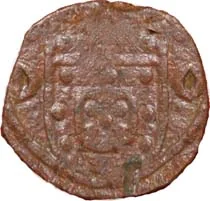
Obverse
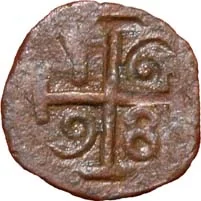
Reverse
Edge
Mintings
Historical background
In 1686, the currency situation in Portuguese India was a complex reflection of its declining economic power and its position within vast, overlapping networks of trade. The official currency was the Portuguese real (plural: réis), but its circulation and authority were limited. The heart of the monetary system was the silver rupia (rupee), minted locally at the Goa Mint, which bore the crest of the Portuguese Crown but was fundamentally tied to the weight and standard of the ubiquitous Mughal rupee. This was a practical necessity, as the bulk of trade—both within the subcontinent and across the Indian Ocean—was conducted in these silver rupees, alongside a flood of other coins like gold mohurs and various European and Asian currencies.
This monetary landscape was characterized by chronic instability and scarcity. A persistent shortage of precious metals, especially silver, plagued the Estado da Índia, hampering its ability to mint sufficient currency. This scarcity was exacerbated by Portugal's economic difficulties at home and the relentless outflow of silver to pay for textiles and spices, often to rival European companies. Consequently, a bewildering variety of foreign coins circulated at fluctuating values, including Spanish pieces of eight, Venetian ducats, and Persian larins, forcing constant official pronouncements on their exchange rates. The system was further complicated by the widespread use of cruzados (a money of account worth 400 réis) for bookkeeping and high-value transactions.
Ultimately, the currency situation of 1686 symbolized Portuguese India's attenuated sovereignty. While the Casa da Moeda in Goa produced coinage, its standards were dictated by Mughal economic dominance. The reliance on foreign silver and the chaotic circulation of non-Portuguese coins revealed that Lisbon's control over the local economy was more nominal than real. The monetary chaos hindered commerce, facilitated fraud, and was a symptom of the larger decline of the Estado da Índia, which was increasingly unable to control the seas or the markets upon which its survival depended.
This monetary landscape was characterized by chronic instability and scarcity. A persistent shortage of precious metals, especially silver, plagued the Estado da Índia, hampering its ability to mint sufficient currency. This scarcity was exacerbated by Portugal's economic difficulties at home and the relentless outflow of silver to pay for textiles and spices, often to rival European companies. Consequently, a bewildering variety of foreign coins circulated at fluctuating values, including Spanish pieces of eight, Venetian ducats, and Persian larins, forcing constant official pronouncements on their exchange rates. The system was further complicated by the widespread use of cruzados (a money of account worth 400 réis) for bookkeeping and high-value transactions.
Ultimately, the currency situation of 1686 symbolized Portuguese India's attenuated sovereignty. While the Casa da Moeda in Goa produced coinage, its standards were dictated by Mughal economic dominance. The reliance on foreign silver and the chaotic circulation of non-Portuguese coins revealed that Lisbon's control over the local economy was more nominal than real. The monetary chaos hindered commerce, facilitated fraud, and was a symptom of the larger decline of the Estado da Índia, which was increasingly unable to control the seas or the markets upon which its survival depended.
💎 Extremely Rare