

2 Mun – Joseon
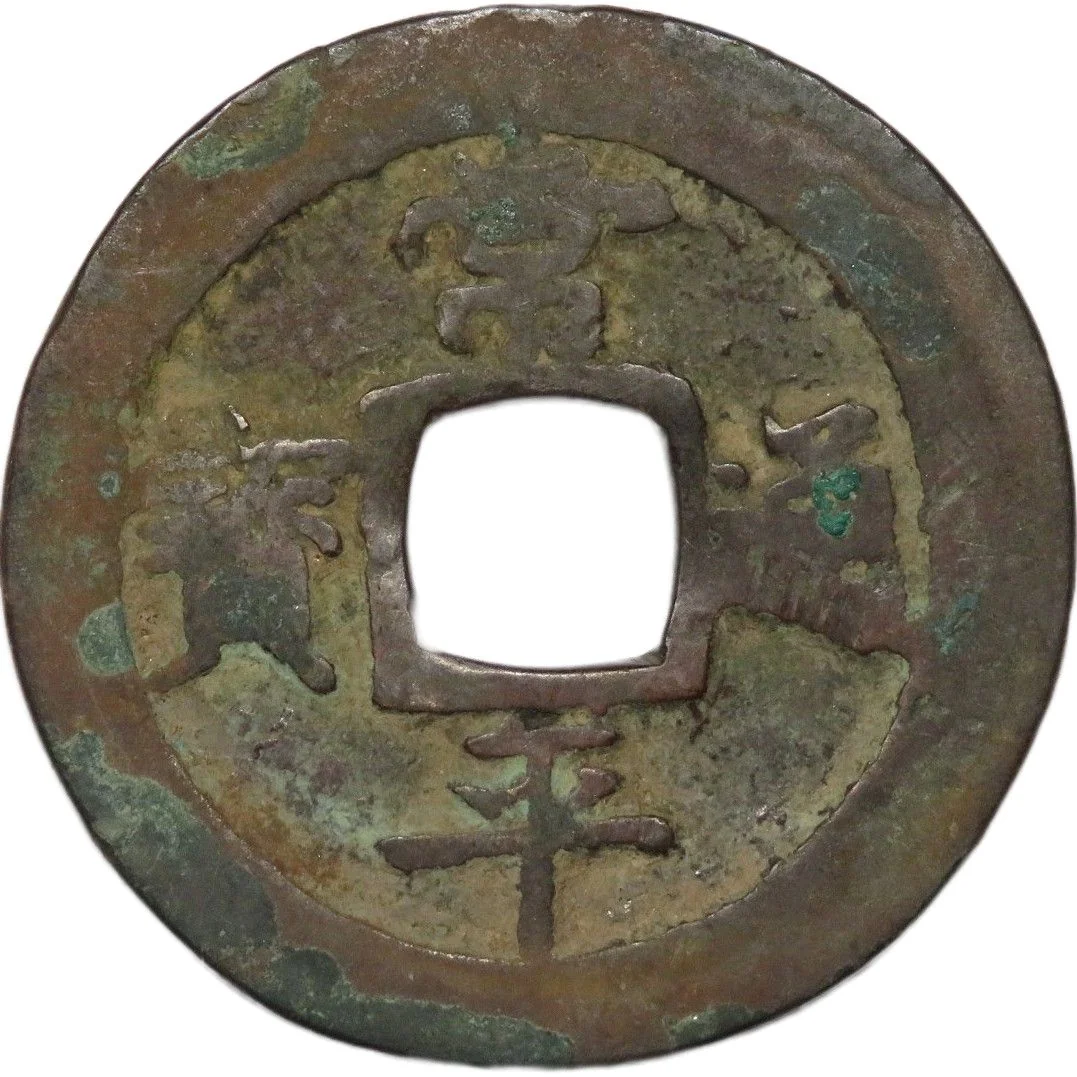
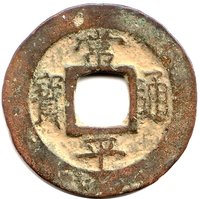
Obverse
Description:
常平通寶 (Sang pyong tong bo) - Korean Yi Dynasty currency.
Inscription:
常
寶 通
平
寶 通
平
Scripts: Chinese (traditional, regular script)
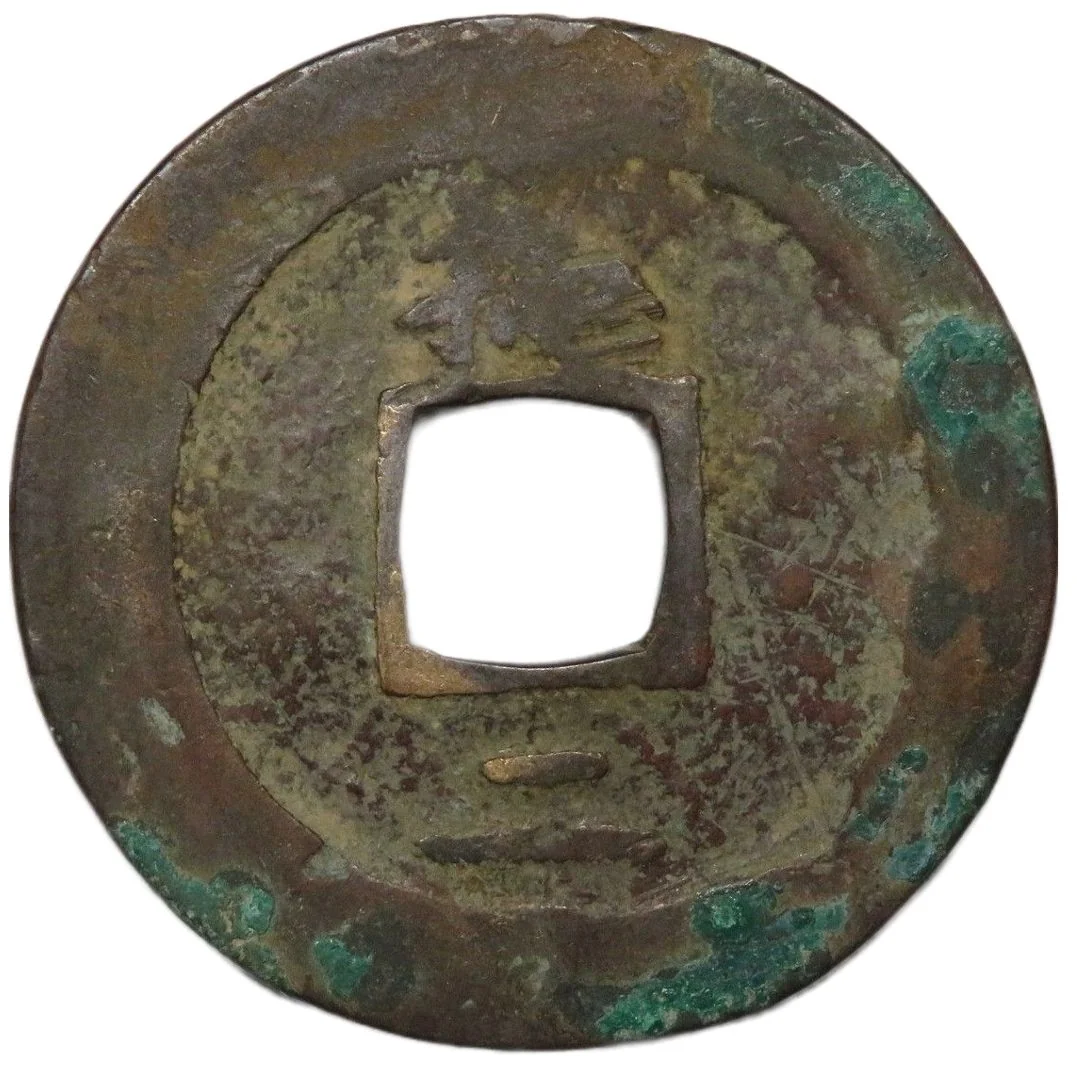
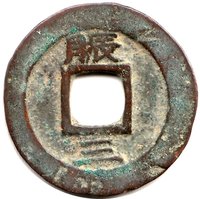
Reverse
Description:
Mint mark: top "I," bottom "Chong" (General Military Office).
Inscription:
捴
二
二
Scripts: Chinese (traditional, regular script)
Edge
Mints
| Name | Mark |
|---|---|
| General Military Office | 捴 |
Mintings
| Year | Mint Mark | Mintage | Quality | Collection |
|---|---|---|---|---|
| — | 捴 | — |
Historical background
In 1692, the currency system of Joseon Korea was in a state of significant strain and transition, caught between the entrenched use of commodity money and the failed implementation of a state-issued coin. For centuries, the economy had operated primarily on a barter and cloth standard, with high-quality cotton cloth (known as pye) and rice serving as the main media of exchange and units of account. This system was cumbersome for large transactions and interregional trade, creating a persistent demand for a more efficient metallic currency. The state had attempted to address this by minting and circulating "Sangpyeong Tongbo" (常平通寶) copper coins decades earlier, but public distrust, a preference for the tangible value of cloth and grain, and a lack of sufficient copper had caused the initiative to falter repeatedly.
The specific monetary pressures of the late 17th century were exacerbated by broader economic shifts. The aftermath of the devastating Imjin Wars (1592-1598) and the Manchu invasions (1627, 1636) had long disrupted agriculture and handicraft production, while increased trade with Qing China and Japan created a drain of precious metals, particularly silver, out of Korea. This period also saw a gradual commercialization of the economy, which further highlighted the inadequacies of the cloth standard. By 1692, the circulation of coinage was minimal and unreliable, with transactions in the capital, Hanseong, perhaps using some mixed currency, while the countryside remained dominated by cloth and grain. The state treasury itself often collected taxes in cloth, underscoring the official system's reliance on the old standard.
Consequently, the currency situation in 1692 was one of institutional paralysis. The royal court was aware of the problems but struggled to enforce a unified monetary policy. Debates persisted between reformers advocating for a revitalized coinage system to stimulate commerce and increase state revenue, and conservative factions wary of the inflation and social disruption that could accompany a forced currency transition. Therefore, the year falls within a protracted period of experimentation and setback, laying the groundwork for the more successful and widespread circulation of Sangpyeong Tongbo coins that would eventually be achieved in the early 18th century under King Yeongjo's reign.
The specific monetary pressures of the late 17th century were exacerbated by broader economic shifts. The aftermath of the devastating Imjin Wars (1592-1598) and the Manchu invasions (1627, 1636) had long disrupted agriculture and handicraft production, while increased trade with Qing China and Japan created a drain of precious metals, particularly silver, out of Korea. This period also saw a gradual commercialization of the economy, which further highlighted the inadequacies of the cloth standard. By 1692, the circulation of coinage was minimal and unreliable, with transactions in the capital, Hanseong, perhaps using some mixed currency, while the countryside remained dominated by cloth and grain. The state treasury itself often collected taxes in cloth, underscoring the official system's reliance on the old standard.
Consequently, the currency situation in 1692 was one of institutional paralysis. The royal court was aware of the problems but struggled to enforce a unified monetary policy. Debates persisted between reformers advocating for a revitalized coinage system to stimulate commerce and increase state revenue, and conservative factions wary of the inflation and social disruption that could accompany a forced currency transition. Therefore, the year falls within a protracted period of experimentation and setback, laying the groundwork for the more successful and widespread circulation of Sangpyeong Tongbo coins that would eventually be achieved in the early 18th century under King Yeongjo's reign.
✨ Legendary