

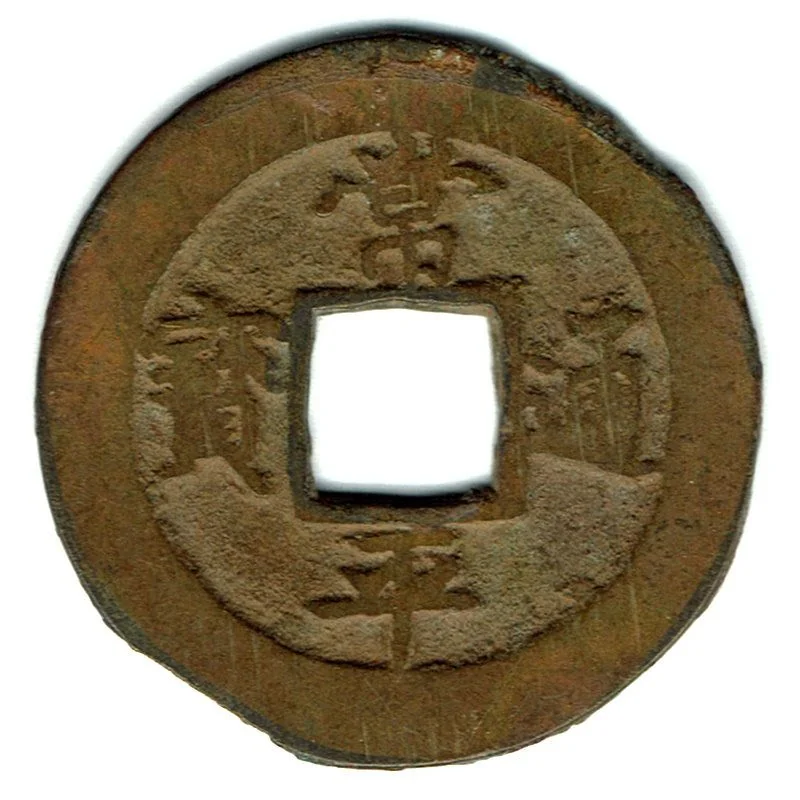
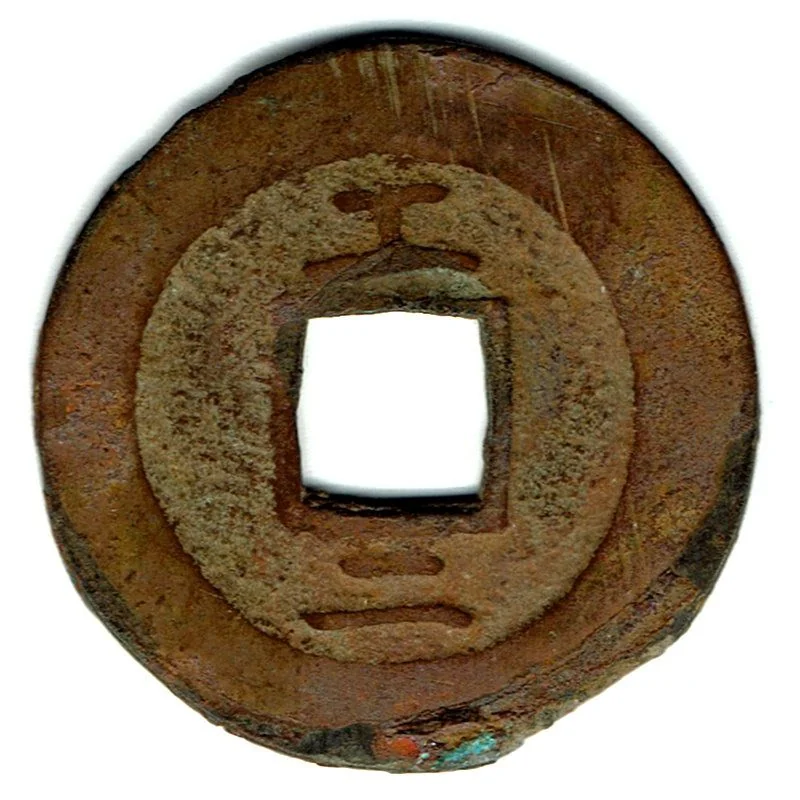
2 Mun – Joseon
Material
Diameter: 31 mm
Weight: 8 g
Thickness: 1.2 mm
Shape: Round with a square hole
Composition: Copper
Magnetic: No
Technique: Cast
Alignment: Medal alignment
flip
References
KM: #Click to copy to clipboard145
Numista: #304896
Obverse
Description:
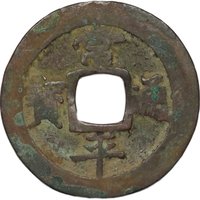
常平通寶 (Sang pyong Tong bo) - Yi Dynasty Korean currency.
Inscription:
常
寶 通
平
寶 通
平
Scripts: Chinese (traditional, regular script)
Reverse
Description:
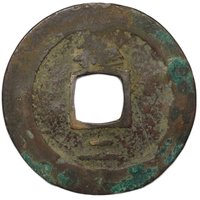
Mint mark top, serial number bottom. *工 (Kong): Ministry of Industry.
Inscription:
工
二
二
Scripts: Chinese (traditional, regular script)
Edge
Mints
| Name | Mark |
|---|---|
| Ministry of Industry | 工 |
Mintings
| Year | Mint Mark | Mintage | Quality | Collection |
|---|---|---|---|---|
| — | — | — |
Historical background
In 1685, the currency system of Joseon Korea was in a state of tension and transition, caught between the ideals of a state-controlled agrarian economy and the practical realities of a growing market. The official ideology, rooted in Neo-Confucianism, distrusted commerce and promoted a rice-and-cloth-based economy. The state minted sangpyeong tongbo copper coins, but their circulation was limited and often restricted to use for tax payments, official salaries, and government transactions rather than everyday market use. The primary mediums of exchange for most people remained bolts of cotton cloth (p'o) and rice, with grain serving as the fundamental unit for land valuation and taxation.
However, by the late 17th century, this system was under significant strain. Increased agricultural production, the growth of private commerce, and the influence of foreign trade—particularly with Ming and Qing China and Japan—created a powerful demand for a more convenient and standardized currency. Chinese copper coins and silver (especially in the form of imported Japanese silver via the Waegwan in Busan) flowed into Joseon, circulating widely in major markets and port cities. This created a de facto monetary system that operated outside of, and often in conflict with, the government's official policies.
Consequently, the court in 1685 faced a critical dilemma. Factional debates persisted between conservative officials who wished to restrict coinage to maintain social order and reformers who saw the benefits of a expanded, state-managed coinage to stimulate the economy and increase royal authority. The result was a cautious and inconsistent policy. While the government continued to mint coins, it lacked a comprehensive strategy for their universal adoption, leading to a complex and often chaotic multi-currency environment where official coin, foreign coin, silver, and commodity money all circulated simultaneously, with their values fluctuating based on local market conditions.
However, by the late 17th century, this system was under significant strain. Increased agricultural production, the growth of private commerce, and the influence of foreign trade—particularly with Ming and Qing China and Japan—created a powerful demand for a more convenient and standardized currency. Chinese copper coins and silver (especially in the form of imported Japanese silver via the Waegwan in Busan) flowed into Joseon, circulating widely in major markets and port cities. This created a de facto monetary system that operated outside of, and often in conflict with, the government's official policies.
Consequently, the court in 1685 faced a critical dilemma. Factional debates persisted between conservative officials who wished to restrict coinage to maintain social order and reformers who saw the benefits of a expanded, state-managed coinage to stimulate the economy and increase royal authority. The result was a cautious and inconsistent policy. While the government continued to mint coins, it lacked a comprehensive strategy for their universal adoption, leading to a complex and often chaotic multi-currency environment where official coin, foreign coin, silver, and commodity money all circulated simultaneously, with their values fluctuating based on local market conditions.

✨ Legendary