

1 tanga – Portuguese India
Add to wishlist
India
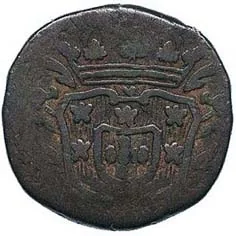
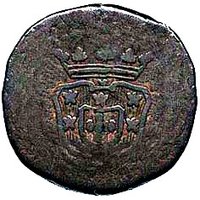
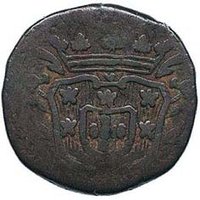
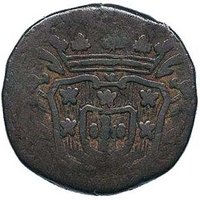
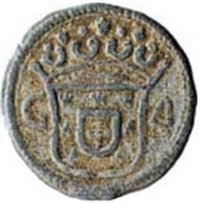
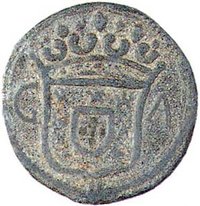
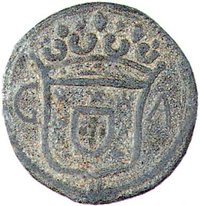
Obverse
Description:
Gomes (2013): "King's Coat of Arms"
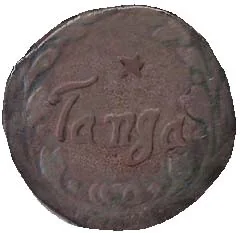
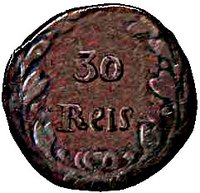
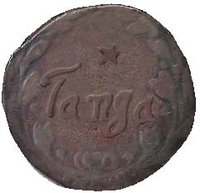
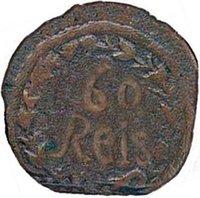
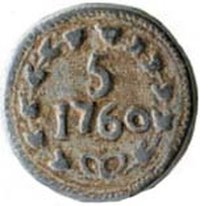
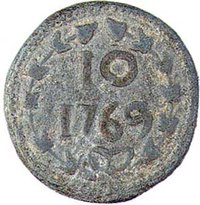
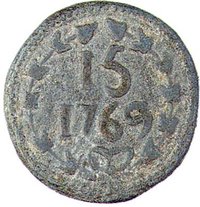
Reverse
Inscription:
Tanga
Edge
Mintings
| Year | Mint Mark | Mintage | Quality | Collection |
|---|---|---|---|---|
| — | — | — |
Historical background
By 1760, the currency situation in Portuguese India, centered on Goa, was a complex tapestry of official and unofficial systems, reflecting both its declining imperial power and its integration into regional trade networks. Officially, the currency was based on the Portuguese real and its higher denominations like the cruzado, minted at the Goa mint. However, decades of economic strain and the rising cost of maintaining the Estado da Índia had led to repeated debasements of this coinage. The intrinsic value of locally minted coins often fell below their face value, undermining confidence in the official monetary system.
In practice, the daily economic life of the colony was dominated by a multitude of foreign coins, a testament to Goa's role as a commercial hub. Gold mohurs and silver rupees from the neighboring Maratha Empire were particularly prevalent and trusted for their consistent purity. Other currencies, including Venetian ducats, Spanish-American pieces of eight, and various Indian and Arabian coins, circulated freely for trade. This created a de facto system where transactions were often calculated in theoretical units like the xerafim but settled with a heterogeneous mix of physical foreign specie, requiring merchants and money-changers to be expert in assaying and exchange rates.
This monetary fragmentation posed significant challenges for the Portuguese administration. It struggled to collect taxes and pay its officials and soldiers in a stable medium, while the influx of superior foreign coins further eroded the reach of its own currency. The situation in 1760 thus encapsulates a period of transition: the Portuguese crown's authority was symbolically weakened by its own debased coinage, while the practical economy was sustained by the very foreign powers and networks that were gradually eclipsing its imperial influence in the Indian Ocean.
In practice, the daily economic life of the colony was dominated by a multitude of foreign coins, a testament to Goa's role as a commercial hub. Gold mohurs and silver rupees from the neighboring Maratha Empire were particularly prevalent and trusted for their consistent purity. Other currencies, including Venetian ducats, Spanish-American pieces of eight, and various Indian and Arabian coins, circulated freely for trade. This created a de facto system where transactions were often calculated in theoretical units like the xerafim but settled with a heterogeneous mix of physical foreign specie, requiring merchants and money-changers to be expert in assaying and exchange rates.
This monetary fragmentation posed significant challenges for the Portuguese administration. It struggled to collect taxes and pay its officials and soldiers in a stable medium, while the influx of superior foreign coins further eroded the reach of its own currency. The situation in 1760 thus encapsulates a period of transition: the Portuguese crown's authority was symbolically weakened by its own debased coinage, while the practical economy was sustained by the very foreign powers and networks that were gradually eclipsing its imperial influence in the Indian Ocean.
✨ Legendary