


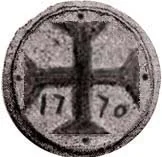
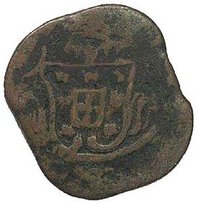
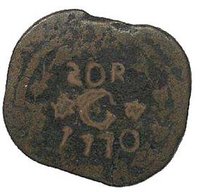
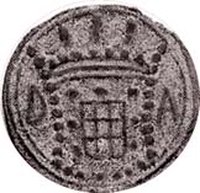
10 Bazarucos – Portuguese India
India
Context
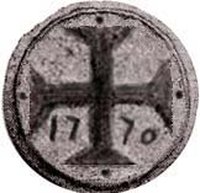
Year: 1770
Country: India 
Issuer: Portuguese India
Issuing organization: Casa da Moeda de Damão
Ruler: Joseph I
Currency:
(1706—1880)
Demonetized: Yes
Material
References
KM: #Click to copy to clipboard19
Numista: #49219
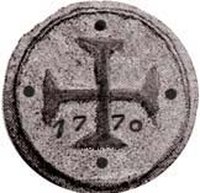
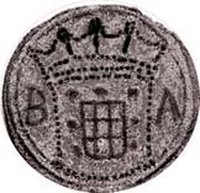
Obverse
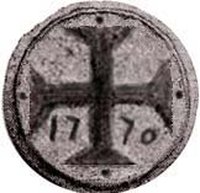
Reverse
Edge
Categories
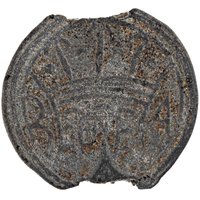
| Symbols> Coat of Arms |
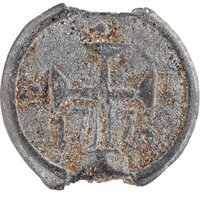
| Symbol> Cross |
Mintings
| Year | Mint Mark | Mintage | Quality | Collection |
|---|---|---|---|---|
| 1770 | D-A | — |
Historical background
In 1770, the currency situation in Portuguese India was a complex and deteriorating system, characterized by chronic instability and a severe shortage of reliable coinage. The official currency was the xerafim, but the monetary landscape was a chaotic mosaic of various coins in circulation. These included not only Portuguese issues like the cruzado and real, but also a plethora of foreign coins from neighboring powers, such as the Mughal rupia, Venetian sequins, and other European and Asian currencies. This proliferation undermined state control, as trade and daily transactions often relied on these foreign pieces, valued by their intrinsic metal content rather than a stable face value.
The root of the crisis lay in the precipitous decline of the Portuguese Estado da Índia's economic and political power. With its trade monopoly long broken and its territories reduced to Goa, Damão, and Diu, the administration lacked the fiscal strength to enforce a uniform currency or prevent the outflow of silver. A critical problem was the persistent practice of exporting full-weight silver coins to be melted down abroad for profit, leaving behind a debased and inadequate supply for the local economy. This led to frequent re-coinages and arbitrary adjustments in the official valuation of coins, creating confusion, facilitating fraud, and eroding public trust in the currency.
Consequently, the monetary chaos of 1770 acted as a significant drag on the local economy and a symbol of wider imperial decay. It hampered commerce, complicated revenue collection for the cash-strapped colonial government, and burdened the general population with uncertainty and transaction costs. While attempts at reform were occasionally made, they were largely ineffectual without addressing the fundamental issues of economic weakness and external competition. The situation would only begin to find resolution decades later with more decisive monetary reforms in the early 19th century.
The root of the crisis lay in the precipitous decline of the Portuguese Estado da Índia's economic and political power. With its trade monopoly long broken and its territories reduced to Goa, Damão, and Diu, the administration lacked the fiscal strength to enforce a uniform currency or prevent the outflow of silver. A critical problem was the persistent practice of exporting full-weight silver coins to be melted down abroad for profit, leaving behind a debased and inadequate supply for the local economy. This led to frequent re-coinages and arbitrary adjustments in the official valuation of coins, creating confusion, facilitating fraud, and eroding public trust in the currency.
Consequently, the monetary chaos of 1770 acted as a significant drag on the local economy and a symbol of wider imperial decay. It hampered commerce, complicated revenue collection for the cash-strapped colonial government, and burdened the general population with uncertainty and transaction costs. While attempts at reform were occasionally made, they were largely ineffectual without addressing the fundamental issues of economic weakness and external competition. The situation would only begin to find resolution decades later with more decisive monetary reforms in the early 19th century.

✨ Legendary