Logo Title
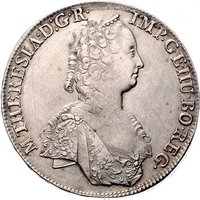
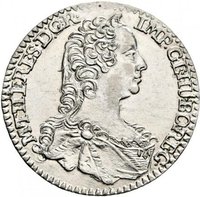
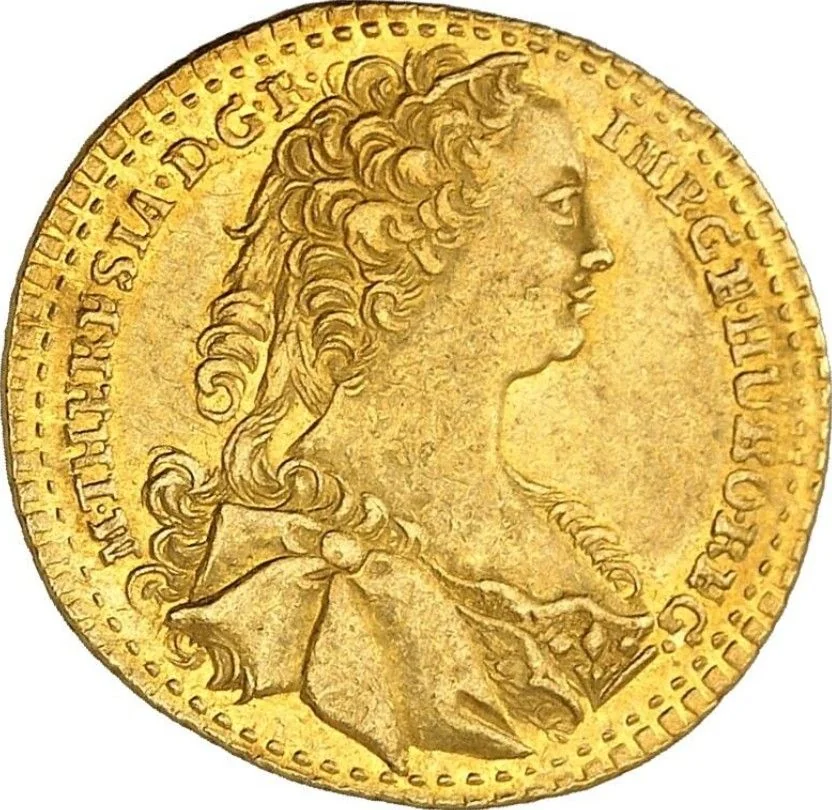
obverse
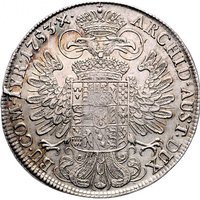
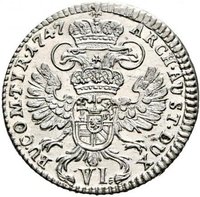
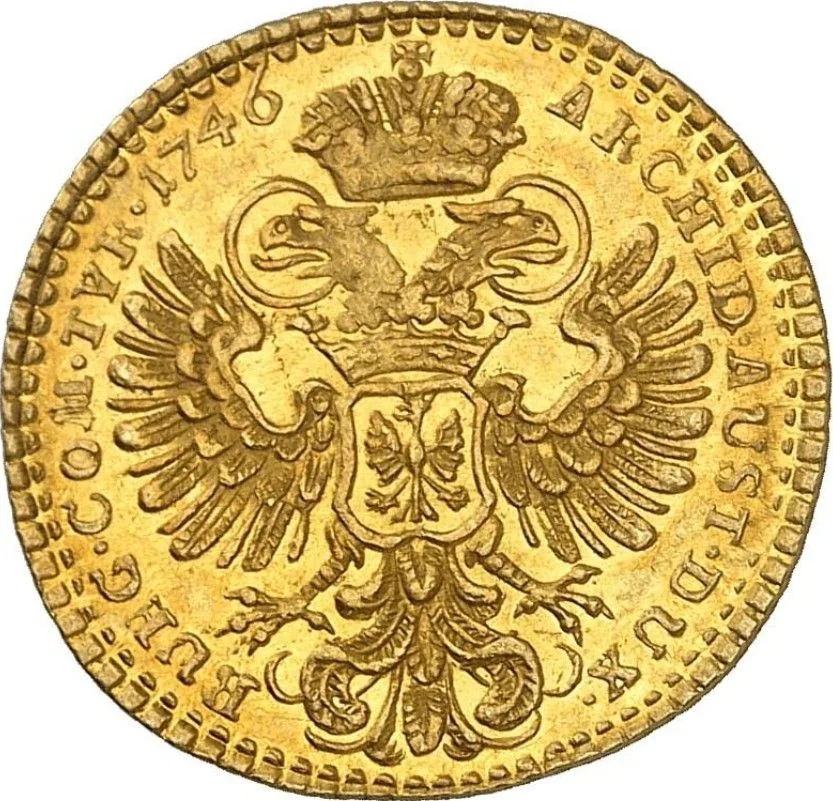
reverse
Fritz Rudolf Künker GmbH & Co. KG, Osnabrück and Lübke & Wiedemann KG, Leonberg

1 Ducat – County of Tyrol

Austria
Context
Year: 1746
Country: Austria Country flag
Currency:
Demonetized: Yes
Material
Diameter: 22 mm
Weight: 3.46 g
Gold weight: 3.41 g
Composition: 98.6% Gold
Magnetic: No
References
KM: #Click to copy to clipboard1744
Numista: #492065
Value
Bullion value: $566.58

Obverse

Description:
Right-facing portrait in diadem and mantle, legend begins at 8 o'clock.
Inscription:
M THERESIA D G R IMP G H HU BO REG
Script: Latin

Reverse

Description:
Imperial double-headed eagle with Tyrol shield on breast, surrounded by legend.
Inscription:
ARCHID AUST DUX BURG COM TYR 1746
Script: Latin

Edge

Plain

Mints

NameMark
Hall

Mintings

YearMint MarkMintageQualityCollection
1746

Historical background

In 1746, the currency situation in the County of Tyrol was complex and strained, reflecting its unique political position within the Habsburg Monarchy. While formally part of the Austrian hereditary lands, Tyrol enjoyed significant fiscal and administrative autonomy, including the right to mint its own coinage at the Hall mint. However, its monetary system was not isolated; it operated within the broader context of the Holy Roman Empire and the Habsburg state's chronic financial pressures, particularly from the ongoing War of the Austrian Succession (1740-1748). This conflict drained Vienna's treasury, leading to repeated debasements of the imperial coinage, which in turn destabilized regional economies like Tyrol's.

The core of the problem was the coexistence of multiple coinage standards. Tyrol officially used the Konventionsfuß (Convention Standard), established in 1753, but the prelude to this reform was a period of significant disorder. In practice, the county's circulation was a confusing mix of older Tyrolean kreuzers, debased Reich coinage from other German states, and more valued silver specie like the Tyroler Gulden. The disparity between the face value and intrinsic silver content of coins created widespread arbitrage, where good silver coins were hoarded or melted down, leaving poorer-quality money in daily circulation. This eroded public trust and complicated trade.

Consequently, 1746 fell within a period of acute monetary transition and distress. The local authorities grappled with price inflation, fraudulent coinage, and the economic fallout from the war. The situation demanded a systemic solution, which would culminate just a few years later in the Imperial Coinage Convention of 1753. This agreement, which Tyrol joined, successfully standardized the silver content of gulden across the Habsburg lands, finally providing the stability that the county's economy lacked in the mid-1740s.
Legendary