Logo Title
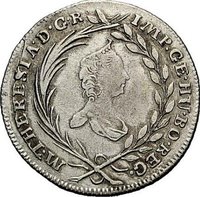
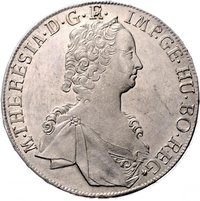
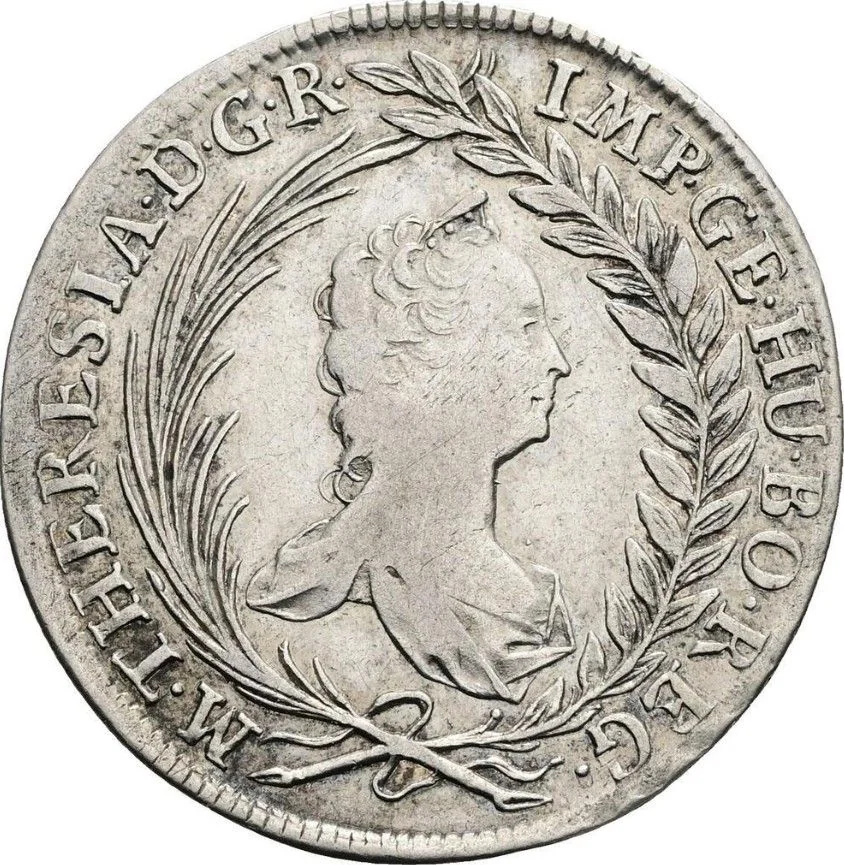
obverse
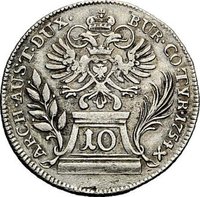
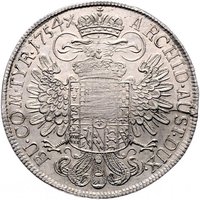
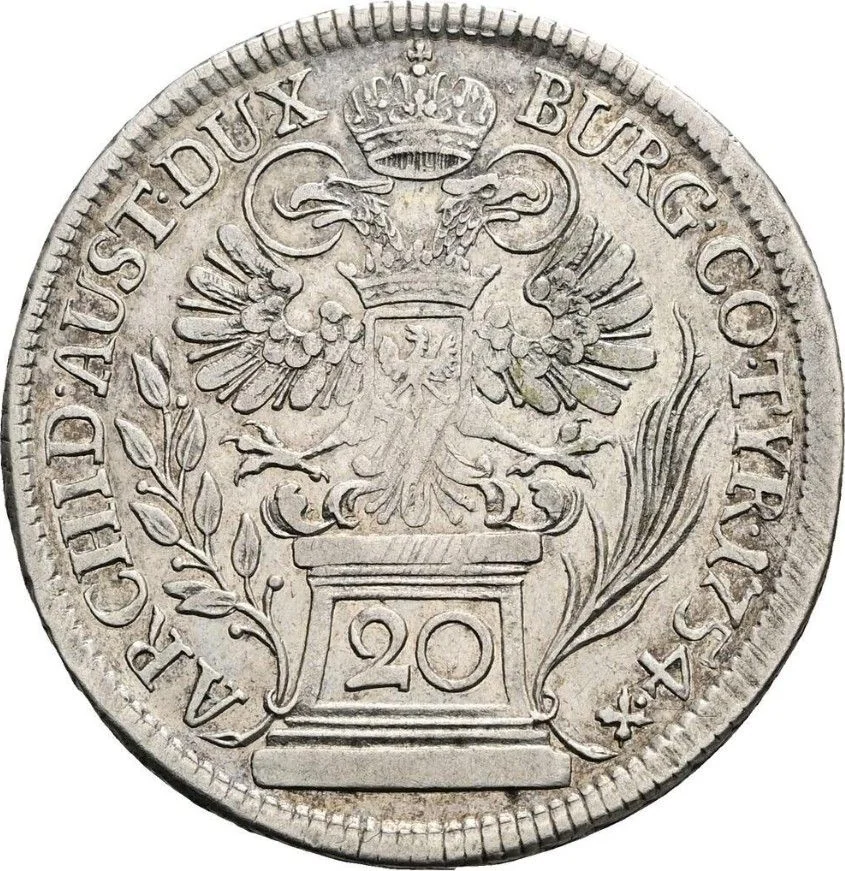
reverse
Auktionen Frühwald
Context
Years: 1754–1765
Country: Austria Country flag
Currency:
Demonetized: Yes
Total mintage: 132,000
Material
Weight: 6.56 g
Silver weight: 3.55 g
Shape: Round
Composition: 54.1% Silver
Magnetic: No
References
KM: #Click to copy to clipboard1813
Numista: #491914
Value
Bullion value: $9.96

Obverse

Description:
Bust within a laurel and palm wreath, surrounded by legend.
Inscription:
M • THERESIA • D • G • R • IMP • GE • HU • BO • REG •
Script: Latin

Reverse

Description:
Imperial double-headed eagle with Tyrolean arms, flanked by wreaths. Value on pedestal below.
Inscription:
ARCHID • AUST • DUX BURG • CO • TYR • 1754 X
Script: Latin

Edge

Plain

Mints

NameMark
Hall

Mintings

YearMint MarkMintageQualityCollection
1754
1755
1756
1758
1759
1760
1761
1763
1764
1765132,000

Historical background

In 1754, the County of Tyrol, a strategic Alpine territory within the Habsburg Monarchy, operated under a complex and often strained currency system. The official currency was the Tyrolean Conventionsgulden (or florin), which was part of a broader monetary standard—the Conventionsmünzfuß—adopted by several southern German states and Austria in 1753. This system aimed to stabilize silver content, defining a Conventionsgulden as 1/10 of a Cologne mark of fine silver. However, everyday transactions were dominated by smaller, frequently debased subsidiary coins like kreuzers and pfennigs, creating a persistent tension between high-value account money and circulating coinage.

The region's economy, heavily reliant on mining, transit trade, and agriculture, suffered from a chronic shortage of small change, which hampered commerce and wages. This scarcity was exacerbated by the practices of neighboring states and local entities issuing inferior coinage that flowed into Tyrol, leading to confusion and devaluation. Furthermore, the Habsburg state's frequent military engagements, particularly during the War of the Austrian Succession (1740-1748), placed severe fiscal pressure on the monarchy, often resulting in the debasement of coinage to fund war debts, a practice that eroded public trust in the currency's value.

Consequently, monetary authorities in Innsbruck faced the dual challenge of aligning with imperial monetary conventions while managing a fragile local economy. Efforts to control the quality and quantity of circulating specie were constant but often undermined by economic necessity and the sheer difficulty of policing money flows in a mountainous, transit-rich region. Thus, in 1754, Tyrol's currency situation was characterized by a fragile official standard, a chaotic circulation of heterogeneous coins, and the underlying pressures of Habsburg imperial finance.

Series: 1754 County of Tyrol circulation coins

10 Kreuzers obverse
10 Kreuzers reverse
10 Kreuzers
1754-1765
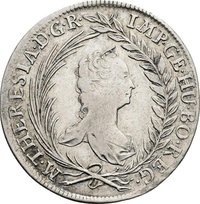
20 Kreuzer obverse
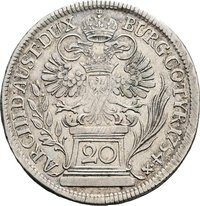
20 Kreuzer reverse
20 Kreuzer
1754-1765
1 Thaler obverse
1 Thaler reverse
1 Thaler
1754-1765
Legendary