

1 Thaler – Hungary
Hungary
Context
Material
References
KM: #Click to copy to clipboard388
Numista: #49115
Value
Bullion value: $65.52
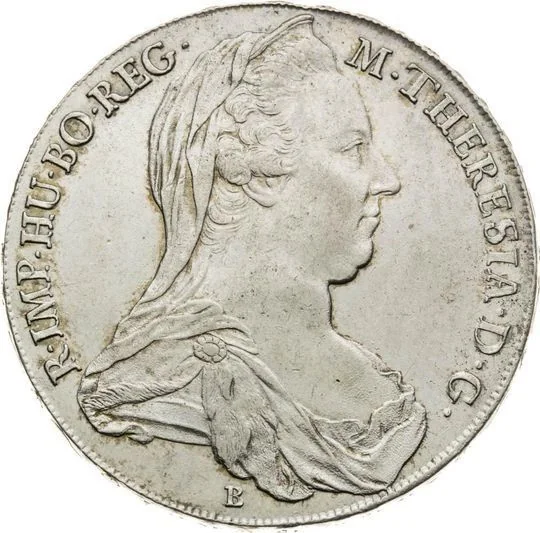
Obverse
Description:
Veiled bust facing right, inscription from top right.
Inscription:
M · THERESIA · D · G · R · IMP · HU · BO · REG ·
Script: Latin
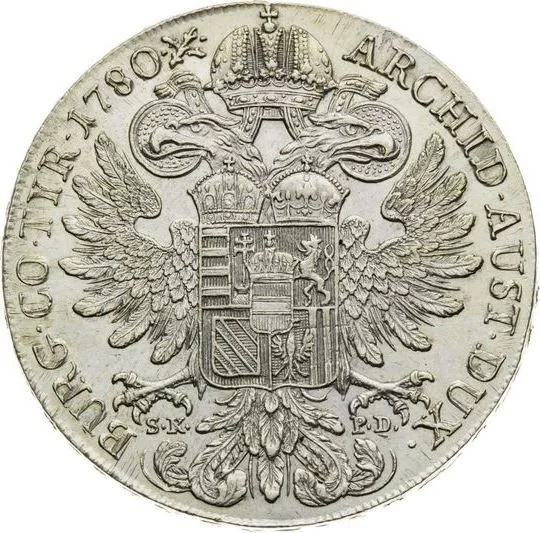
Reverse
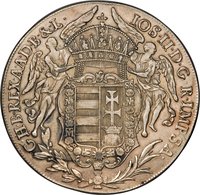
Description:
Crowned Austrian eagle with central Hungarian shield; divides mint marks below.
Inscription:
ARCHID · AUST · DUX · BURG · CO · TYR · 1780 · X ·
Script: Latin
Edge
Plain
Mints
| Name | Mark |
|---|---|
| Kremnica | B |
Mintings
| Year | Mint Mark | Mintage | Quality | Collection |
|---|---|---|---|---|
| 1780 | B | — |
Historical background
In 1780, Hungary operated under a complex and strained monetary system as part of the Habsburg Monarchy. The official currency was the Habsburg Conventionsthaler (or Konventionstaler), a large silver coin standardized across the empire in 1753. However, Hungary's economy also relied heavily on its own subsidiary coinage, the krajcár (kreuzer), with 120 krajcár to one Conventionsthaler. A critical problem was the chronic shortage of small-denomination coins in circulation, which severely hampered everyday trade and market transactions for the peasantry and urban poor.
This monetary scarcity was exacerbated by the state's fiscal policies. To finance its costly wars, particularly the Seven Years' War (1756-1763), the Habsburg state, under Maria Theresa, had resorted to debasement—reducing the silver content in smaller coins like the krajcár while officially maintaining their face value. This practice, alongside the circulation of overvalued foreign coins and private tokens issued by large landowners and towns, led to a loss of public trust in the currency and significant price inflation. The monetary system was fragmented and unreliable.
Therefore, the currency situation in 1780 was one of transition and attempted reform. The year fell within the reign of Maria Theresa (who died that November) and her co-regent Joseph II, who was pursuing a centralizing agenda. Efforts were underway to unify and stabilize the monetary system across the empire, but these faced immense practical challenges. The legacy of war debt, the need for small change, and the tension between Vienna's central control and Hungary's distinct economic identity created a fragile and inefficient monetary environment on the eve of Joseph II's sole rule.
This monetary scarcity was exacerbated by the state's fiscal policies. To finance its costly wars, particularly the Seven Years' War (1756-1763), the Habsburg state, under Maria Theresa, had resorted to debasement—reducing the silver content in smaller coins like the krajcár while officially maintaining their face value. This practice, alongside the circulation of overvalued foreign coins and private tokens issued by large landowners and towns, led to a loss of public trust in the currency and significant price inflation. The monetary system was fragmented and unreliable.
Therefore, the currency situation in 1780 was one of transition and attempted reform. The year fell within the reign of Maria Theresa (who died that November) and her co-regent Joseph II, who was pursuing a centralizing agenda. Efforts were underway to unify and stabilize the monetary system across the empire, but these faced immense practical challenges. The legacy of war debt, the need for small change, and the tension between Vienna's central control and Hungary's distinct economic identity created a fragile and inefficient monetary environment on the eve of Joseph II's sole rule.
💎 Extremely Rare