

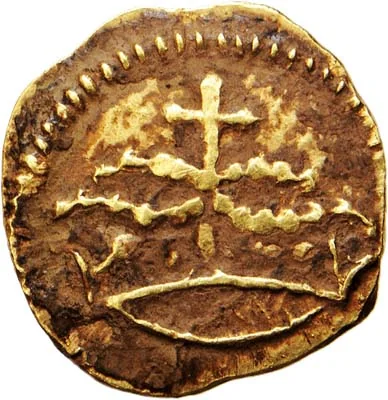
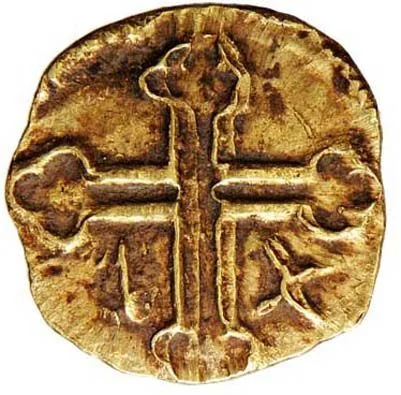
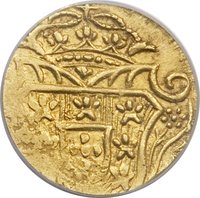
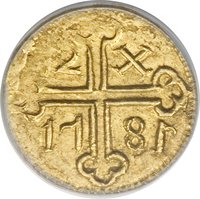
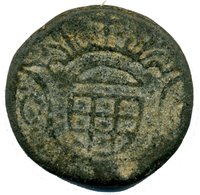
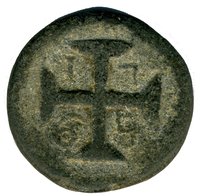
1 Xerafim – Portuguese India
India
Context
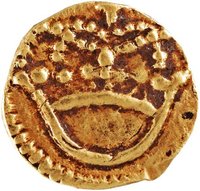
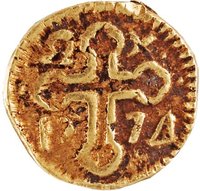
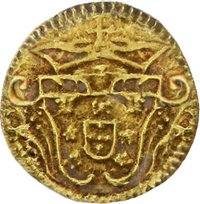
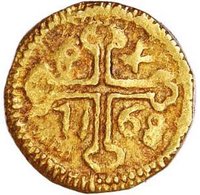
Year: 1766
Country: India 
Issuer: Portuguese India
Ruler: Joseph I
Currency:
(1706—1880)
Demonetized: Yes
Material
Diameter: 10 mm
Weight: 0.4 g
Gold weight: 0.40 g
Shape: Irregular round
Composition: Gold
Magnetic: No
Technique: Hammered
References
KM: #Click to copy to clipboard129
Numista: #49079
Value
Bullion value: $66.83
Mints
| Name | Mark |
|---|---|
| Goa | — |
Mintings
| Year | Mint Mark | Mintage | Quality | Collection |
|---|---|---|---|---|
| 1766 | — | — |
Historical background
In 1766, the currency situation in Portuguese India was a complex and fragmented system, reflecting both the colony's historic role as a trading hub and the declining administrative control of the Portuguese Empire. The primary official currency was the Portuguese Indian Rupia, a silver coin minted at the Goa Mint. However, its circulation and acceptance were uneven, competing with a plethora of other coins that flowed through the region's ports. The most significant of these were gold hons and silver xerafins, which had long been established in local and regional trade, alongside a multitude of other Indian and foreign coins from neighboring Maratha territories and other European trading companies.
This monetary mosaic created chronic problems of valuation and exchange. The value of coins was not solely determined by their official stamp but by their intrinsic metal content (silver or gold purity and weight), which led to constant assay disputes and complicated commercial transactions. Furthermore, the Portuguese administration struggled with persistent currency debasement and shortages of precious metals. To finance local expenses and military campaigns, authorities often resorted to issuing coins with reduced silver content, which eroded public trust and drove "good" full-weight coins out of circulation, a phenomenon described by Gresham's Law.
Consequently, the economy of Portuguese India in this period operated on a dual system: a strained official currency for state-related functions and a more robust, but chaotic, market-driven system of various valued bullion and coins for actual commerce. This instability was symptomatic of broader Portuguese imperial decline, as local merchants and markets increasingly relied on the more reliable currencies of other regional powers, undermining Lisbon's economic authority and complicating fiscal governance in its most prized eastern possession.
This monetary mosaic created chronic problems of valuation and exchange. The value of coins was not solely determined by their official stamp but by their intrinsic metal content (silver or gold purity and weight), which led to constant assay disputes and complicated commercial transactions. Furthermore, the Portuguese administration struggled with persistent currency debasement and shortages of precious metals. To finance local expenses and military campaigns, authorities often resorted to issuing coins with reduced silver content, which eroded public trust and drove "good" full-weight coins out of circulation, a phenomenon described by Gresham's Law.
Consequently, the economy of Portuguese India in this period operated on a dual system: a strained official currency for state-related functions and a more robust, but chaotic, market-driven system of various valued bullion and coins for actual commerce. This instability was symptomatic of broader Portuguese imperial decline, as local merchants and markets increasingly relied on the more reliable currencies of other regional powers, undermining Lisbon's economic authority and complicating fiscal governance in its most prized eastern possession.
✨ Legendary