

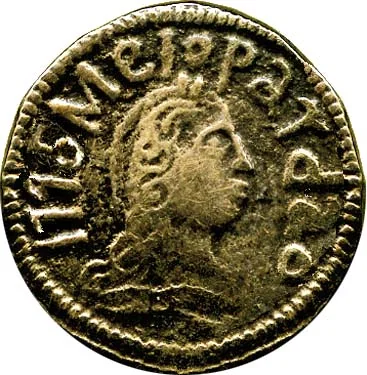
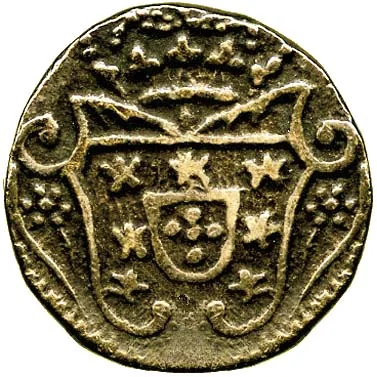
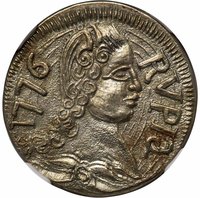
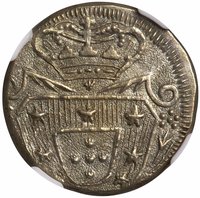
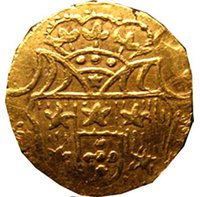
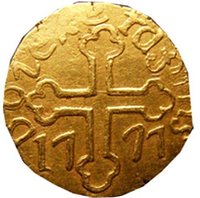
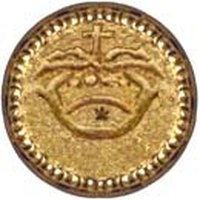
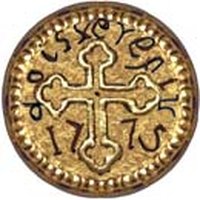
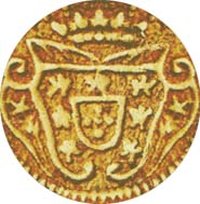
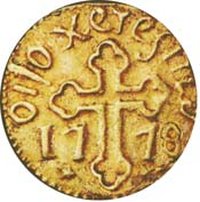
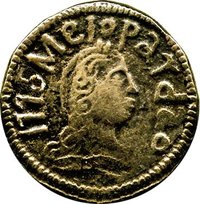
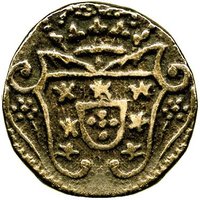
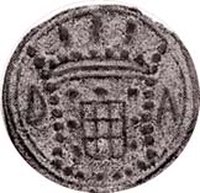
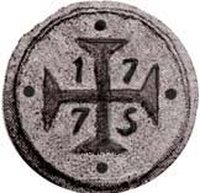
150 reis – Portuguese India
Add to wishlist
India
Context
Years: 1775–1782
Country: India
Issuer: Portuguese India
Ruler: Joseph I
Currency:
(1706—1880)
Subdivision: 150 reis = ½ Pardao=¼ Rupia
Demonetized: Yes
Material
Diameter: 16 mm
Weight: 2.8 g
Silver Weight:: 2.80 g
Shape: Irregular round
Composition: Silver
Magnetic: No
Technique: Hammered
References
KM: #
Numista: #49038
Value
Bullion value: $7.03
Mints
| Name | Mark |
|---|---|
| Goa | — |
Mintings
| Year | Mint Mark | Mintage | Quality | Collection |
|---|---|---|---|---|
| 1775 | — | — | ||
| 1775 | — | — | BU | |
| 1776 | — | — | BU | |
| 1777 | — | — | ||
| 1780 | — | — | ||
| 1781 | — | — | ||
| 1782 | — | — |
Historical background
In 1775, the currency situation in Portuguese India was a complex and fragmented system, reflecting both its regional economic role and its administrative challenges under the Marquis of Pombal’s reforms. The official currency was the Portuguese xerafim, but the territory’s economy was dominated by a multitude of foreign coins, a legacy of Goa’s historic position as a major trading hub. The most prevalent and trusted of these was the gold mohur from the Maratha Empire, alongside other regional currencies like the rupee and silver cruzados. This created a de facto multi-currency environment where trade and daily transactions relied on a constantly fluctuating exchange of coins from various empires and trading companies.
Administratively, Lisbon struggled to impose monetary order from afar. The Royal Treasury in Goa faced chronic shortages of specie, leading to the circulation of worn, clipped, and counterfeit coins, which further eroded trust in the official currency. Attempts to mint local copper bazarucos for small-scale transactions were often unsuccessful, as they were not widely accepted by the population who preferred silver and gold. The Viceroyalty’s financial weakness was exacerbated by declining revenues from the once-lucrative trade monopolies and the high cost of maintaining military defenses against regional powers.
Consequently, the monetary landscape was one of pragmatic disorder. Exchange rates between the xerafim, mohurs, rupees, and other units like the tangas were not fixed, fluctuating with trade flows, political events, and the perceived quality of coin batches. This instability hampered governance and commerce, forcing the administration to often accept taxes and payments in foreign coin. Thus, in 1775, the currency system was less a unified structure and more a contested marketplace of metallic value, symbolizing Portuguese India’s diminished economic control amidst a vibrant and competitive Indian Ocean economy.
Administratively, Lisbon struggled to impose monetary order from afar. The Royal Treasury in Goa faced chronic shortages of specie, leading to the circulation of worn, clipped, and counterfeit coins, which further eroded trust in the official currency. Attempts to mint local copper bazarucos for small-scale transactions were often unsuccessful, as they were not widely accepted by the population who preferred silver and gold. The Viceroyalty’s financial weakness was exacerbated by declining revenues from the once-lucrative trade monopolies and the high cost of maintaining military defenses against regional powers.
Consequently, the monetary landscape was one of pragmatic disorder. Exchange rates between the xerafim, mohurs, rupees, and other units like the tangas were not fixed, fluctuating with trade flows, political events, and the perceived quality of coin batches. This instability hampered governance and commerce, forcing the administration to often accept taxes and payments in foreign coin. Thus, in 1775, the currency system was less a unified structure and more a contested marketplace of metallic value, symbolizing Portuguese India’s diminished economic control amidst a vibrant and competitive Indian Ocean economy.
✨ Legendary