Logo Title
obverse
reverse
http://monnaiesliegeoises.over-blog.com/

1 Liard – Prince-bishopric of Liege

Belgium
Context
Years: 1726–1727
Country: Belgium Country flag
Currency:
(1650—1795)
Demonetized: Yes
Material
Diameter: 24 mm
Weight: 3.1 g
Shape: Round
Composition: Copper
Magnetic: No
Alignment: Coin alignment
Obverse
OBVERSE ↑
flip
Reverse
REVERSE ↓
References
KM: #Click to copy to clipboard134
Numista: #48959

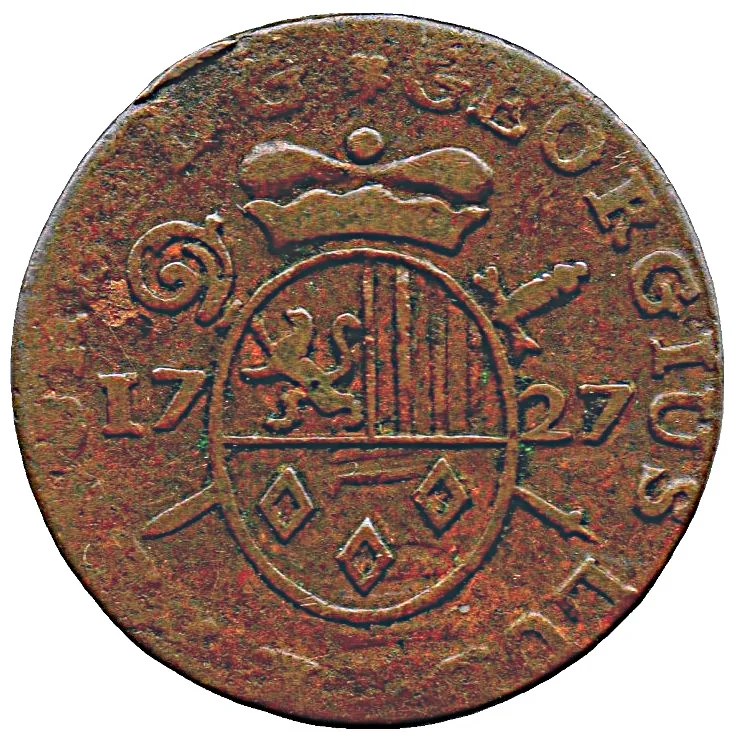
Obverse

Description:
Arms of Berghes on a crossed staff and sword, flanking the date. "Georgius Ludovicus de Berghes dei gratia."
Inscription:
GEORGIUS·LUD:DE·BERGHES·D·G·
Script: Latin

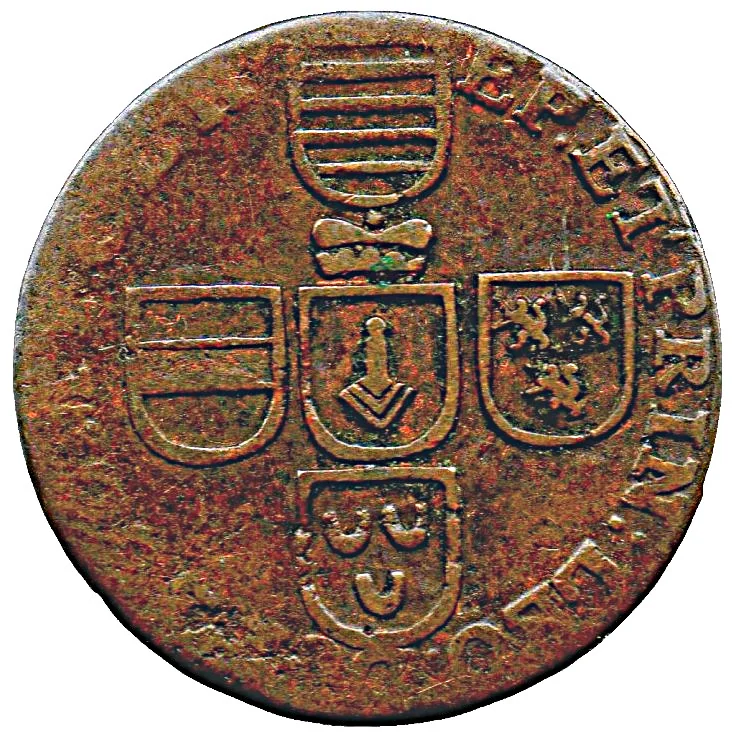
Reverse

Description:
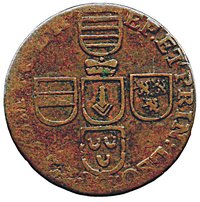
Four coats of arms in a cross: Loon (top), Franchimont (right), Horne (bottom), Bouillon (left).
Inscription:
EP·ET·PRIN·LEO·DUX·BUL·M·F·C·L·H
Script: Latin

Edge

Plain

Mintings

YearMint MarkMintageQualityCollection
1726
1727

Historical background

In 1726, the Prince-Bishopric of Liège was grappling with a severe and chronic monetary crisis, a common affliction in the fragmented Holy Roman Empire. The circulation was a chaotic jumble of over a hundred different coin types from neighboring states like the Spanish Netherlands, France, and various German territories, alongside Liège's own issues. This proliferation of coins, many of which were debased or worn, made trade difficult and fostered widespread counterfeiting, eroding public trust and destabilizing the local economy. The intrinsic value of silver in many of these coins often exceeded their face value, leading to hoarding and the export of good currency, which only worsened the shortage of reliable money.

The newly elected Prince-Bishop, Georges-Louis de Berghes, recognized that monetary reform was an urgent priority for his administration. The situation demanded a decisive move to reassert sovereign control over the currency. His solution, enacted in 1726, was the introduction of a new, standardized silver coin: the liard de Berghes. This coin was intended to replace the chaotic mix in circulation with a stable, trusted currency issued under the bishopric's sole authority. Its design prominently featured the bishop's coat of arms, symbolizing this reassertion of monetary sovereignty and the hope for economic stability.

The long-term success of the liard de Berghes was, however, limited. While it provided a temporary solution and a much-needed uniform currency, the Prince-Bishopric remained embedded in a complex economic region with powerful neighbors. The fundamental pressures of cross-border trade and competition from the monetary systems of larger states like France and the Austrian Netherlands continued to pose challenges. Consequently, while the 1726 reform was a significant and characteristic attempt by a small state to manage its economic destiny, it could not fully insulate Liège from the wider monetary instability of 18th-century Europe.
🌟 Limited