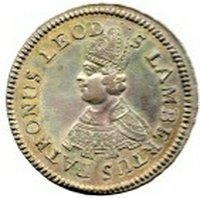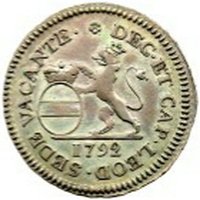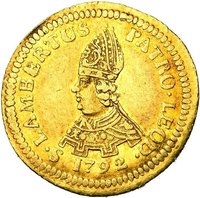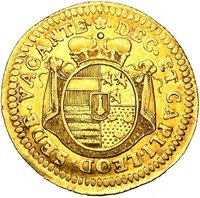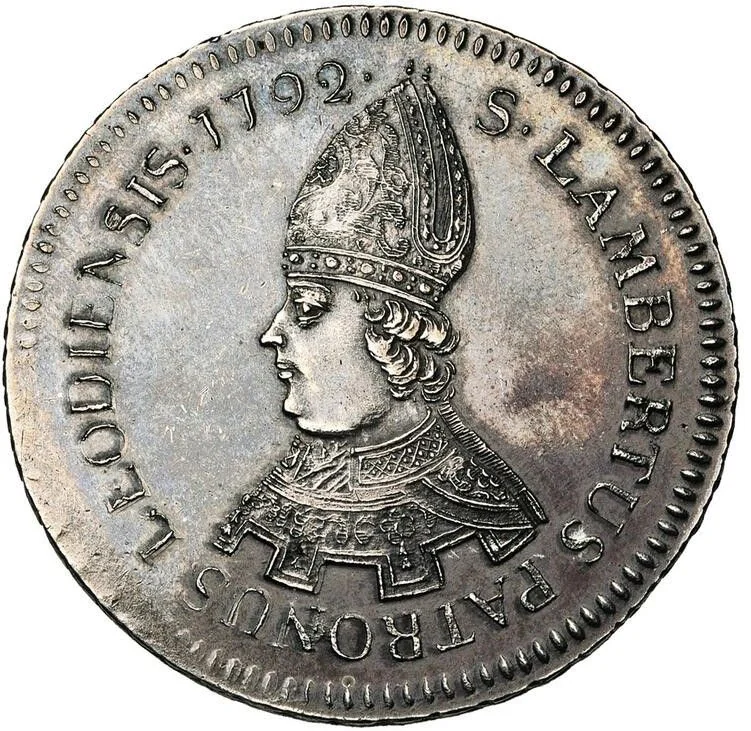
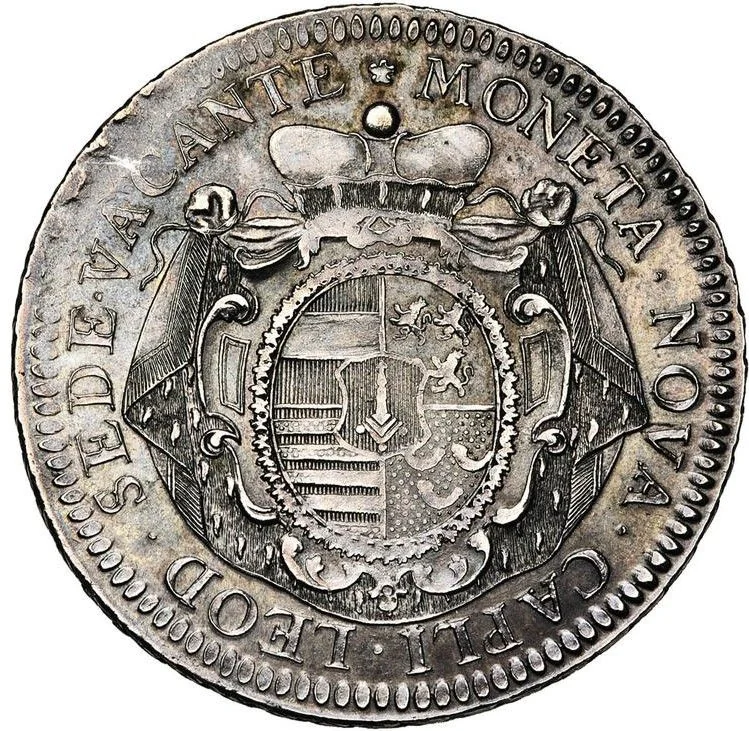
In 1792, the Prince-Bishopric of Liège found itself in a state of profound monetary instability, caught between its historic traditions and the revolutionary currents sweeping Europe. The principality's currency system was a complex and fragmented patchwork, reflecting its political divisions. While the official unit of account was the
florin (or guilder) of Liège, subdivided into 20
sous or 240
deniers, the actual coins circulating were incredibly diverse. These included not only local issues from the Prince-Bishop's mint but also a heavy influx of foreign coins from neighboring states like the Austrian Netherlands, the Dutch Republic, and France, all valued at fluctuating and often arbitrary exchange rates.
This monetary confusion was severely exacerbated by the political upheaval of the Liège Revolution, which had begun in 1789. The revolutionary "Patriot" government, and later the restored but weakened Prince-Bishop, resorted to issuing vast quantities of paper money—
assignats and
mandats—to finance their regimes and cover debts. This led to rapid inflation and a catastrophic loss of public confidence in both paper notes and even metal coinage, as the intrinsic silver value of coins often exceeded their face value, causing them to be hoarded or melted down. By 1792, the economy was plagued by severe shortages of sound money, rampant counterfeiting, and wildly inconsistent valuations from town to town.
The situation reached a critical point in 1792-1793, as external military events dictated the principality's fate. The armies of Revolutionary France first entered Liège in November 1792, bringing with them the French
assignat and attempting to impose a new monetary order. Although Austrian forces temporarily restored the Prince-Bishop in early 1793, the French returned definitively in 1794, leading to Liège's annexation in 1795. Thus, the chaotic currency situation of 1792 was ultimately "resolved" not by internal reform, but by the abolition of the Prince-Bishopric itself and its forced integration into the French monetary system, ending its independent coinage after centuries.