

2 Patards – Prince-bishopric of Liege
Belgium
Context
Year: 1613
Country: Belgium 
Issuer: Prince-bishopric of Liege
Ruler: Ferdinand of Bavaria
Currency:
(1545—1650)
Demonetized: Yes
Material
Weight: 1.73 g
Silver weight: 1.73 g
Shape: Irregular round
Composition: Silver
Magnetic: No
Technique: Hammered
References
KM: #Click to copy to clipboardD35
Numista: #487595
Value
Bullion value: $4.95
Obverse
Description:
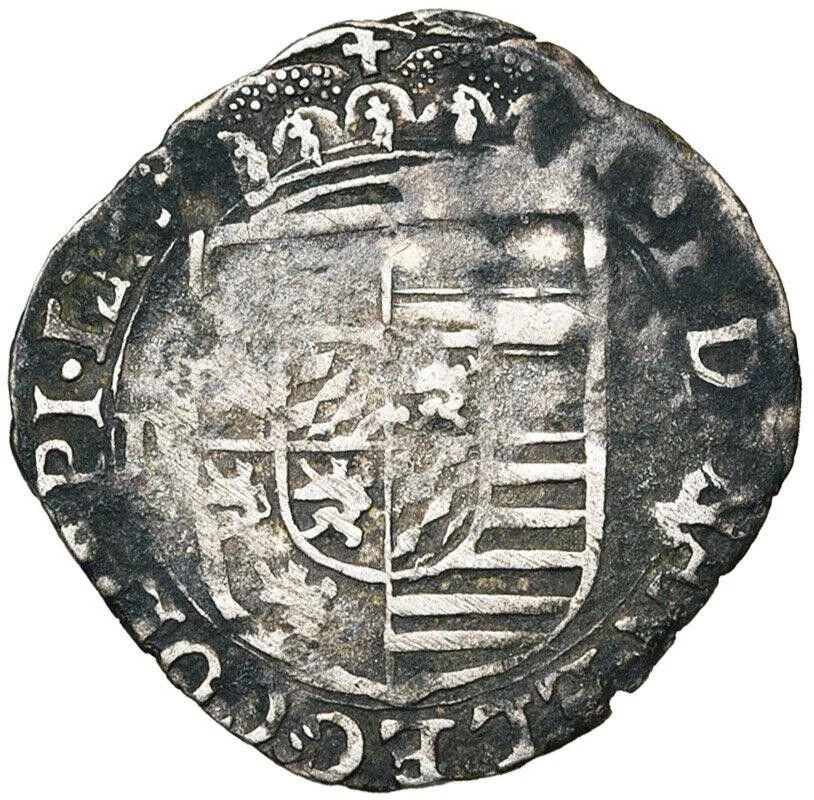
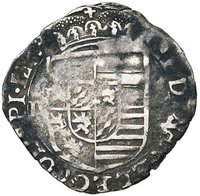
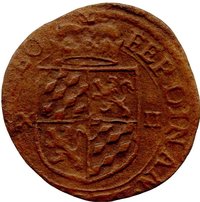
Arms of Liege-Bouillon-Looz-Franchimont, topped by Bavaria-Palatinate, flank the value.
Inscription:
FERDINAN • ELEC • COL • EPI • LEO • Z
Script: Latin
Reverse
Description:
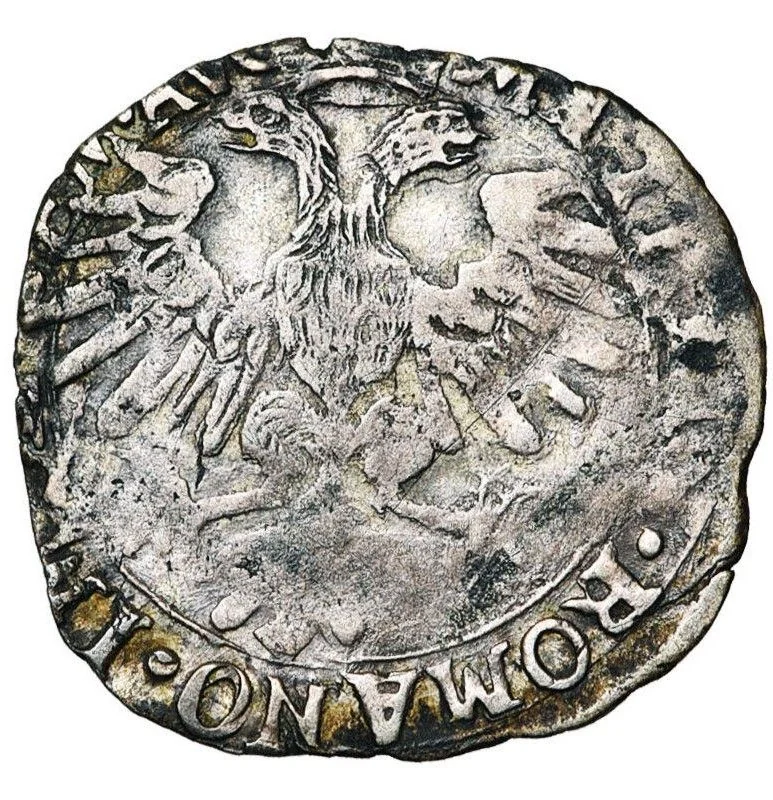
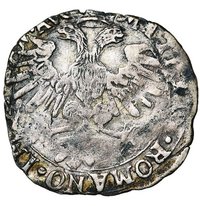
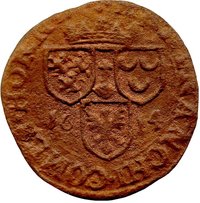
Two-headed eagle displayed.
Inscription:
MATHIAS • ROMANO • IMPE • SEMP • AVG
Script: Latin
Edge
Categories
| Symbols> Coat of Arms |
| Symbol> Double-headed eagle |
Mints
| Name | Mark |
|---|---|
| Liège | — |
Mintings
| Year | Mint Mark | Mintage | Quality | Collection |
|---|---|---|---|---|
| 1613 | — | — |
Historical background
In 1613, the Prince-Bishopric of Liège found itself in a complex and deteriorating monetary situation, caught in the crosscurrents of wider European economic turmoil. The region, while politically independent within the Holy Roman Empire, was economically integrated into the vibrant and tumultuous trade networks of the Spanish Netherlands. This exposed Liège to a flood of heavily debased coinage, particularly lightweight patards and double patards from neighbouring states, which drove full-weight domestic coins out of circulation according to Gresham's Law. The result was a severe shortage of good money, price inflation, and widespread confusion in daily commerce, eroding public trust in the currency.
The root of the crisis lay in the "monetary mutation" policies of competing sovereigns. Both the Spanish Crown in Brussels and the Dutch Republic were engaged in a "currency war," deliberately debasing their coinage to gain fiscal advantages and drain precious metal from rival territories. Liège, with its important metallurgical and arms industries, was particularly vulnerable to this influx of bad money. Prince-Bishop Ernest of Bavaria, though primarily occupied with the Counter-Reformation and political stability, faced mounting pressure from Liège's merchant and artisan guilds, who demanded decisive action to protect the local economy from these external manipulations.
Consequently, the year 1613 was one of legislative response and attempted reform. The Prince-Bishopric issued ordinances aimed at controlling the crisis, likely setting official exchange rates and attempting to prohibit or regulate the circulation of the most debased foreign coins. However, these measures were largely reactive and struggled against powerful market forces. The situation highlighted the inherent weakness of a small state trying to maintain monetary sovereignty in a region dominated by larger powers engaging in aggressive economic warfare, a challenge that would persist for decades.
The root of the crisis lay in the "monetary mutation" policies of competing sovereigns. Both the Spanish Crown in Brussels and the Dutch Republic were engaged in a "currency war," deliberately debasing their coinage to gain fiscal advantages and drain precious metal from rival territories. Liège, with its important metallurgical and arms industries, was particularly vulnerable to this influx of bad money. Prince-Bishop Ernest of Bavaria, though primarily occupied with the Counter-Reformation and political stability, faced mounting pressure from Liège's merchant and artisan guilds, who demanded decisive action to protect the local economy from these external manipulations.
Consequently, the year 1613 was one of legislative response and attempted reform. The Prince-Bishopric issued ordinances aimed at controlling the crisis, likely setting official exchange rates and attempting to prohibit or regulate the circulation of the most debased foreign coins. However, these measures were largely reactive and struggled against powerful market forces. The situation highlighted the inherent weakness of a small state trying to maintain monetary sovereignty in a region dominated by larger powers engaging in aggressive economic warfare, a challenge that would persist for decades.
✨ Legendary