

3 Patards – Prince-bishopric of Liege
Belgium
Context
Year: 1609
Country: Belgium 
Issuer: Prince-bishopric of Liege
Ruler: Ernest of Bavaria
Currency:
(1545—1650)
Demonetized: Yes
Material
References
KM: #Click to copy to clipboard16
Numista: #487226
Obverse
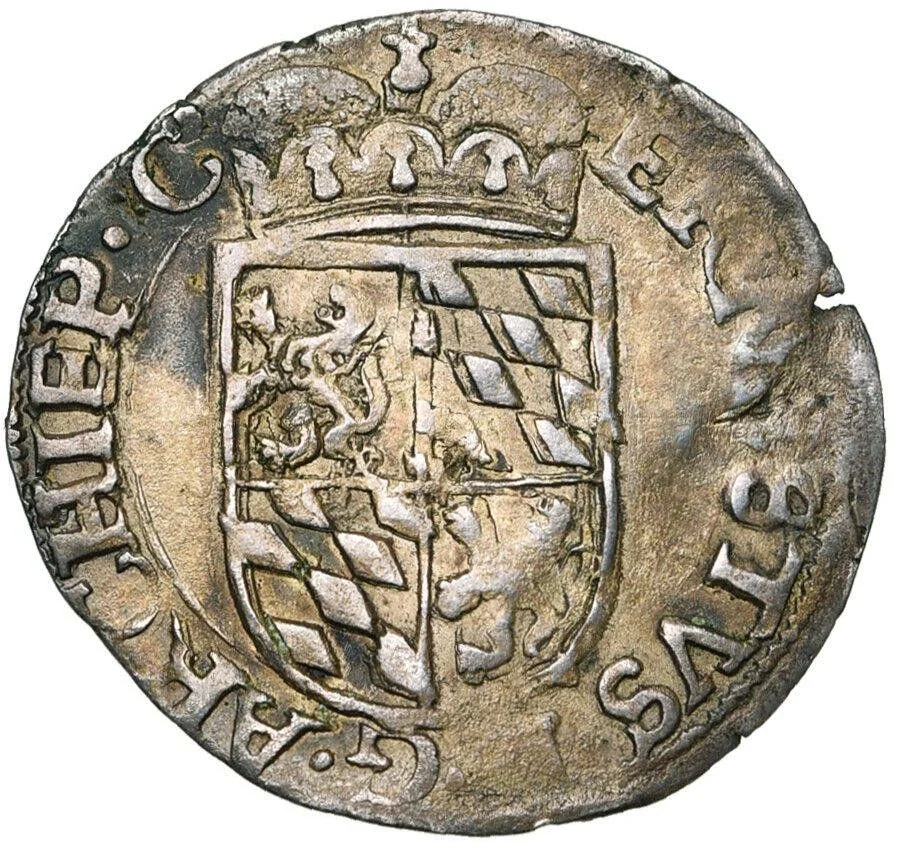
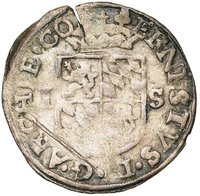
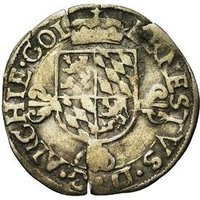
Description:
Bavarian-Palatinate arms flank value.
Inscription:
ERNESTVS · D · G · ARCHIEP · C
Script: Latin
Reverse
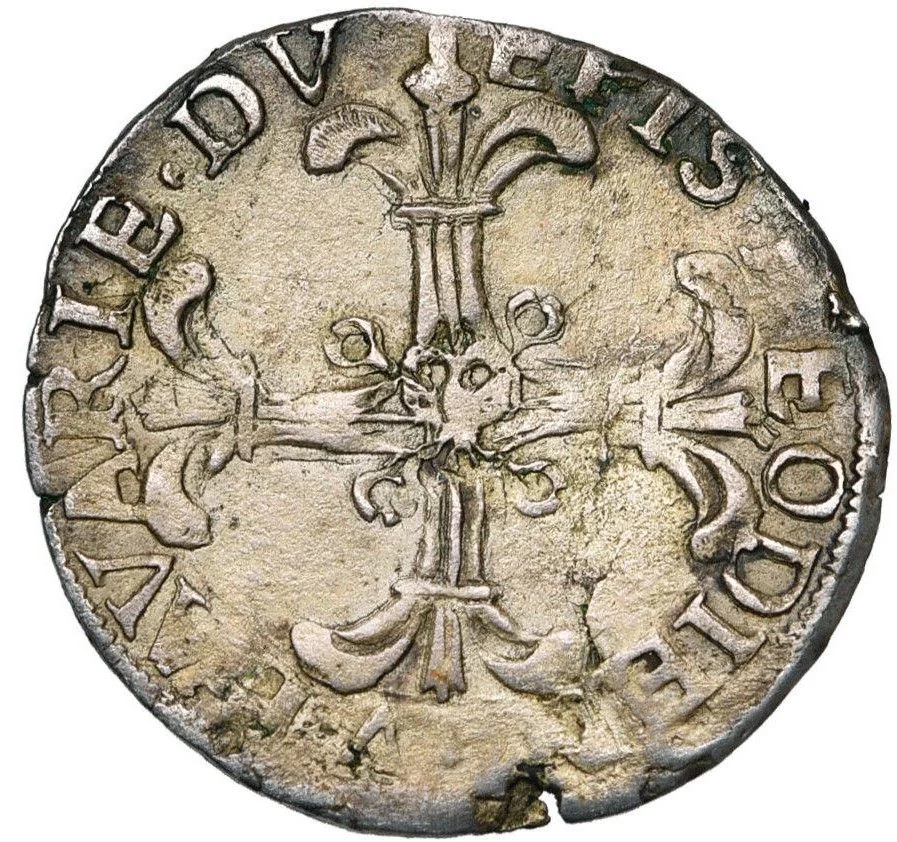
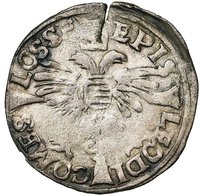
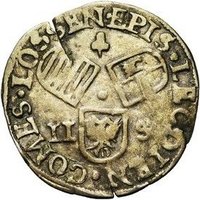
Description:
Cross with fleur-de-lis ends.
Inscription:
EPIS · LEODIEN · V · BAVARIE · DV
Script: Latin
Edge
Categories
| Symbols> Coat of Arms |
| Symbol> Cross |
Mints
| Name | Mark |
|---|---|
| Liège | — |
Mintings
| Year | Mint Mark | Mintage | Quality | Collection |
|---|---|---|---|---|
| 1609 | — | — |
Historical background
In 1609, the Prince-Bishopric of Liège found itself in a complex and challenging monetary situation, caught between the competing currency systems of its powerful neighbours. The principality, though politically independent within the Holy Roman Empire, was economically intertwined with both the Spanish Netherlands to the west and the Dutch Republic to the north. The latter's introduction of a new, stable guilder in 1606 created a strong "trade guilder" that flowed into Liège, while older, debased coins from the Southern Netherlands also circulated widely. This led to a chaotic bimetallic system where the value of coins was determined more by their metal content and origin than by official decree, causing confusion in trade and daily transactions.
The core of the problem was a severe shortage of high-quality small denomination coins for local commerce, a situation known as a "divisionary crisis." The Bishopric's own mint struggled to produce sufficient quantities of reliable liard coins, as the cost of production often exceeded their face value. Consequently, the economy became flooded with inferior foreign coins, many of which were intentionally lightweight or debased. This practice of "crying down" good money while "crying up" bad money, driven by merchants and money-changers, led to Gresham's Law in action: good silver coins were hoarded or exported, leaving only the poorest currency in active circulation.
Recognizing the economic damage, Prince-Bishop Ernest of Bavaria (r. 1581-1612) attempted reform. In 1609, he sought to impose order by issuing an official ordinance that fixed the exchange rates for the multitude of foreign coins circulating within his lands. The aim was to stabilize the monetary chaos and assert sovereign control. However, the decree had limited practical effect. The economic gravity of its neighbours, continued speculation, and the sheer volume of foreign coinage made it nearly impossible to enforce a unified system, leaving Liège's currency situation fragmented and unstable as the bishop approached the end of his reign.
The core of the problem was a severe shortage of high-quality small denomination coins for local commerce, a situation known as a "divisionary crisis." The Bishopric's own mint struggled to produce sufficient quantities of reliable liard coins, as the cost of production often exceeded their face value. Consequently, the economy became flooded with inferior foreign coins, many of which were intentionally lightweight or debased. This practice of "crying down" good money while "crying up" bad money, driven by merchants and money-changers, led to Gresham's Law in action: good silver coins were hoarded or exported, leaving only the poorest currency in active circulation.
Recognizing the economic damage, Prince-Bishop Ernest of Bavaria (r. 1581-1612) attempted reform. In 1609, he sought to impose order by issuing an official ordinance that fixed the exchange rates for the multitude of foreign coins circulating within his lands. The aim was to stabilize the monetary chaos and assert sovereign control. However, the decree had limited practical effect. The economic gravity of its neighbours, continued speculation, and the sheer volume of foreign coinage made it nearly impossible to enforce a unified system, leaving Liège's currency situation fragmented and unstable as the bishop approached the end of his reign.

✨ Legendary