

1 Farthing – Ireland
Ireland
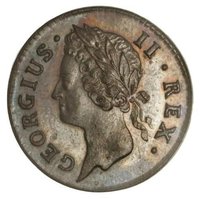
Obverse
Description:
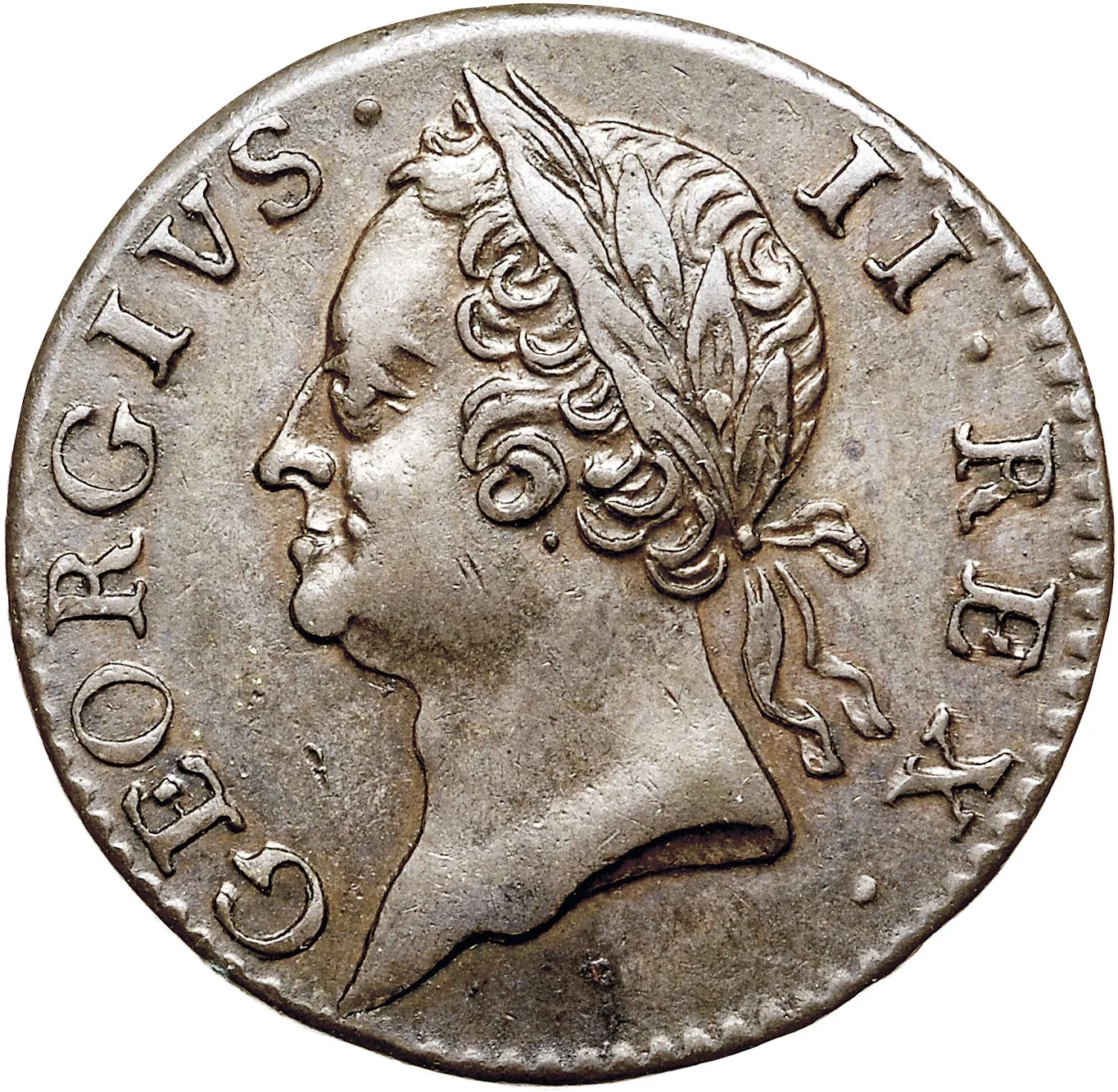
George II bust left, encircled by inscription.
Inscription:
GEORGIVS II . REX
Script: Latin
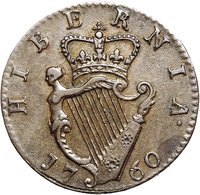
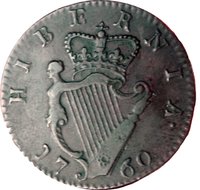
Reverse
Edge
Plain
Mintings
| Year | Mint Mark | Mintage | Quality | Collection |
|---|---|---|---|---|
| 1760 | — | — |
Historical background
In 1760, Ireland operated under a complex and restrictive monetary system largely dictated by its political and economic subordination to Britain. The official currency was the Irish pound, which was not a freely circulating coinage but a unit of account pegged at a discount to the British pound sterling (13 Irish pounds to 12 British). This created persistent friction in trade and finance. Crucially, Ireland suffered from a severe shortage of official specie (gold and silver coin), as much of it was drained to pay for imports from Britain and to meet the financial obligations of the Anglo-Irish landlord class, who often remitted rents to absentee landlords in England.
The chronic lack of official coinage led to a reliance on a chaotic patchwork of alternative currencies. Proclamation money (coins declared legal tender by proclamation), foreign coins—especially Spanish dollars and Portuguese johannes—and a vast array of private tokens issued by merchants, cities, and even grand estates circulated widely. This situation was inefficient and prone to fraud, as the value and authenticity of these mediums were inconsistent. Furthermore, the Irish banking system was in its infancy, with the Bank of Ireland only founded in 1783, so paper credit was limited and not universally trusted.
This unstable monetary environment reflected and exacerbated Ireland’s broader economic grievances under the mercantilist restrictions of the British Parliament. The Currency Act of 1760, passed in London, further tightened control by prohibiting the Irish Parliament from issuing its own copper coinage, a measure seen as protecting British economic interests. Thus, the currency situation in 1760 was one of scarcity, confusion, and dependency, symbolising Ireland’s lack of fiscal autonomy and contributing to the economic discontent that would fuel later political movements.
The chronic lack of official coinage led to a reliance on a chaotic patchwork of alternative currencies. Proclamation money (coins declared legal tender by proclamation), foreign coins—especially Spanish dollars and Portuguese johannes—and a vast array of private tokens issued by merchants, cities, and even grand estates circulated widely. This situation was inefficient and prone to fraud, as the value and authenticity of these mediums were inconsistent. Furthermore, the Irish banking system was in its infancy, with the Bank of Ireland only founded in 1783, so paper credit was limited and not universally trusted.
This unstable monetary environment reflected and exacerbated Ireland’s broader economic grievances under the mercantilist restrictions of the British Parliament. The Currency Act of 1760, passed in London, further tightened control by prohibiting the Irish Parliament from issuing its own copper coinage, a measure seen as protecting British economic interests. Thus, the currency situation in 1760 was one of scarcity, confusion, and dependency, symbolising Ireland’s lack of fiscal autonomy and contributing to the economic discontent that would fuel later political movements.
⭐ Rare