

10 lire – San Marino
Add to wishlist
San Marino
Context
Years: 1931–1938
Issuer: San Marino
Period:
(since 301)
Currency:
(1864—2001)
Demonetized: Yes
Total mintage: 150,000
Material
References
KM: #
Numista: #11879
Value
Exchange value: 10 SML
Bullion value: $21.34
Obverse
Description:
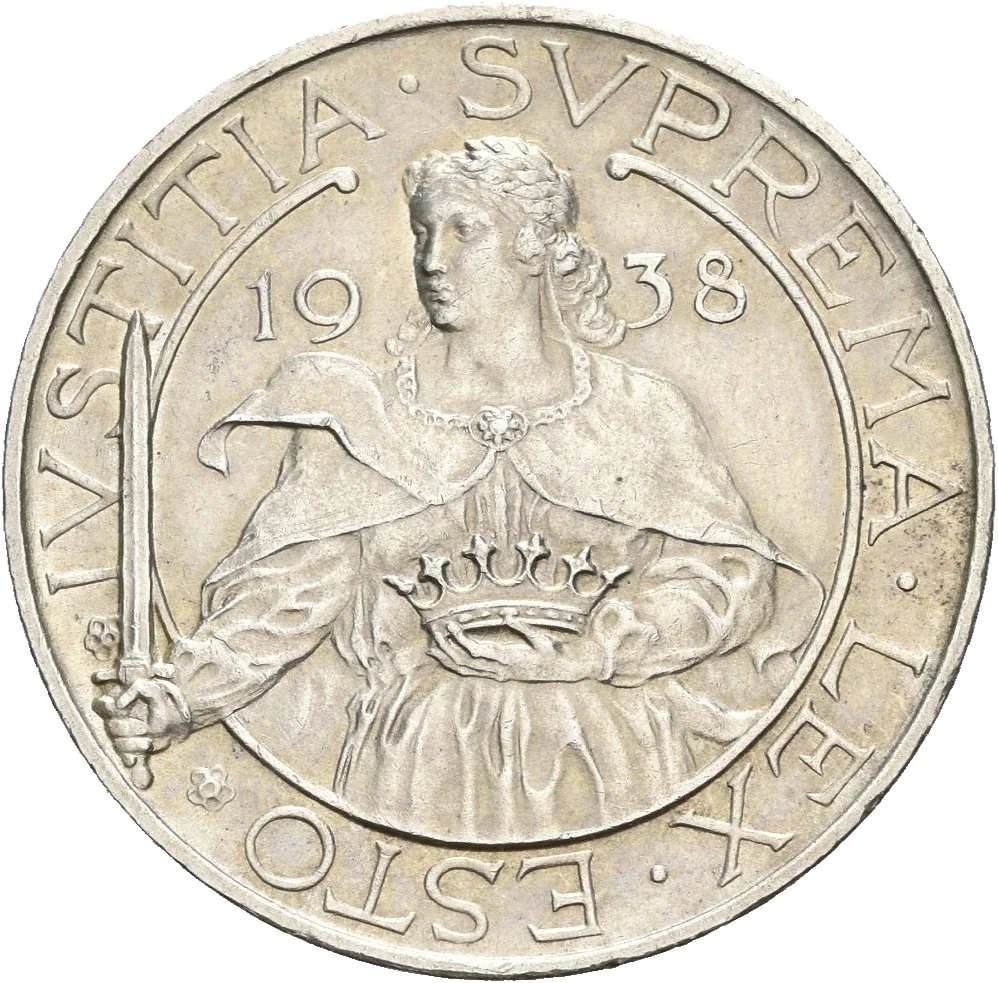
St. Agatha bust with sword and crown.
Inscription:
IUSTITIA SUPREMA LEX ESTO
Translation:
Let justice be the supreme law.
Script: Latin
Language: Latin
Engraver: Enrico Saroldi
Reverse
Description:
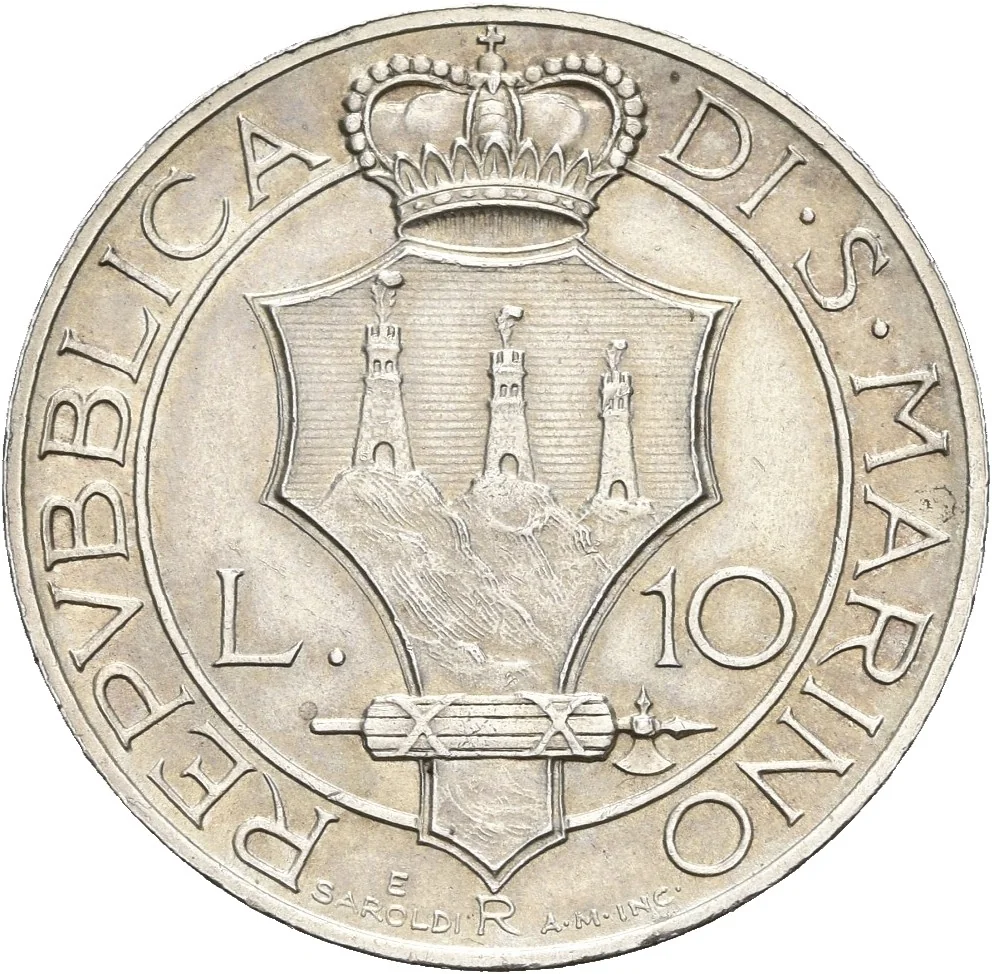
Crowned fasces with coat of arms.
Inscription:
REPVBBLICA DI·S·MARINO
L. 10
L. 10
Script: Latin
Engraver: Enrico Saroldi
Edge
Inscripted
Legend:
LIBERTAS * LIBERTAS *
Categories
| Object> Cold weapons |
Mints
| Name | Mark |
|---|---|
| Rome | R |
Mintings
Historical background
In 1931, the currency situation in the Republic of San Marino was intrinsically tied to that of its much larger neighbor, Italy, due to a long-standing monetary union formalized in the 1897 Convention. San Marino lacked the capacity to issue its own independent legal tender and instead used the Italian lira as its official circulating currency. However, a unique feature of this arrangement was San Marino's limited right, granted by Italy, to mint its own distinct coinage in low, commemorative denominations. These Sammarinese coins, such as the 5 and 10 lire silver pieces, were legal tender within the republic's borders and technically in Italy as well, though they were primarily numismatic items.
The global financial crisis triggered by the Great Depression placed severe strain on the Italian economy in 1931, leading to significant capital flight and pressure on the lira. As Italy was forced to defend its currency and implement austerity, San Marino, with its economy fully integrated and dependent on Italy, had no independent monetary policy to counteract the economic shock. The crisis effectively underscored San Marino's complete lack of monetary sovereignty; its financial stability was wholly contingent on the decisions made in Rome and the health of the Italian banking system.
Consequently, the year 1931 did not see a change in San Marino's formal currency system, but it highlighted the vulnerabilities of its dependent position during a period of intense international financial turmoil. The republic weathered the storm by mirroring Italian economic policies, and the existing monetary convention remained unchallenged. This arrangement would persist for decades, solidifying the lira's dominance until the adoption of the Euro in 2002.
The global financial crisis triggered by the Great Depression placed severe strain on the Italian economy in 1931, leading to significant capital flight and pressure on the lira. As Italy was forced to defend its currency and implement austerity, San Marino, with its economy fully integrated and dependent on Italy, had no independent monetary policy to counteract the economic shock. The crisis effectively underscored San Marino's complete lack of monetary sovereignty; its financial stability was wholly contingent on the decisions made in Rome and the health of the Italian banking system.
Consequently, the year 1931 did not see a change in San Marino's formal currency system, but it highlighted the vulnerabilities of its dependent position during a period of intense international financial turmoil. The republic weathered the storm by mirroring Italian economic policies, and the existing monetary convention remained unchallenged. This arrangement would persist for decades, solidifying the lira's dominance until the adoption of the Euro in 2002.
🌱 Fairly Common