

20 Poltura – Hungary
Hungary

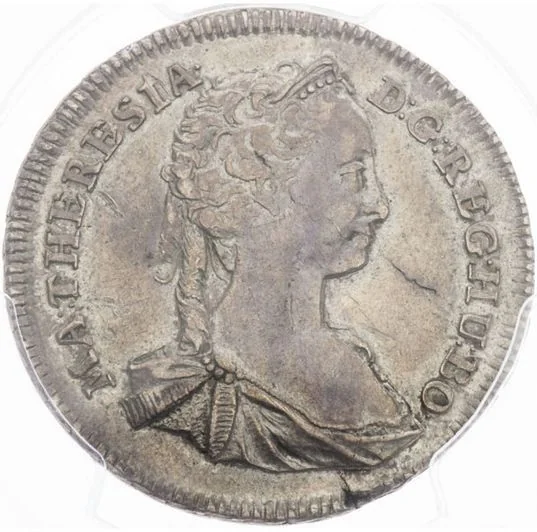
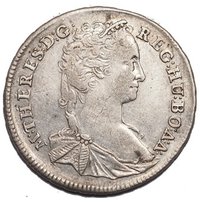
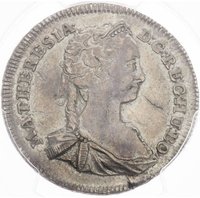
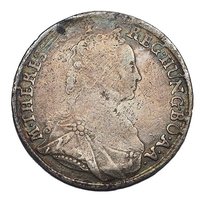
Obverse
Description:
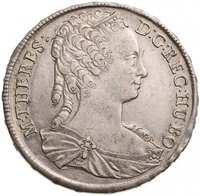
Young bust right. No square stamp.
Inscription:
MA · THERESIA · D · G · REG · HU · BO :
Script: Latin
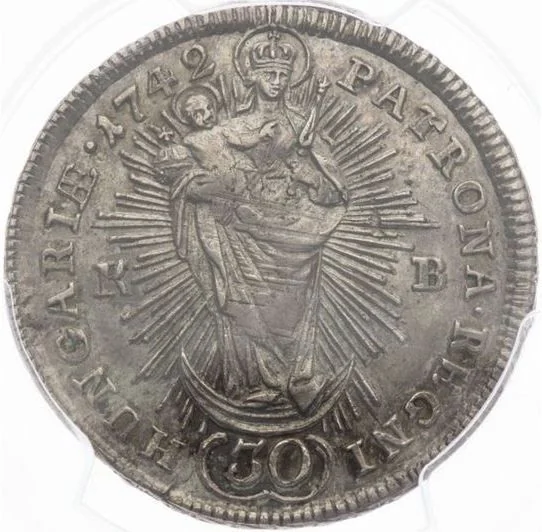
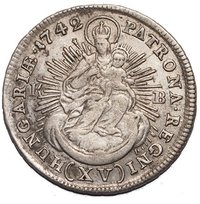
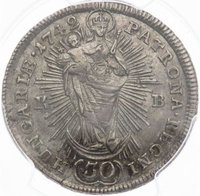
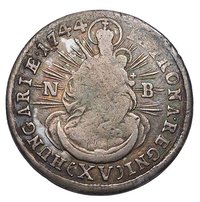
Reverse
Description:
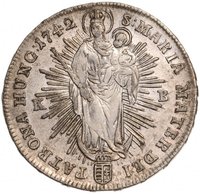
Madonna and child with crown, mintmark K B. Value 30 below, no square stamp.
Inscription:
PATRONA · REGNI · HUNGARIÆ · 1742
(30)
K B
(30)
K B
Script: Latin
Edge
Mints
| Name | Mark |
|---|---|
| Kremnica | K B |
Mintings
| Year | Mint Mark | Mintage | Quality | Collection |
|---|---|---|---|---|
| 1742 | K | — |
Historical background
In 1742, Hungary’s currency situation was deeply unstable and inflationary, a direct consequence of the financial demands of the ongoing War of the Austrian Succession (1740-1748). To fund the massive military expenditures required to defend Maria Theresa’s claim to the Habsburg throne, the Viennese court resorted to aggressive debasement of the coinage. The primary mint in Nagybánya (today Baia Mare, Romania) was ordered to drastically increase the production of silver coins, particularly the tallér (thaler) and poltura, by reducing their precious metal content. This resulted in a flood of lower-value coins into circulation, severely undermining public trust.
The monetary chaos was exacerbated by the simultaneous circulation of older, full-value coins alongside the new, debased issues. This led to Gresham’s Law in practice, where "bad money drives out good." Citizens and merchants hoarded the older, purer coins, removing them from the economy, while using the inferior new coins for transactions. The resulting disparity caused wild fluctuations in exchange rates between different coin types and made trade and taxation profoundly difficult. Regional differences further complicated the picture, with varying acceptance of the new currency across the kingdom.
This inflationary crisis placed a heavy burden on the Hungarian population, especially the peasantry and soldiers who were paid in the devalued currency. While providing short-term liquidity for the Habsburg war effort, the policy eroded the economic stability of the kingdom and fueled discontent among the estates. The currency debasement of the early 1740s stands as a clear example of how the fiscal-military needs of the central Habsburg state often precipitated economic distress within the lands of the Crown of St. Stephen.
The monetary chaos was exacerbated by the simultaneous circulation of older, full-value coins alongside the new, debased issues. This led to Gresham’s Law in practice, where "bad money drives out good." Citizens and merchants hoarded the older, purer coins, removing them from the economy, while using the inferior new coins for transactions. The resulting disparity caused wild fluctuations in exchange rates between different coin types and made trade and taxation profoundly difficult. Regional differences further complicated the picture, with varying acceptance of the new currency across the kingdom.
This inflationary crisis placed a heavy burden on the Hungarian population, especially the peasantry and soldiers who were paid in the devalued currency. While providing short-term liquidity for the Habsburg war effort, the policy eroded the economic stability of the kingdom and fueled discontent among the estates. The currency debasement of the early 1740s stands as a clear example of how the fiscal-military needs of the central Habsburg state often precipitated economic distress within the lands of the Crown of St. Stephen.
Series: 1742 Hungary circulation coins

✨ Legendary