

15 kreuzers – Hungary
Add to wishlist
Hungary
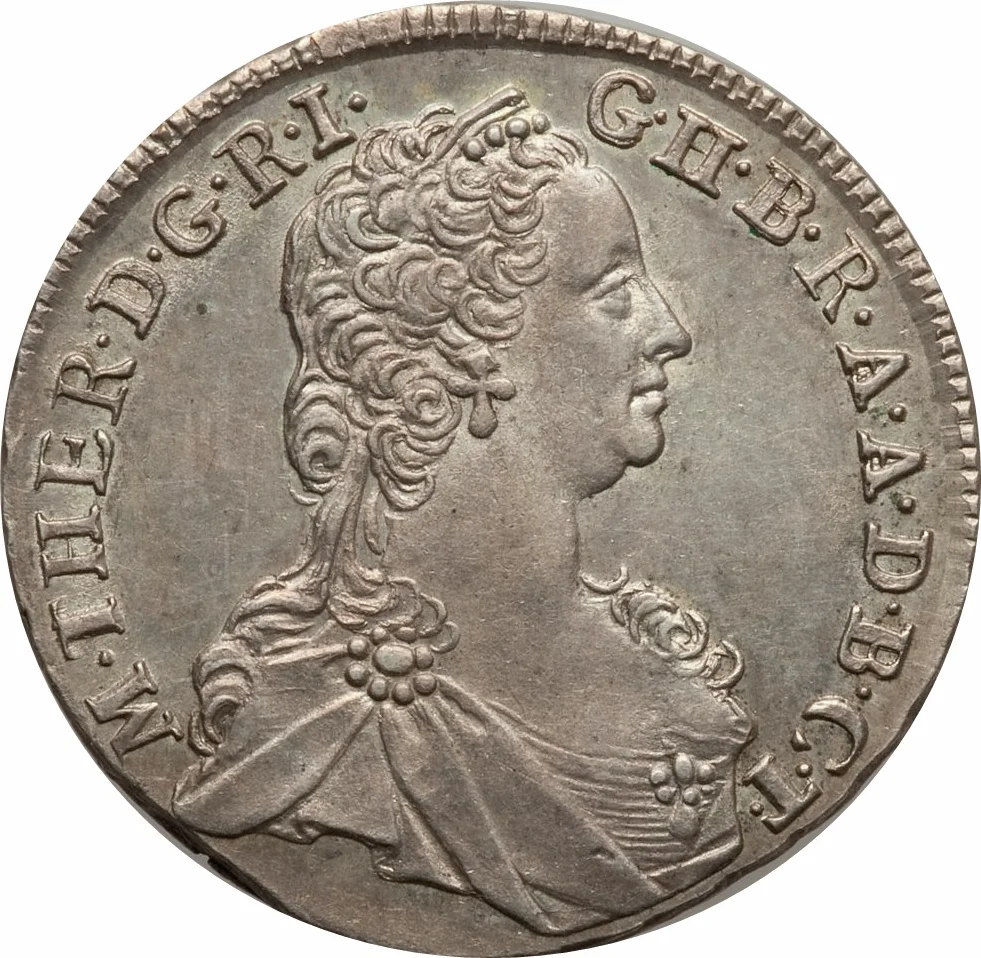
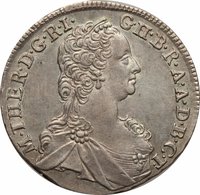
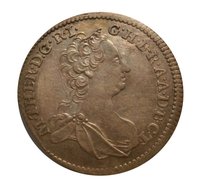
Obverse
Description:
Younger, large-bust figure facing right.
Inscription:
M · THER · D · G · R · I · G · H · B · R · A · A · D · B · C · T ·
Script: Latin
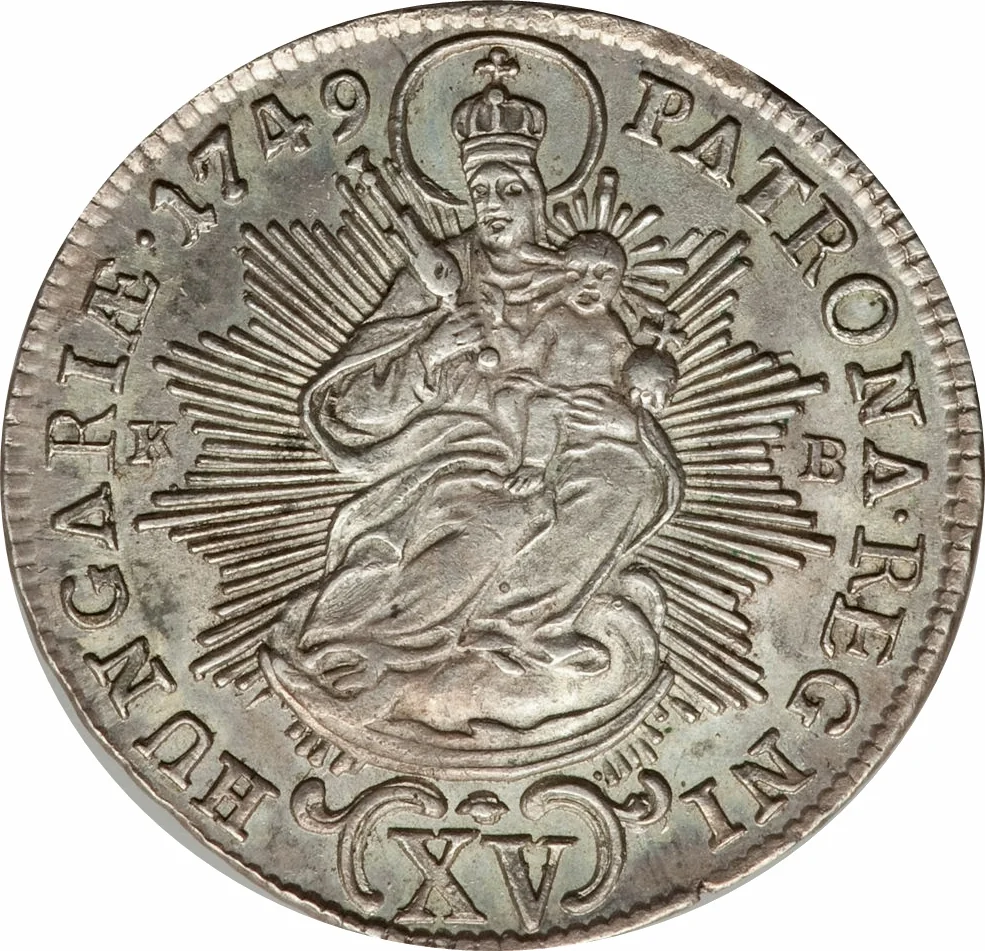
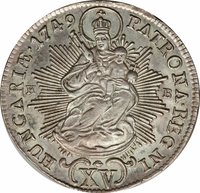
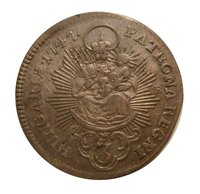
Reverse
Description:
Madonna and child seated on crescent; value XV in cartouche below divides mintmark.
Inscription:
PATRONA · REGNI HUNGARIÆ · 1749
KB
(XV)
KB
(XV)
Script: Latin
Edge
Mints
| Name | Mark |
|---|---|
| Kremnica | K B |
Mintings
| Year | Mint Mark | Mintage | Quality | Collection |
|---|---|---|---|---|
| 1747 | K | — | ||
| 1748 | K | — | ||
| 1749 | K | — | ||
| 1750 | K | — |
Historical background
In 1747, the currency situation in Hungary, then part of the Habsburg Monarchy, was characterized by profound instability and confusion stemming from decades of war and fiscal mismanagement. The primary unit was the Hungarian forint (gulden), but the monetary system was a chaotic mix of domestic and foreign coins circulating at varying values. The state's chronic budget deficits, largely due to the costly War of the Austrian Succession (1740-1748), were financed through the relentless debasement of coinage. The Habsburg state mints, including the key mint at Nagybánya (today Baia Mare, Romania), systematically reduced the silver content of coins, flooding the economy with depreciated currency and causing severe inflation.
This period was part of the broader era known as the "Mária Terézia Tallér" age, though the famous, widely-circulated Conventionsthaler was not standardized until 1753. In 1747, the immediate monetary reality was one of uncertainty, where the nominal value of a coin often far exceeded its intrinsic metal worth. This led to Gresham's Law in action, where "bad money drives out good"—older, full-value coins were hoarded or melted down, leaving only the debased currency in everyday circulation. This eroded public trust, disrupted commerce, and placed a heavy burden on the peasantry and those with fixed incomes.
The situation prompted urgent discussions about reform within the Habsburg court. Empress Maria Theresa and her advisors, recognizing that monetary chaos hindered economic recovery and state revenue, were actively working towards a comprehensive solution. The year 1747 thus represents a pivotal point of crisis and planning, immediately preceding the major monetary reforms that would begin in the 1750s. These reforms, culminating in the Conventionsmünzfuss of 1753, aimed to stabilize the currency by establishing a standard silver content and finally bringing order to the Habsburg monetary system, including Hungary.
This period was part of the broader era known as the "Mária Terézia Tallér" age, though the famous, widely-circulated Conventionsthaler was not standardized until 1753. In 1747, the immediate monetary reality was one of uncertainty, where the nominal value of a coin often far exceeded its intrinsic metal worth. This led to Gresham's Law in action, where "bad money drives out good"—older, full-value coins were hoarded or melted down, leaving only the debased currency in everyday circulation. This eroded public trust, disrupted commerce, and placed a heavy burden on the peasantry and those with fixed incomes.
The situation prompted urgent discussions about reform within the Habsburg court. Empress Maria Theresa and her advisors, recognizing that monetary chaos hindered economic recovery and state revenue, were actively working towards a comprehensive solution. The year 1747 thus represents a pivotal point of crisis and planning, immediately preceding the major monetary reforms that would begin in the 1750s. These reforms, culminating in the Conventionsmünzfuss of 1753, aimed to stabilize the currency by establishing a standard silver content and finally bringing order to the Habsburg monetary system, including Hungary.
Series: 1747 Hungary circulation coins

💎 Very Rare