

3 Kreuzer – Hungary
Hungary
Context
Years: 1766–1773
Issuer: Hungary 
Ruler: Maria Theresa
Currency:
(1754—1857)
Demonetized: Yes
Total mintage: 180,000
Material
References
KM: #Click to copy to clipboard380
Numista: #48203
Value
Bullion value: $4.74
Obverse
Description:
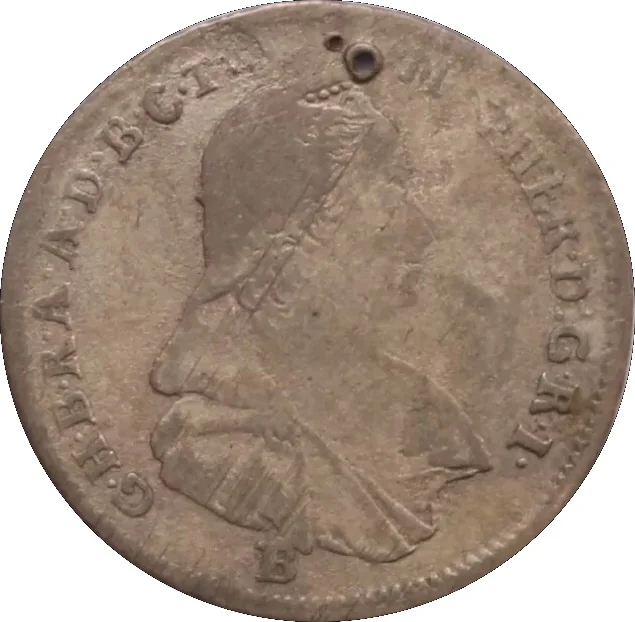
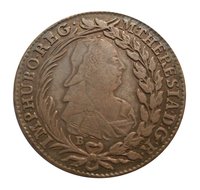
Aged portrait facing right with a corolla; legend above, mintmark B below.
Inscription:
M · THER · D · G · R · IMP · G · H · B · R · A · A · D · B · C · T ·
Script: Latin
Reverse
Description:
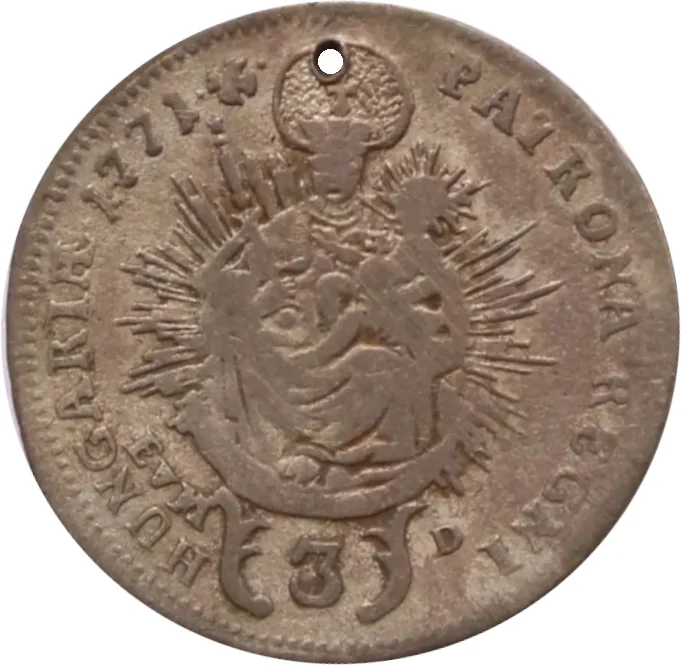
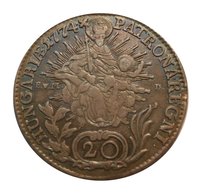
Madonna and child seated on crescent; no inner circle. Mint master's mark and value (3) in cartouche below.
Inscription:
PATRONA · REGNI · HUNGARIÆ · 1773 · X
Script: Latin
Edge
Plain
Mints
| Name | Mark |
|---|---|
| Kremnica | B |
Mintings
Historical background
In 1766, Hungary operated within the complex monetary system of the Habsburg Monarchy, which was characterized by a chronic shortage of specie and a reliance on paper money. The primary circulating currency was the Viennese gulden (forint), subdivided into 60 kreuzer. However, the state's finances were heavily dependent on the Bancozettel, paper banknotes issued by the Vienna City Bank since 1762 to fund Maria Theresa's wars, notably the Seven Years' War. While not legal tender in Hungary initially, these notes increasingly flowed into the kingdom, creating a de facto bimetallic system where their value against silver coinage began to fluctuate, sowing early seeds of distrust.
The Hungarian economy itself was still predominantly agrarian, with significant transactions often conducted in kind or using physical silver. The monarchy's persistent deficit and wartime expenditures led to a policy of extracting precious metals from Hungary, particularly from its productive mines, to be minted into coin in Vienna. This, coupled with the influx of less-trusted paper, resulted in a "currency drain," where good silver coins were hoarded or exported, leaving the domestic economy with a poorer mix of mediums. The disparity between the official face value of coins and their intrinsic metal value also encouraged smuggling and clipping.
Consequently, 1766 fell within a period of monetary instability and tension between the Hungarian estates and the Viennese court. The Hungarian Diet repeatedly petitioned for the establishment of a separate Hungarian mint to retain specie within the kingdom and to curb the circulation of Bancozettel, which they saw as an inflationary foreign imposition. While Maria Theresa resisted these demands to maintain centralized fiscal control, the pressures of 1766 were part of the ongoing struggle that would eventually lead to the founding of the Hungarian mint in Nagybánya in 1769, a minor concession in the larger battle over monetary sovereignty.
The Hungarian economy itself was still predominantly agrarian, with significant transactions often conducted in kind or using physical silver. The monarchy's persistent deficit and wartime expenditures led to a policy of extracting precious metals from Hungary, particularly from its productive mines, to be minted into coin in Vienna. This, coupled with the influx of less-trusted paper, resulted in a "currency drain," where good silver coins were hoarded or exported, leaving the domestic economy with a poorer mix of mediums. The disparity between the official face value of coins and their intrinsic metal value also encouraged smuggling and clipping.
Consequently, 1766 fell within a period of monetary instability and tension between the Hungarian estates and the Viennese court. The Hungarian Diet repeatedly petitioned for the establishment of a separate Hungarian mint to retain specie within the kingdom and to curb the circulation of Bancozettel, which they saw as an inflationary foreign imposition. While Maria Theresa resisted these demands to maintain centralized fiscal control, the pressures of 1766 were part of the ongoing struggle that would eventually lead to the founding of the Hungarian mint in Nagybánya in 1769, a minor concession in the larger battle over monetary sovereignty.

✨ Legendary