

1 Kreuzer – Hungary
Hungary

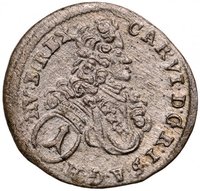
Obverse
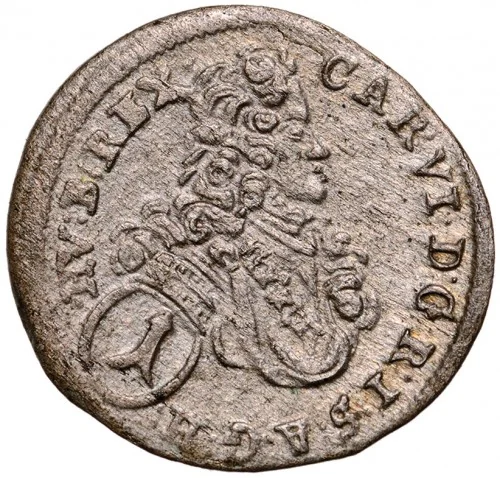
Description:
Laureate bust right, breaking legend. Denomination (1) at shoulder. No inner circle.
Inscription:
CAR · VI · D · G · R · I · S · A · G · H · (1) HV · B · REX ·
Script: Latin
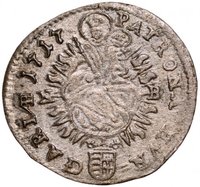
Reverse
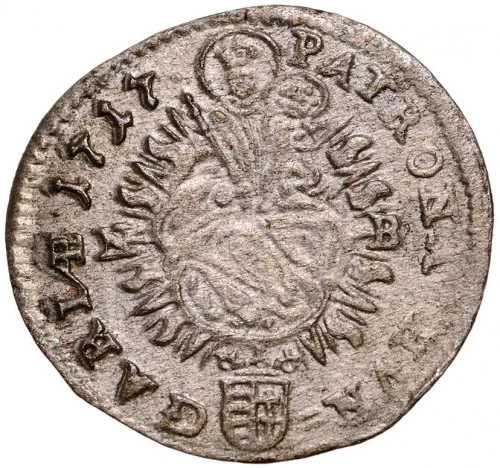
Description:
Crowned Madonna in mandorla on a crescent, holding child and scepter, breaking inner pearl circle. Double-crowned Hungarian shield below. Mintmark N B divided, date divided by crown.
Inscription:
PATRONA · HVNGARIÆ · 17 16
Script: Latin
Edge
Plain
Mints
| Name | Mark |
|---|---|
| Baia Mare | NB |
Mintings
| Year | Mint Mark | Mintage | Quality | Collection |
|---|---|---|---|---|
| 1716 | N | — | ||
| 1717 | N | — | ||
| 1718 | N | — | ||
| 1721 | N | — | ||
| 1723 | N | — | ||
| 1724 | N | — |
Historical background
In 1716, Hungary’s currency situation was complex and unstable, deeply shaped by its position within the Habsburg Monarchy following the expulsion of the Ottoman Turks. The primary circulating coins were silver thalers (known as Tallér) and smaller silver denars (Denár), but their value and metal content were in constant flux. The Habsburg government in Vienna, facing immense debts from the recent wars (including the War of Spanish Succession and the ongoing conflicts with the Ottomans), frequently resorted to debasement—reducing the precious metal content in coins to mint more money from the same silver reserves. This led to a severe loss of public trust in the official coinage.
Alongside official coins, a chaotic multitude of older, worn, and foreign coins circulated, particularly Turkish and Polish issues, each valued by weight and perceived metal content rather than face value. This created a confusing and inefficient monetary environment where trade often relied on barter. Furthermore, the Hungarian estates and the Vienna court were locked in a political struggle over monetary sovereignty, with Hungarians resisting Vienna’s control over their mines and minting rights. The famous copper mining region of Upper Hungary (modern Slovakia) was a key asset in this dispute, as copper was a crucial material for minting lower-denomination coins.
Consequently, Hungary suffered from chronic inflation, a shortage of reliable small change for everyday transactions, and a dual economy where official prices differed from market realities. The situation stifled economic recovery in the war-ravaged kingdom and created widespread discontent. It was within this context that Charles III would, in 1717, attempt a significant monetary reform to standardize the coinage, but its success would be limited by the ongoing fiscal pressures on the Habsburg state.
Alongside official coins, a chaotic multitude of older, worn, and foreign coins circulated, particularly Turkish and Polish issues, each valued by weight and perceived metal content rather than face value. This created a confusing and inefficient monetary environment where trade often relied on barter. Furthermore, the Hungarian estates and the Vienna court were locked in a political struggle over monetary sovereignty, with Hungarians resisting Vienna’s control over their mines and minting rights. The famous copper mining region of Upper Hungary (modern Slovakia) was a key asset in this dispute, as copper was a crucial material for minting lower-denomination coins.
Consequently, Hungary suffered from chronic inflation, a shortage of reliable small change for everyday transactions, and a dual economy where official prices differed from market realities. The situation stifled economic recovery in the war-ravaged kingdom and created widespread discontent. It was within this context that Charles III would, in 1717, attempt a significant monetary reform to standardize the coinage, but its success would be limited by the ongoing fiscal pressures on the Habsburg state.
Series: 1716 Hungary circulation coins

✨ Legendary