

10 Deniers – Hungary
Hungary
Context
Years: 1741–1745
Issuer: Hungary 
Ruler: Maria Theresa
Currency:
(1526—1754)
Demonetized: Yes
Total mintage: 23,248
References
KM: #Click to copy to clipboard326
Numista: #48171
Value
Bullion value: $6.64
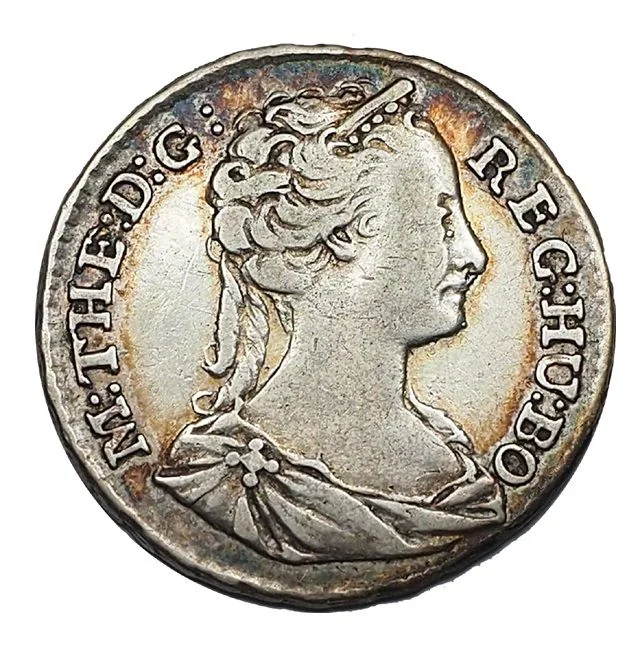
Obverse
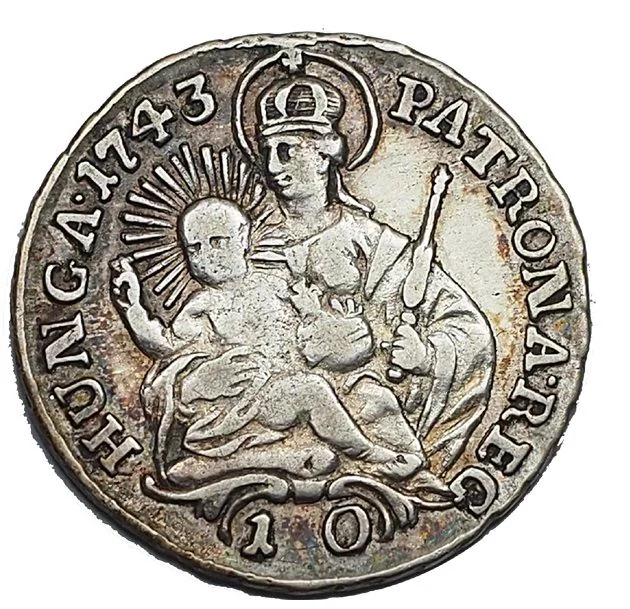
Reverse
Description:
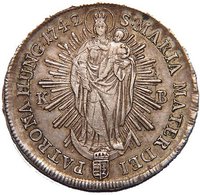
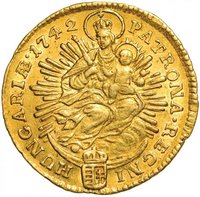
Madonna and child seated on a crescent; she holds a scepter, the child holds an orb. Value "10" in legend below divides mintmark.
Inscription:
PATRONA · REG · HUNGA · 1743
10
10
Script: Latin
Edge
Mints
| Name | Mark |
|---|---|
| Kremnica | — |
Mintings
| Year | Mint Mark | Mintage | Quality | Collection |
|---|---|---|---|---|
| 1741 | — | 9,409 | ||
| 1742 | — | 7,435 | ||
| 1743 | — | 6,404 | ||
| 1744 | — | — | ||
| 1745 | — | — |
Historical background
In 1741, Hungary’s currency situation was characterized by profound instability and debasement, a legacy of the Habsburg monarchy's relentless financial demands to fund the War of the Austrian Succession. The primary circulating coin was the silver tallér (thaler), but the backbone of everyday domestic trade was the small silver denár and its accounting unit, the Hungarian forint (gulden). However, the Vienna Court, facing immense military expenses, systematically reduced the precious metal content of minted coins to create seigniorage profit. This resulted in a flood of lightweight and debased coins, particularly the so-called kriegsgulden ("war gulden"), which eroded public trust and caused rampant inflation within the kingdom.
The monetary chaos was exacerbated by the circulation of multiple coin types at varying values. Alongside the debased domestic issues, older full-weight thalers, foreign coins (like Dutch ducats and Saxon thalers), and even physical silver bullion circulated simultaneously. This created a complex and inefficient system where exchange rates fluctuated wildly, and merchants preferred stable foreign currencies for significant transactions, further undermining the local currency. The Habsburg authorities' attempts to enforce artificial exchange rates by decree often failed, as market realities and widespread hoarding of good coin prevailed.
This deteriorating currency environment placed a severe burden on the Hungarian population, especially the peasantry and landholders who received fixed payments in increasingly worthless money. It also fueled political tension between the Hungarian estates and the Viennese court, as the arbitrary debasement was seen as a violation of the kingdom's fiscal rights. The monetary crisis of 1741 was, therefore, not merely an economic issue but a key point of contention in the ongoing struggle between Hungarian autonomy and centralized Habsburg absolutism during a period of existential conflict for the monarchy.
The monetary chaos was exacerbated by the circulation of multiple coin types at varying values. Alongside the debased domestic issues, older full-weight thalers, foreign coins (like Dutch ducats and Saxon thalers), and even physical silver bullion circulated simultaneously. This created a complex and inefficient system where exchange rates fluctuated wildly, and merchants preferred stable foreign currencies for significant transactions, further undermining the local currency. The Habsburg authorities' attempts to enforce artificial exchange rates by decree often failed, as market realities and widespread hoarding of good coin prevailed.
This deteriorating currency environment placed a severe burden on the Hungarian population, especially the peasantry and landholders who received fixed payments in increasingly worthless money. It also fueled political tension between the Hungarian estates and the Viennese court, as the arbitrary debasement was seen as a violation of the kingdom's fiscal rights. The monetary crisis of 1741 was, therefore, not merely an economic issue but a key point of contention in the ongoing struggle between Hungarian autonomy and centralized Habsburg absolutism during a period of existential conflict for the monarchy.

✨ Legendary