

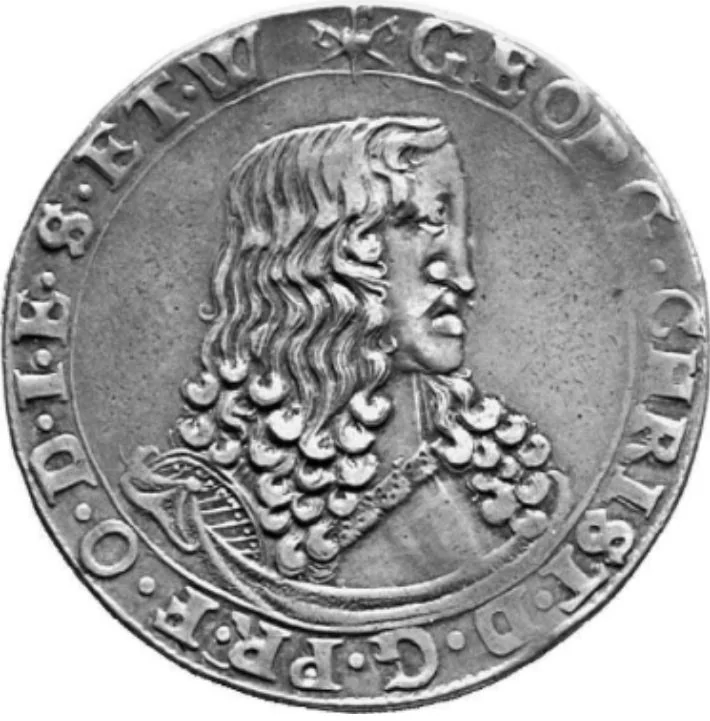
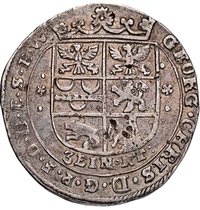
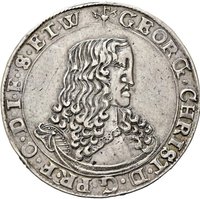
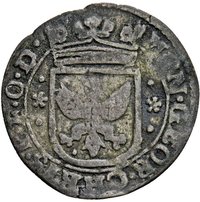
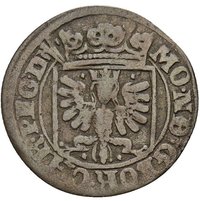
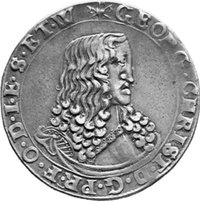
Obverse
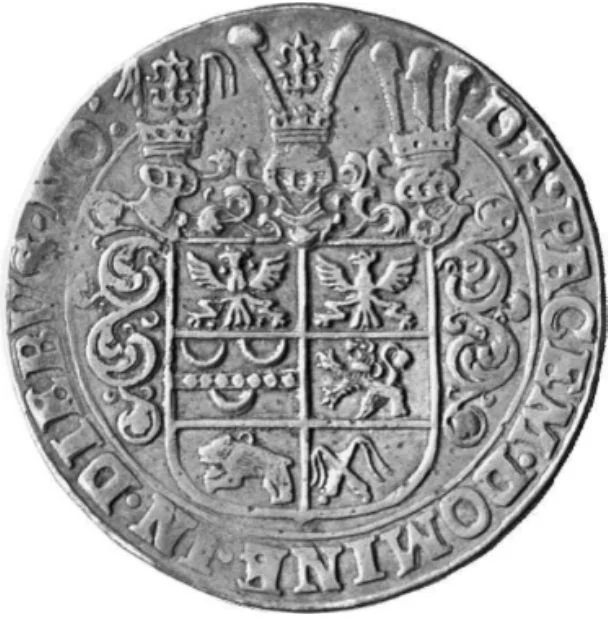
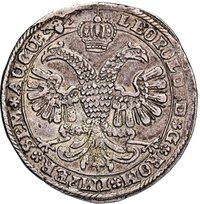
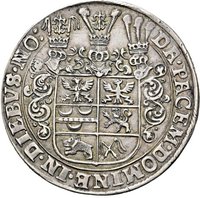
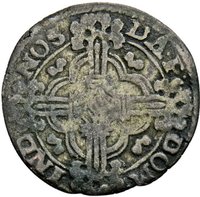
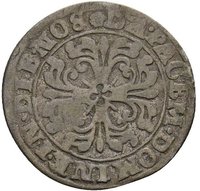
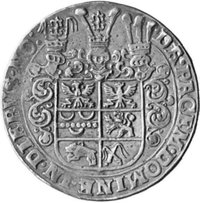
Reverse
Description:
Three helmets over a shield, encircled by text.
Inscription:
DA·PACEM·DOMINE·IN·DIEBVS·NO:
Script: Latin
Edge
Mintings
| Year | Mint Mark | Mintage | Quality | Collection |
|---|---|---|---|---|
| — | — | — |
Historical background
In 1660, the County of East Frisia was entangled in a complex and fragmented monetary landscape, a direct legacy of its political fragmentation and external economic pressures. While nominally a county within the Holy Roman Empire, the region was effectively a patchwork of semi-autonomous territories, with the Cirksena counts holding limited central authority. This political weakness prevented the establishment of a strong, unified currency. Consequently, a multitude of coins circulated simultaneously, including local issues from Emden and Aurich, but more dominantly, a flood of foreign coins from the Dutch Republic, the neighbouring Prince-Bishopric of Münster, and various northern German states.
The primary unit of account for large transactions and bookkeeping was the Reichsthaler, a theoretical silver standard defined by the Imperial Coinage ordinances. However, the actual circulating coins were lower-denomination pieces like Grote, Stüber, and Thalers of varying purity and weight. The prolific Dutch Leeuwendaalder (Lion Dollar) was particularly prevalent in trade, alongside a range of debased minor coins. This proliferation led to chronic problems: merchants and citizens had to constantly assess and haggle over the actual intrinsic silver value of each coin, facilitating fraud and hindering commerce.
This chaotic situation was exacerbated by the county’s economic alignment with the Dutch Republic. East Frisia’s main port, Emden, was a vital hub for trade with the Netherlands, ensuring a steady inflow of Dutch currency that further undermined local monetary sovereignty. The result was a system prone to instability, where the values of coins fluctuated based on metal content and foreign exchange rates rather than reliable local authority. This monetary disarray reflected the broader challenges of a small territory caught between the economic gravity of the Dutch Republic and the weak regulatory framework of the Empire.
The primary unit of account for large transactions and bookkeeping was the Reichsthaler, a theoretical silver standard defined by the Imperial Coinage ordinances. However, the actual circulating coins were lower-denomination pieces like Grote, Stüber, and Thalers of varying purity and weight. The prolific Dutch Leeuwendaalder (Lion Dollar) was particularly prevalent in trade, alongside a range of debased minor coins. This proliferation led to chronic problems: merchants and citizens had to constantly assess and haggle over the actual intrinsic silver value of each coin, facilitating fraud and hindering commerce.
This chaotic situation was exacerbated by the county’s economic alignment with the Dutch Republic. East Frisia’s main port, Emden, was a vital hub for trade with the Netherlands, ensuring a steady inflow of Dutch currency that further undermined local monetary sovereignty. The result was a system prone to instability, where the values of coins fluctuated based on metal content and foreign exchange rates rather than reliable local authority. This monetary disarray reflected the broader challenges of a small territory caught between the economic gravity of the Dutch Republic and the weak regulatory framework of the Empire.
✨ Legendary