

1 Duarius – Hungary
Hungary
Context

Material
Shape: Irregular round
Composition: Billon
References
KM: #Click to copy to clipboard304
Numista: #48118
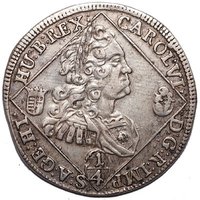
Obverse
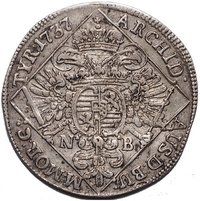
Reverse
Edge
Mintings
| Year | Mint Mark | Mintage | Quality | Collection |
|---|---|---|---|---|
| 1724 | — | — |
Historical background
In 1724, the currency situation in the Kingdom of Hungary, then part of the Habsburg Monarchy, was defined by a complex and unstable bimetallic system. The official currency was based on the silver forint (or florin) and the gold dukat, but the everyday reality was a chaotic circulation of both domestic and foreign coins. Alongside these, the lower-value copper krajcár was heavily used for small transactions. However, decades of war, particularly against the Ottoman Empire and the recent Rákóczi War of Independence (1703-1711), had severely depleted the treasury and led to repeated debasements. The government frequently issued coins with reduced precious metal content to fund its expenditures, eroding public trust and causing significant inflation.
This monetary disorder was exacerbated by the widespread circulation of underweight and counterfeit coins, as well as a flood of foreign specie, especially from German states and the Netherlands. The value of coins was not fixed by their face value but by their actual weight and metal content, leading to constant fluctuation and confusion in trade. Merchants and money-changers had to meticulously weigh and assess each coin, making commerce cumbersome. The Habsburg authorities in Vienna, who controlled Hungary's monetary policy, struggled to impose order, but their efforts were often ineffective or aimed more at extracting revenue for the central treasury than establishing a stable currency for the Hungarian economy.
Consequently, the year 1724 fell within a period of slow recovery and attempted reform following the Treaty of Szatmár (1711). While the worst of the wartime chaos had passed, the monetary system remained a significant obstacle to economic stability and growth. The lack of a reliable, uniform currency hindered both internal commerce and external trade, reflecting the broader challenges of integrating Hungary into the Habsburg fiscal and administrative system. True stabilization would only begin later, with the more comprehensive monetary reforms initiated under Empress Maria Theresa in the mid-18th century.
This monetary disorder was exacerbated by the widespread circulation of underweight and counterfeit coins, as well as a flood of foreign specie, especially from German states and the Netherlands. The value of coins was not fixed by their face value but by their actual weight and metal content, leading to constant fluctuation and confusion in trade. Merchants and money-changers had to meticulously weigh and assess each coin, making commerce cumbersome. The Habsburg authorities in Vienna, who controlled Hungary's monetary policy, struggled to impose order, but their efforts were often ineffective or aimed more at extracting revenue for the central treasury than establishing a stable currency for the Hungarian economy.
Consequently, the year 1724 fell within a period of slow recovery and attempted reform following the Treaty of Szatmár (1711). While the worst of the wartime chaos had passed, the monetary system remained a significant obstacle to economic stability and growth. The lack of a reliable, uniform currency hindered both internal commerce and external trade, reflecting the broader challenges of integrating Hungary into the Habsburg fiscal and administrative system. True stabilization would only begin later, with the more comprehensive monetary reforms initiated under Empress Maria Theresa in the mid-18th century.

✨ Legendary