

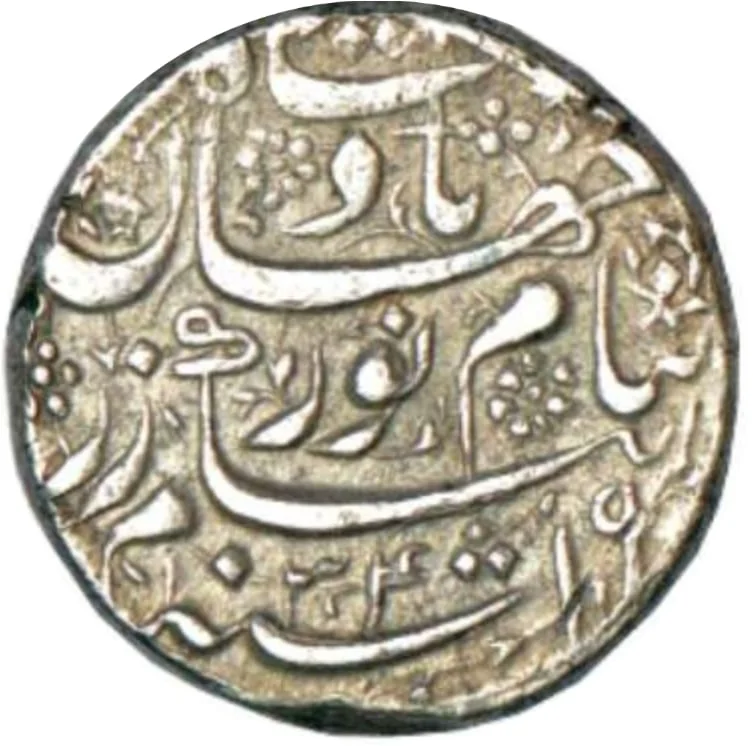
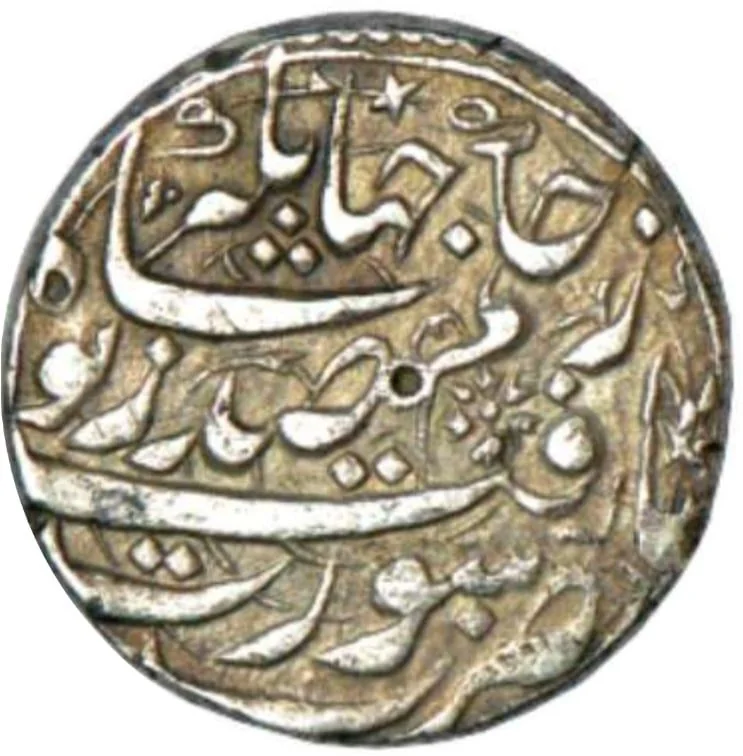
1 Rupee – Mughal Empire
India
Context
Year: 1626
Country: India 
Issuer: Mughal Empire
Ruler: Jahangir I
Currency:
(1540—1842)
Demonetized: Yes
Material
References
KM: #Click to copy to clipboard168.6
Numista: #480747
Value
Bullion value: $32.39
Mintings
| Year | Mint Mark | Mintage | Quality | Collection |
|---|---|---|---|---|
| 1626 | — | — |
Historical background
In 1626, the Mughal Empire's currency system was a well-established and sophisticated bimetallic structure, underpinning one of the world's largest and most prosperous economies. The system was centrally controlled from the imperial mints (dar-ul-zarb), with the silver rupee as the primary unit of account and most widely circulated coin for major transactions and revenue collection. It was complemented by the gold mohur, used for high-value transactions, hoarding, and ceremonial purposes, and a variety of copper dams or paisa, which formed the essential small change for everyday marketplace exchanges. The integrity of the currency, particularly the consistently high purity of the silver rupee, was a point of imperial pride and a key facilitator of both domestic trade and international commerce.
This monetary stability was directly tied to the empire's military and political fortunes, which in 1626 were in a state of flux. Emperor Jahangir's health was failing, and the court was embroiled in the intense succession struggles that would culminate in Shah Jahan's ascension two years later. Furthermore, the empire was engaged in costly military campaigns, notably the ongoing siege of the Kangra fort. These political and military pressures placed significant strain on the treasury, risking potential debasement of coinage to meet short-term fiscal needs, though the administrative machinery under figures like Asaf Khan largely maintained the standard.
Economically, the currency system faced the persistent challenge of a "silver drain." Vast quantities of American silver entered the Mughal economy via European trading companies—primarily the English East India Company and the Dutch VOC—in exchange for Indian textiles, spices, and other goods. While this influx boosted the money supply and economic activity, a significant portion of this silver was continuously absorbed into the empire's immense private hoards of wealth, taken out of circulation in the form of jewellery, bullion, and treasured coin. Thus, in 1626, the Mughal currency was robust in design and reputation, but its actual circulation and stability were subtly tested by the twin pressures of political uncertainty and the very metallic wealth that powered its global appeal.
This monetary stability was directly tied to the empire's military and political fortunes, which in 1626 were in a state of flux. Emperor Jahangir's health was failing, and the court was embroiled in the intense succession struggles that would culminate in Shah Jahan's ascension two years later. Furthermore, the empire was engaged in costly military campaigns, notably the ongoing siege of the Kangra fort. These political and military pressures placed significant strain on the treasury, risking potential debasement of coinage to meet short-term fiscal needs, though the administrative machinery under figures like Asaf Khan largely maintained the standard.
Economically, the currency system faced the persistent challenge of a "silver drain." Vast quantities of American silver entered the Mughal economy via European trading companies—primarily the English East India Company and the Dutch VOC—in exchange for Indian textiles, spices, and other goods. While this influx boosted the money supply and economic activity, a significant portion of this silver was continuously absorbed into the empire's immense private hoards of wealth, taken out of circulation in the form of jewellery, bullion, and treasured coin. Thus, in 1626, the Mughal currency was robust in design and reputation, but its actual circulation and stability were subtly tested by the twin pressures of political uncertainty and the very metallic wealth that powered its global appeal.
✨ Legendary