

Categories
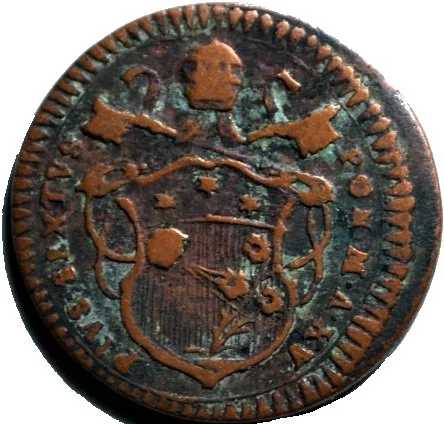
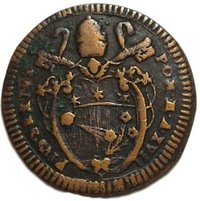
| Symbol> Crown |
| Symbols> Coat of Arms |
Mints
| Name | Mark |
|---|---|
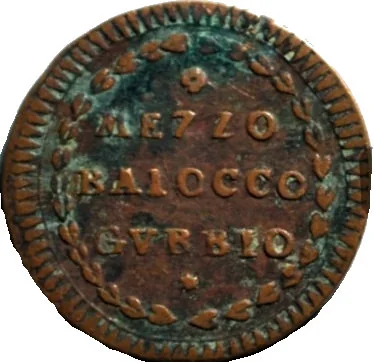
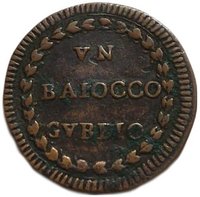
| Gubbio | — |
Mintings
| Year | Mint Mark | Mintage | Quality | Collection |
|---|---|---|---|---|
| 1789 | — | — | ||
| 1790 | — | — | ||
| 1791 | — | — | ||
| — | — | — |
Historical background
In 1789, the Italian city-state of Gubbio, like much of the Papal States under which it fell, operated within a complex and archaic monetary system. The official currency was the Papal scudo, divided into 100 baiocchi, each of which was further divided into 5 quattrini. However, this official system belied a reality of widespread confusion. In daily circulation, a plethora of older local and regional coins from neighbouring Italian states, alongside clipped and worn foreign specie (particularly Spanish and Austrian coins), circulated at fluctuating values set by periodic proclamation. This created a marketplace where exchange rates were uncertain and prone to local manipulation, hindering trade and commerce.
The system was further strained by the Papal government's chronic fiscal weaknesses. To raise revenue, the mint often debased the coinage—reducing the precious metal content—while insisting it maintain its face value. This practice, combined with the circulation of lightweight counterfeit coins, led to Gresham's Law in action: "bad money drives out good." Citizens hoarded older, purer coins, removing them from circulation and leaving the economy to function on a degraded and unreliable medium of exchange. For the artisans and farmers of Gubbio, this meant the real value of their earnings and savings was constantly eroding.
Thus, on the eve of the revolutionary ferment sweeping Europe, Gubbio's currency situation was one of tangible economic stress. The monetary chaos mirrored a broader administrative stagnation under Papal rule, creating a local economy of insecurity and frustration. While not a direct cause of rebellion, this unstable financial environment contributed to a deepening sense of grievance among Gubbio's populace, who faced daily the practical difficulties of an antiquated and exploitative system in a rapidly modernizing world.
The system was further strained by the Papal government's chronic fiscal weaknesses. To raise revenue, the mint often debased the coinage—reducing the precious metal content—while insisting it maintain its face value. This practice, combined with the circulation of lightweight counterfeit coins, led to Gresham's Law in action: "bad money drives out good." Citizens hoarded older, purer coins, removing them from circulation and leaving the economy to function on a degraded and unreliable medium of exchange. For the artisans and farmers of Gubbio, this meant the real value of their earnings and savings was constantly eroding.
Thus, on the eve of the revolutionary ferment sweeping Europe, Gubbio's currency situation was one of tangible economic stress. The monetary chaos mirrored a broader administrative stagnation under Papal rule, creating a local economy of insecurity and frustration. While not a direct cause of rebellion, this unstable financial environment contributed to a deepening sense of grievance among Gubbio's populace, who faced daily the practical difficulties of an antiquated and exploitative system in a rapidly modernizing world.
✨ Legendary