

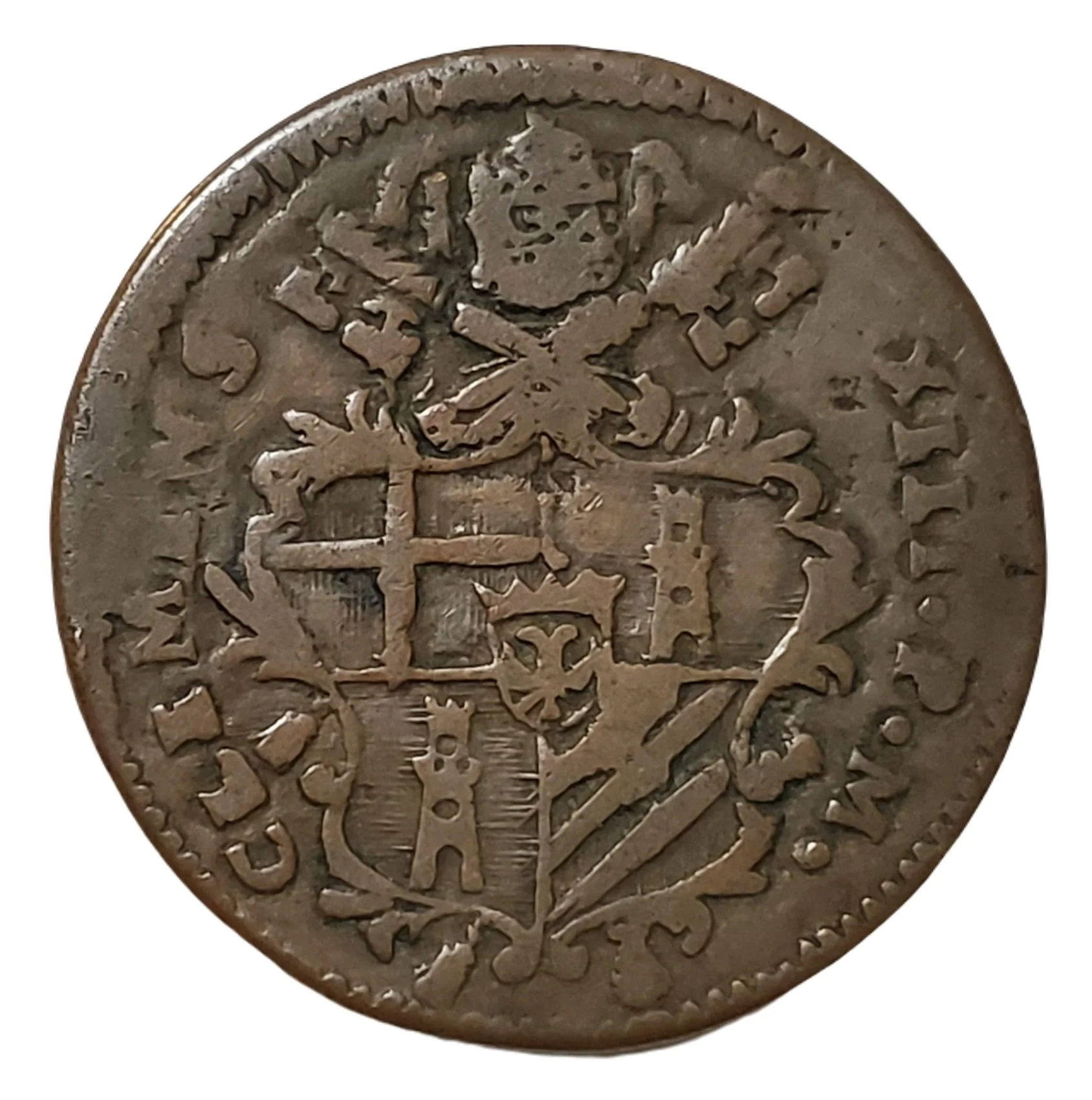
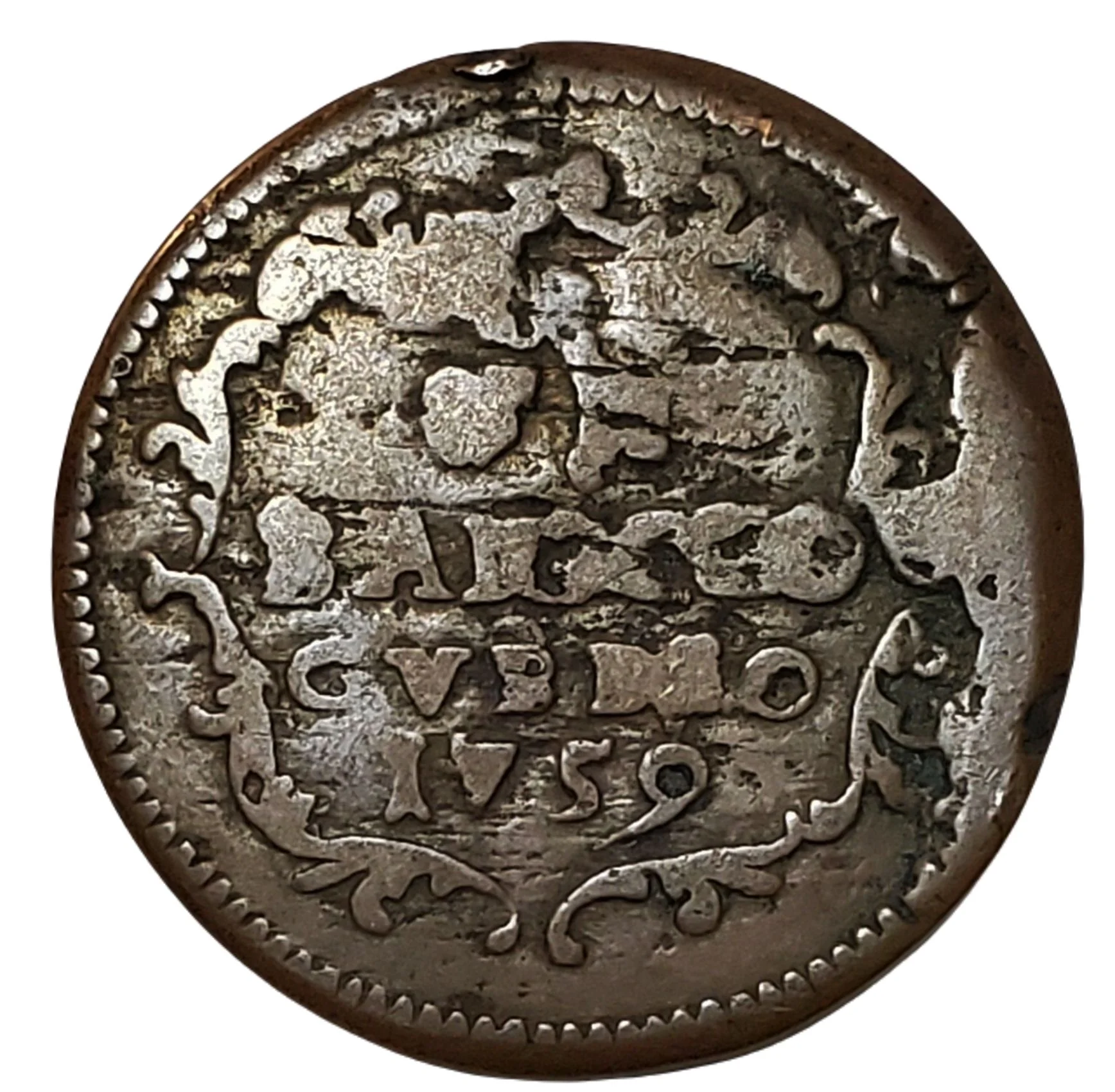
1 baiocco – Gubbio
Add to wishlist
Italy
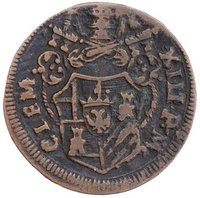
Obverse
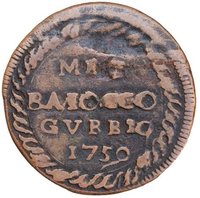
Reverse
Edge
Categories
| Symbol> Crown |
| Symbols> Coat of Arms |
Mints
| Name | Mark |
|---|---|
| Gubbio | — |
Mintings
| Year | Mint Mark | Mintage | Quality | Collection |
|---|---|---|---|---|
| 1759 | — | — |
Historical background
In 1759, the Italian city-state of Gubbio, like much of the Papal States under Pope Clement XIII, operated within a complex and fragmented monetary system. The official currency was the Papal scudo, divided into 100 baiochi or 10 paoli, which was minted in Rome. However, Gubbio's local economy, heavily based on agriculture, wool, and ceramics, also relied on a circulation of older, debased regional coinage and even foreign coins from neighboring states like the Duchy of Urbino and the Grand Duchy of Tuscany. This created constant challenges in exchange rates and valuation for merchants.
The year 1759 fell within a period of particular monetary strain. Decades of budgetary pressures on the Papal treasury had led to periodic debasements—reducing the precious metal content in coins while maintaining their face value. This practice, alongside the influx of lower-quality foreign coin, fueled inflation and eroded public trust. For the citizens of Gubbio, this meant price instability, uncertainty in savings, and the tedious necessity of weighing and assaying coins in even minor transactions to determine their true worth.
Consequently, daily commerce in Gubbio's markets was a practical negotiation not just of price, but of the very medium of exchange. A transaction might involve a mix of current Papal paoli, worn scudi from earlier pontificates, and local token coinage, with their values often disputed. This chaotic environment stifled larger-scale trade and investment, leaving the local economy somewhat insulated but also stagnant compared to more financially unified regions, a common frustration for its mercantile class.
The year 1759 fell within a period of particular monetary strain. Decades of budgetary pressures on the Papal treasury had led to periodic debasements—reducing the precious metal content in coins while maintaining their face value. This practice, alongside the influx of lower-quality foreign coin, fueled inflation and eroded public trust. For the citizens of Gubbio, this meant price instability, uncertainty in savings, and the tedious necessity of weighing and assaying coins in even minor transactions to determine their true worth.
Consequently, daily commerce in Gubbio's markets was a practical negotiation not just of price, but of the very medium of exchange. A transaction might involve a mix of current Papal paoli, worn scudi from earlier pontificates, and local token coinage, with their values often disputed. This chaotic environment stifled larger-scale trade and investment, leaving the local economy somewhat insulated but also stagnant compared to more financially unified regions, a common frustration for its mercantile class.
✨ Legendary