

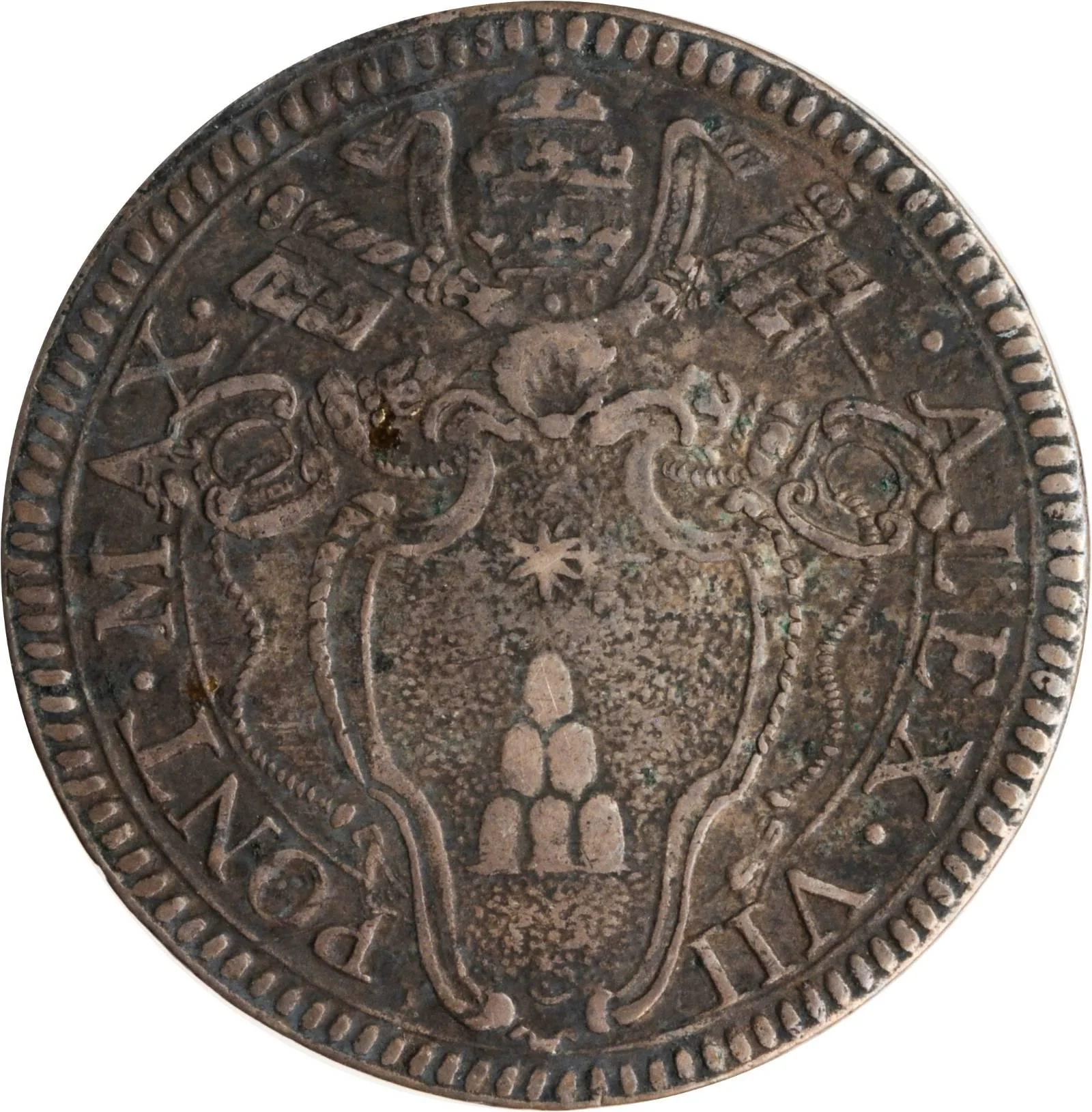
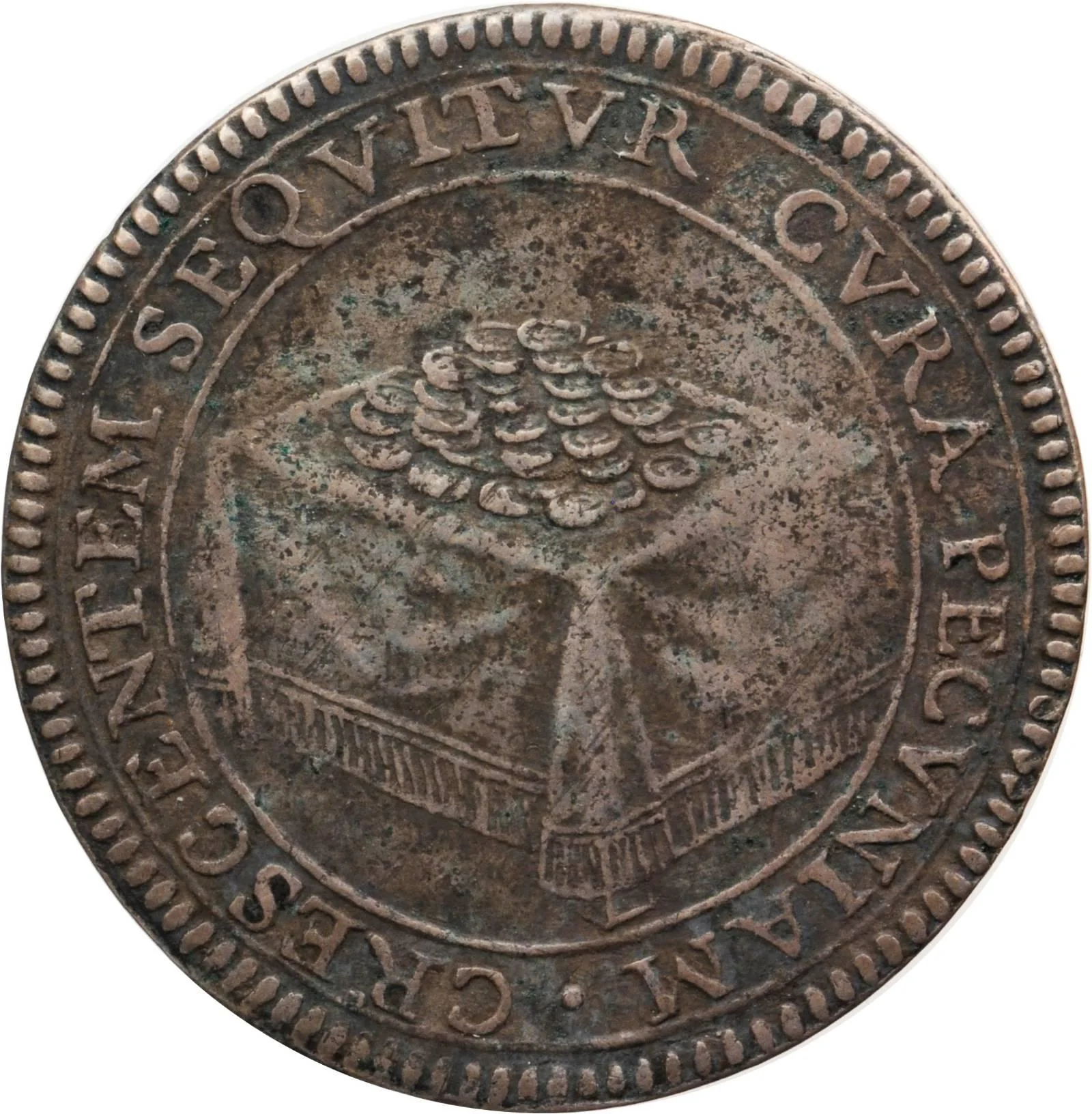
1 Giulio – Papal States
Vatican City
Context
Years: 1655–1667
Country: Vatican City 
Issuer: Papal States
Ruler: Alexander VII
Currency:
(1534—1835)
Demonetized: Yes
Material
Diameter: 26 mm
Weight: 3.1 g
Silver weight: 2.84 g
Shape: Round
Composition: 91.7% Silver
Standard: Gold tenth ounce
Magnetic: No
References
KM: #Click to copy to clipboard274
Numista: #117040
Value
Bullion value: $8.14
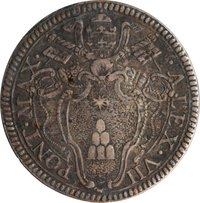
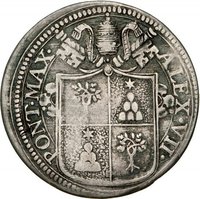
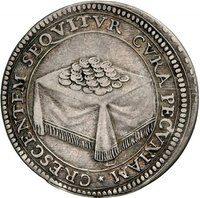
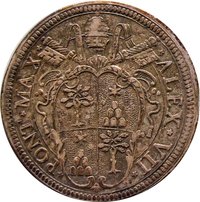
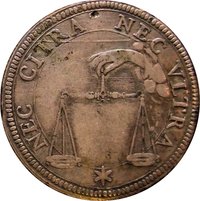
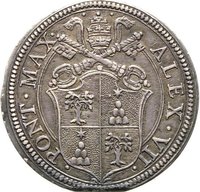
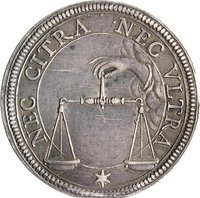
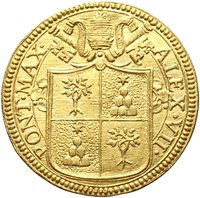
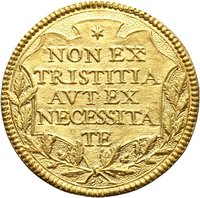
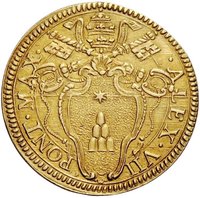
Obverse
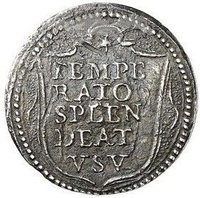
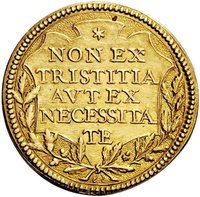
Reverse
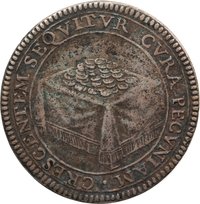
Edge
Categories
| Symbols> Coat of Arms |
| Currency> Coin depiction |
| Symbol> Crown |
| Symbol> Allegory |
Mintings
| Year | Mint Mark | Mintage | Quality | Collection |
|---|---|---|---|---|
| — | — | — |
Historical background
By 1655, the Papal States’ monetary system was a complex and fragmented reflection of its political and economic position. The state issued its own coinage, most notably the scudo (a gold coin) and the giulio (a silver coin), minted at the Zecca in Rome. However, the circulation was far from uniform. A multitude of foreign coins, particularly Spanish silver reales and gold escudos from Spain and Genoa, circulated widely due to the Papal States’ integration into broader Mediterranean trade networks. This created a de facto bimetallic system where the official exchange rates between gold and silver, set by papal decree, often struggled to keep pace with fluctuating market values, leading to periodic instability.
The financial pressures on the papal treasury were significant during this period. Pope Alexander VII, who ascended to the throne in April 1655, inherited the substantial debts of his predecessor, Innocent X, whose reign had been marked by nepotism and costly projects like the construction of the Palazzo Pamphilj. Furthermore, the ongoing Thirty Years' War (1618-1648) and continued regional conflicts had disrupted trade and strained finances across the Italian peninsula. To raise revenue, the Papal States frequently resorted to manipulating the currency, such as by debasing the silver content of subsidiary coins or issuing new coinage at altered standards, a practice that could provoke inflation and public distrust.
Consequently, the monetary situation was one of controlled precariousness. While the high-value gold scudo remained a relatively stable instrument for large-scale trade and church finance, the everyday currency used by the populace was subject to inconsistency and erosion of value. The Apostolic Chamber rigorously enforced laws against the export of precious metals and the clipping of coins, but enforcement was uneven. Thus, in 1655, the currency system was a key concern for the new pope, balancing the need for fiscal solvency with the necessity of maintaining a reliable medium of exchange for both the Roman economy and the vast, international financial operations of the Holy See.
The financial pressures on the papal treasury were significant during this period. Pope Alexander VII, who ascended to the throne in April 1655, inherited the substantial debts of his predecessor, Innocent X, whose reign had been marked by nepotism and costly projects like the construction of the Palazzo Pamphilj. Furthermore, the ongoing Thirty Years' War (1618-1648) and continued regional conflicts had disrupted trade and strained finances across the Italian peninsula. To raise revenue, the Papal States frequently resorted to manipulating the currency, such as by debasing the silver content of subsidiary coins or issuing new coinage at altered standards, a practice that could provoke inflation and public distrust.
Consequently, the monetary situation was one of controlled precariousness. While the high-value gold scudo remained a relatively stable instrument for large-scale trade and church finance, the everyday currency used by the populace was subject to inconsistency and erosion of value. The Apostolic Chamber rigorously enforced laws against the export of precious metals and the clipping of coins, but enforcement was uneven. Thus, in 1655, the currency system was a key concern for the new pope, balancing the need for fiscal solvency with the necessity of maintaining a reliable medium of exchange for both the Roman economy and the vast, international financial operations of the Holy See.
✨ Legendary