

4 Filippi – Retegno
Italy

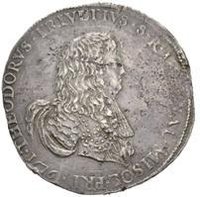
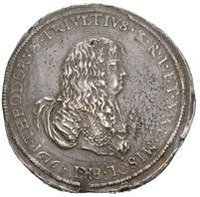
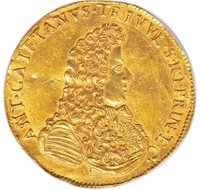
Obverse
Description:
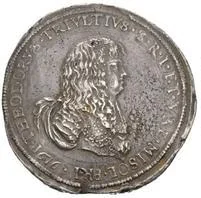
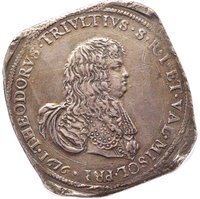
Antonio Teodoro bust right, date below.
Inscription:
THEODORVS·TRIVLTIVS·S·R·I·ET·VAL·MISOL·ERI
1676 ·
1676 ·
Script: Latin
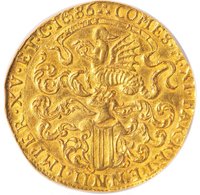
Reverse
Edge
Mints
| Name | Mark |
|---|---|
| Retegno | — |
Mintings
| Year | Mint Mark | Mintage | Quality | Collection |
|---|---|---|---|---|
| 1676 | — | — |
Historical background
In 1676, the Grand Duchy of Retegno was grappling with a severe and multifaceted currency crisis. The primary unit, the silver Retegnese Lira, had been significantly debased over decades to fund the state’s costly wars and lavish court expenditures. By the 1670s, the coinage in circulation contained far less precious metal than its face value proclaimed, leading to widespread distrust. This was compounded by the influx of counterfeit coins from neighboring principalities, further muddying the monetary system and causing merchants and peasants alike to hoard older, purer coins, which stifled everyday commerce.
The situation was exacerbated by a complex and archaic bimetallic system. The official ratio between silver and gold, set by the Ducal Mint, failed to reflect the soaring market value of gold following new imports from the colonies. This created a classic instance of Gresham’s Law, where "good" gold coins were exported or melted down, leaving the "bad" debased silver as the common circulating medium. Consequently, international traders, particularly the influential Merchant Guild of Porto Verde, began refusing payments in the official currency, demanding settlement in foreign gold écus or through barter, which crippled state revenue and foreign trade.
Facing civil unrest and a depleted treasury, Grand Duke Aleramo III convened a secret council of financiers in the spring of 1676. Their proposed solution, the Edict of San Marco, was a radical and risky plan to recall all circulating coinage, re-mint it at a true standard, and introduce a new gold-backed Scudo to restore confidence. However, the edict’s success hinged on a large loan from the very merchant bankers who had lost faith, creating a tense political standoff that would define Retegno’s economic and political future for years to come.
The situation was exacerbated by a complex and archaic bimetallic system. The official ratio between silver and gold, set by the Ducal Mint, failed to reflect the soaring market value of gold following new imports from the colonies. This created a classic instance of Gresham’s Law, where "good" gold coins were exported or melted down, leaving the "bad" debased silver as the common circulating medium. Consequently, international traders, particularly the influential Merchant Guild of Porto Verde, began refusing payments in the official currency, demanding settlement in foreign gold écus or through barter, which crippled state revenue and foreign trade.
Facing civil unrest and a depleted treasury, Grand Duke Aleramo III convened a secret council of financiers in the spring of 1676. Their proposed solution, the Edict of San Marco, was a radical and risky plan to recall all circulating coinage, re-mint it at a true standard, and introduce a new gold-backed Scudo to restore confidence. However, the edict’s success hinged on a large loan from the very merchant bankers who had lost faith, creating a tense political standoff that would define Retegno’s economic and political future for years to come.
✨ Legendary