

2 escudos – Peru
Add to wishlist
Peru
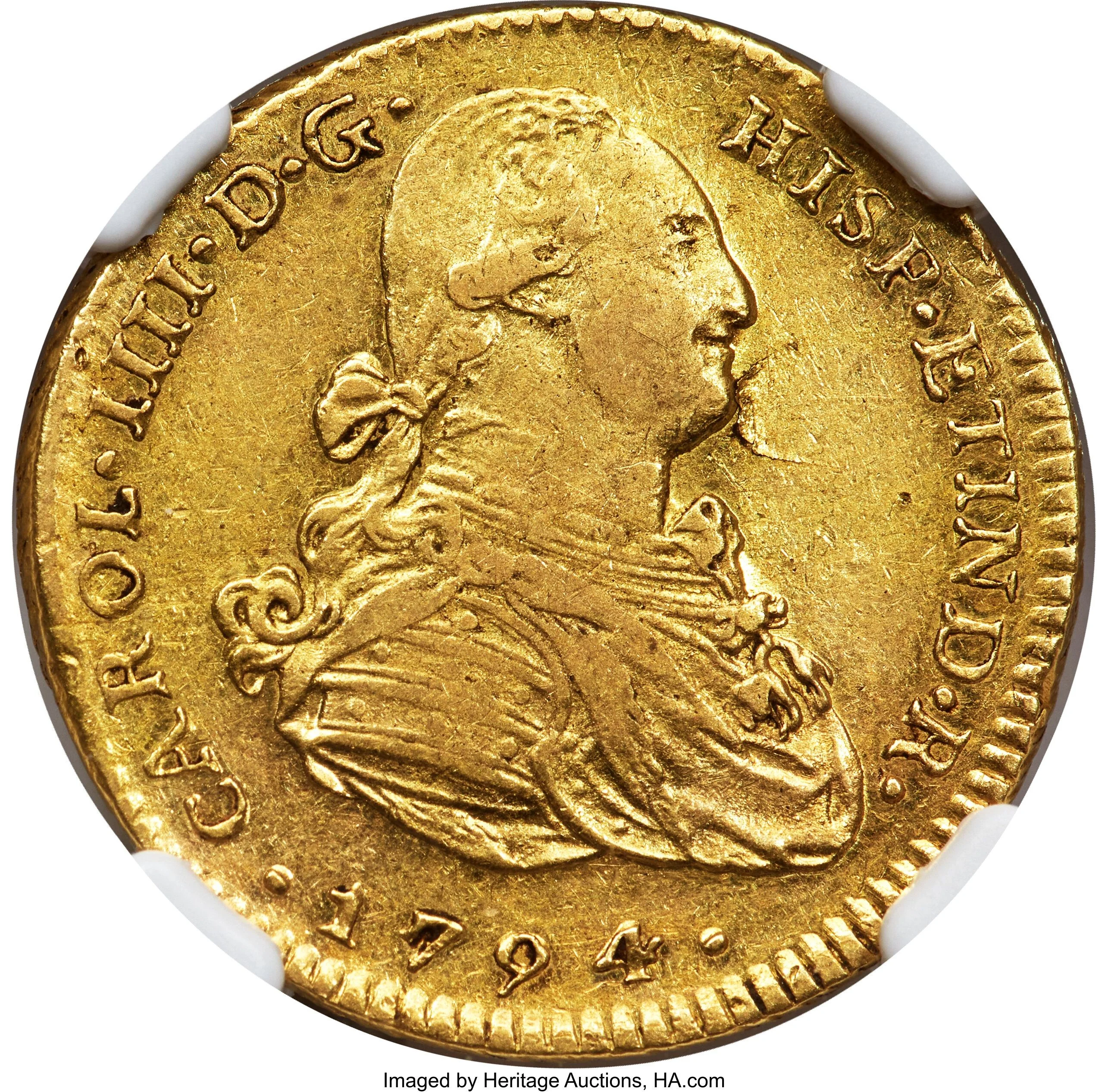
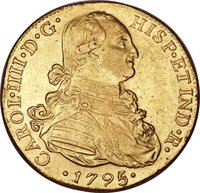
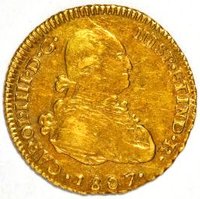
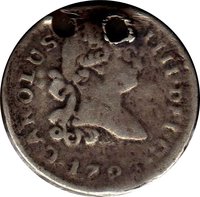
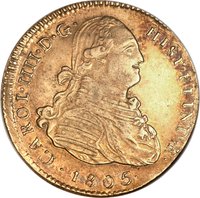
Obverse
Description:
Charles IV bust right, legend around, date below.
Inscription:
• CAROL • IIII • D • G • HISP • ET IND • R •
1794
1794
Script: Latin
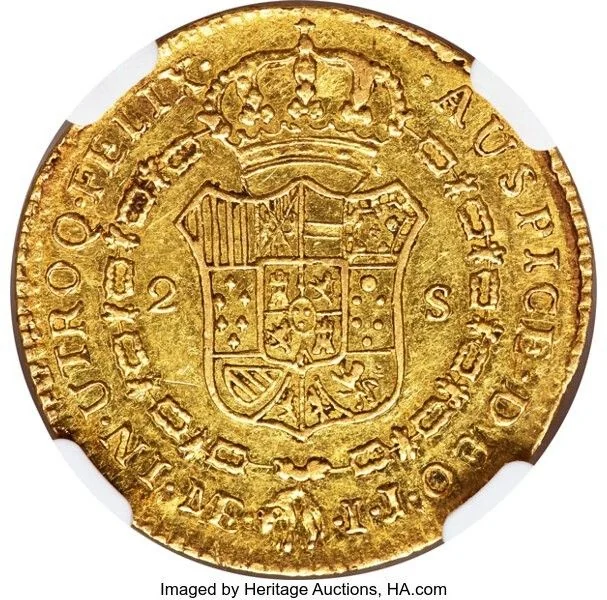
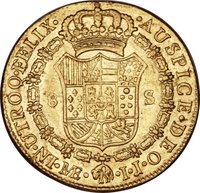
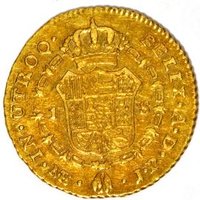
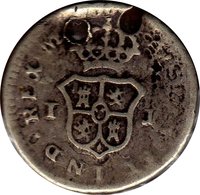
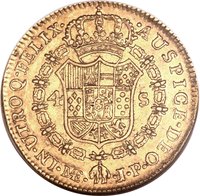
Reverse
Description:
Spanish coat of arms with legend, mintmark, and initials below.
Inscription:
• AUSPICE • DEO • • IN • UTROQ • FELIX •
(monogram) LIMAE • • I • J
(monogram) LIMAE • • I • J
Script: Latin
Edge
Categories
| Person> Monarch |
| Symbols> Coat of Arms |
Mints
| Name | Mark |
|---|---|
| Lima | ME |
Mintings
| Year | Mint Mark | Mintage | Quality | Collection |
|---|---|---|---|---|
| 1792 | IJ | — | ||
| 1793 | IJ | — | ||
| 1794 | IJ | — | ||
| 1795 | IJ | — | ||
| 1796 | IJ | — | ||
| 1797 | IJ | — | ||
| 1798 | IJ | — | ||
| 1799 | IJ | — | ||
| 1800 | IJ | — | ||
| 1802 | IJ | — | ||
| 1804 | JP | — | ||
| 1805 | JP | — | ||
| 1806 | JP | — | ||
| 1807 | JP | — | ||
| 1808 | JP | — |
Historical background
In 1792, the currency situation in the Viceroyalty of Peru was a complex system rooted in Spanish colonial policy, defined by the scarcity of small-denomination coinage and the overwhelming dominance of silver. The primary unit was the silver real, with eight reales equaling one peso, often called the "piece of eight." The famed silver mines, particularly the immense operation at Potosí (in modern Bolivia but then part of the Viceroyalty), produced vast quantities of silver bullion and crude, hand-hammered coins known as macuquinas. However, the minting of smaller coins—cuartillos (¼ real) and half reales—was insufficient for daily market transactions, creating a persistent problem for the local economy and common people.
This scarcity of fractional currency led to widespread use of informal substitutes. In markets across Peru, people relied on token currencies, such as señas (lead or copper tokens issued by merchants or haciendas), and even cacao beans in some regions. Furthermore, due to a severe shortage of official copper coinage authorized by the Crown, many transactions were forced to be conducted through barter or credit. The monetary system was also flooded with debased and clipped macuquinas, which circulated at varying discounts, causing confusion and inefficiency in commerce.
The year 1792 fell within a period of transition aimed at resolving these issues. A decade earlier, in 1780, the Bourbon reforms had established a new mint in Lima equipped with modern screw presses to produce milled-edge coins (monedas de cordoncillo), like the pillar dollars, which were harder to counterfeit. By 1792, these newer, more standardized coins were circulating alongside the older, irregular macuquinas, but the changeover was gradual. The fundamental tension remained: a colonial economy producing immense silver wealth for export to Spain was chronically under-monetized at the local level, hindering everyday trade and highlighting the administrative challenges of the Spanish Empire in its final decades in South America.
This scarcity of fractional currency led to widespread use of informal substitutes. In markets across Peru, people relied on token currencies, such as señas (lead or copper tokens issued by merchants or haciendas), and even cacao beans in some regions. Furthermore, due to a severe shortage of official copper coinage authorized by the Crown, many transactions were forced to be conducted through barter or credit. The monetary system was also flooded with debased and clipped macuquinas, which circulated at varying discounts, causing confusion and inefficiency in commerce.
The year 1792 fell within a period of transition aimed at resolving these issues. A decade earlier, in 1780, the Bourbon reforms had established a new mint in Lima equipped with modern screw presses to produce milled-edge coins (monedas de cordoncillo), like the pillar dollars, which were harder to counterfeit. By 1792, these newer, more standardized coins were circulating alongside the older, irregular macuquinas, but the changeover was gradual. The fundamental tension remained: a colonial economy producing immense silver wealth for export to Spain was chronically under-monetized at the local level, hindering everyday trade and highlighting the administrative challenges of the Spanish Empire in its final decades in South America.
Series: 1792 Peru circulation coins
✨ Legendary