

1 Escudo – Peru
Peru

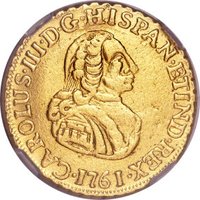
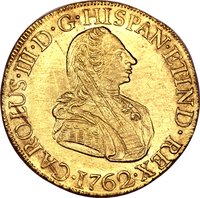
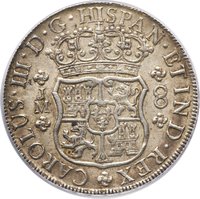
Obverse
Description:
Bust of Charles III, right.
Inscription:
CAROLUS III D G HISPAN ET IND RI X 1762
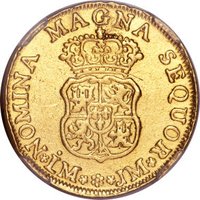
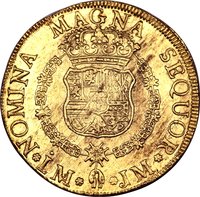
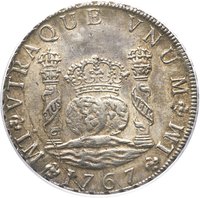
Reverse
Description:
Heraldic emblem.
Inscription:
NOMINA MAGNA SEQUOR
JM IM
JM IM
Edge
Mintings
| Year | Mint Mark | Mintage | Quality | Collection |
|---|---|---|---|---|
| 1761 | JM | — | ||
| 1762 | JM | — |
Historical background
In 1761, the currency situation in the Viceroyalty of Peru was characterized by severe scarcity and administrative confusion, a legacy of Spain's rigid mercantilist policies and local economic constraints. The primary unit was the silver peso, often called "peso fuerte" or "piece of eight," minted from the abundant silver extracted from mines like Potosí (in modern Bolivia) and Cerro de Pasco. However, the Spanish Crown's mandate that all precious metals be shipped to the royal mint in Lima, and then often on to Spain, chronically drained circulating coinage from the local economy. This created a persistent shortage of physical money for everyday trade, forcing many regions to rely on barter or informal credit.
The problem was exacerbated by a dual system of coinage: officially minted, high-quality "milled" coins and crudely produced "macuquina" (cut or chopped) coins. Macuquina, often irregularly cut from silver bars, was the most common circulating medium in provincial areas but was prone to clipping and debasement, leading to distrust and complex exchange rates. Furthermore, the Spanish monetary system of reales and maravedíes was cumbersome, with 8 reales to a peso and 34 maravedíes to a real, complicating transactions in an economy with widespread illiteracy.
Attempts at reform were ongoing but faced significant hurdles. The Bourbon reforms were beginning to take hold, aiming to centralize and modernize administration, including the mint. However, in 1761, the system was still strained by contraband trade, the fiscal demands of the Crown, and the vast, difficult geography of the viceroyalty, which hindered distribution. The situation would eventually lead to more decisive actions, such as the establishment of new mints in Santiago (Chile) and Potosí later in the decade, but in this period, Peru's economy operated under a strained and inefficient monetary regime that stifled internal commerce.
The problem was exacerbated by a dual system of coinage: officially minted, high-quality "milled" coins and crudely produced "macuquina" (cut or chopped) coins. Macuquina, often irregularly cut from silver bars, was the most common circulating medium in provincial areas but was prone to clipping and debasement, leading to distrust and complex exchange rates. Furthermore, the Spanish monetary system of reales and maravedíes was cumbersome, with 8 reales to a peso and 34 maravedíes to a real, complicating transactions in an economy with widespread illiteracy.
Attempts at reform were ongoing but faced significant hurdles. The Bourbon reforms were beginning to take hold, aiming to centralize and modernize administration, including the mint. However, in 1761, the system was still strained by contraband trade, the fiscal demands of the Crown, and the vast, difficult geography of the viceroyalty, which hindered distribution. The situation would eventually lead to more decisive actions, such as the establishment of new mints in Santiago (Chile) and Potosí later in the decade, but in this period, Peru's economy operated under a strained and inefficient monetary regime that stifled internal commerce.

✨ Legendary