

1 Rupee – Mughal Empire
Standard circulation coins
Series: Type 436
India
Context
Years: 1719–1748
Country: India 
Issuer: Mughal Empire
Ruler: Muhammad Shah
Currency:
(1540—1842)
Demonetized: Yes
Material
Diameter: 24 mm
Weight: 11.43 g
Silver weight: 11.43 g
Thickness: 2.5 mm
Shape: Irregular round
Composition: Silver
Magnetic: No
Technique: Hammered
References
KM: #Click to copy to clipboard436.34
Numista: #479809
Value
Bullion value: $32.49
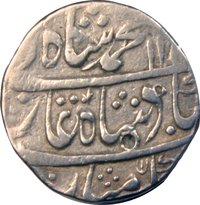
Obverse
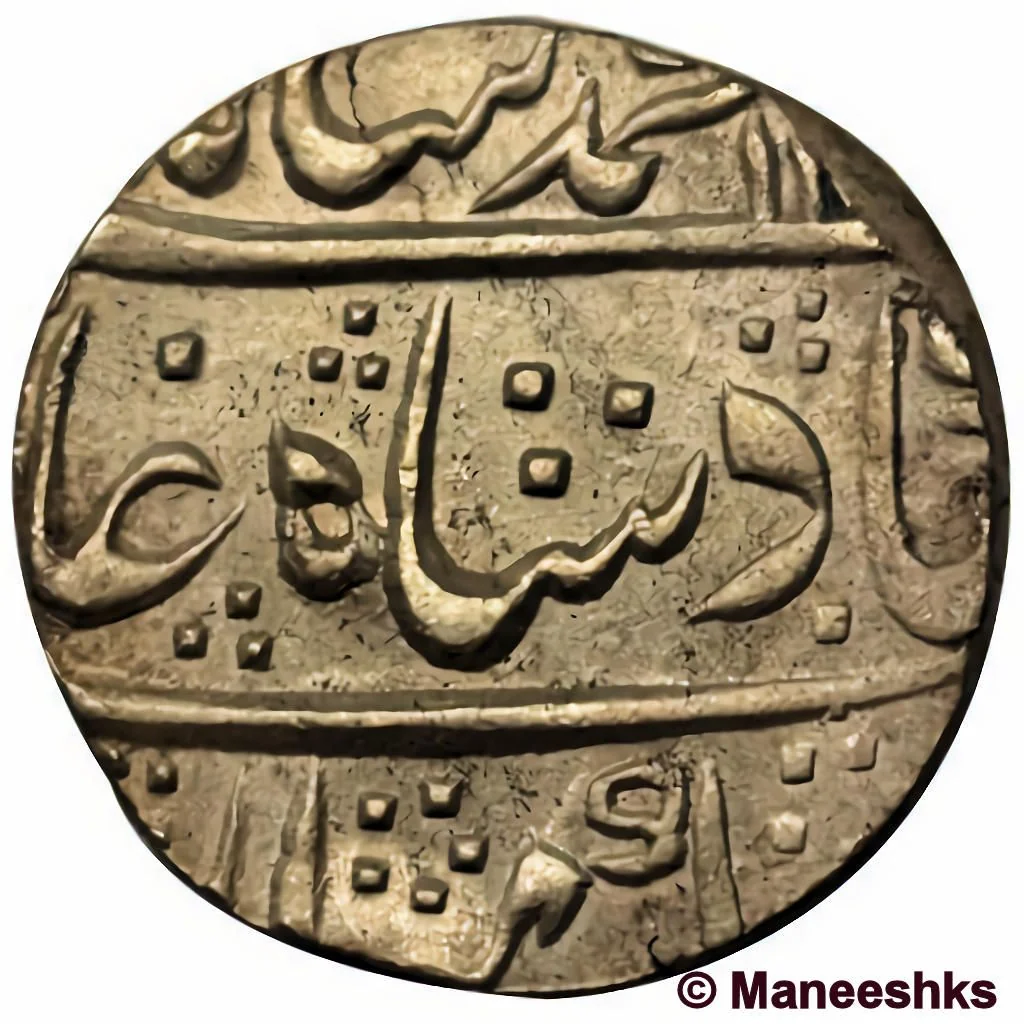
Description:
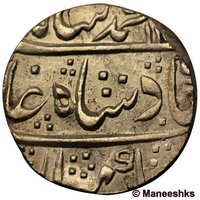
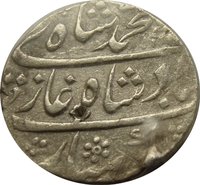
Sikka Mubarak: Badshah Ghazi Muhammad Shah, [AH Year]
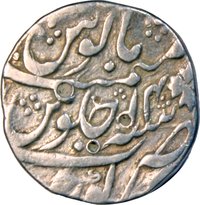
Reverse
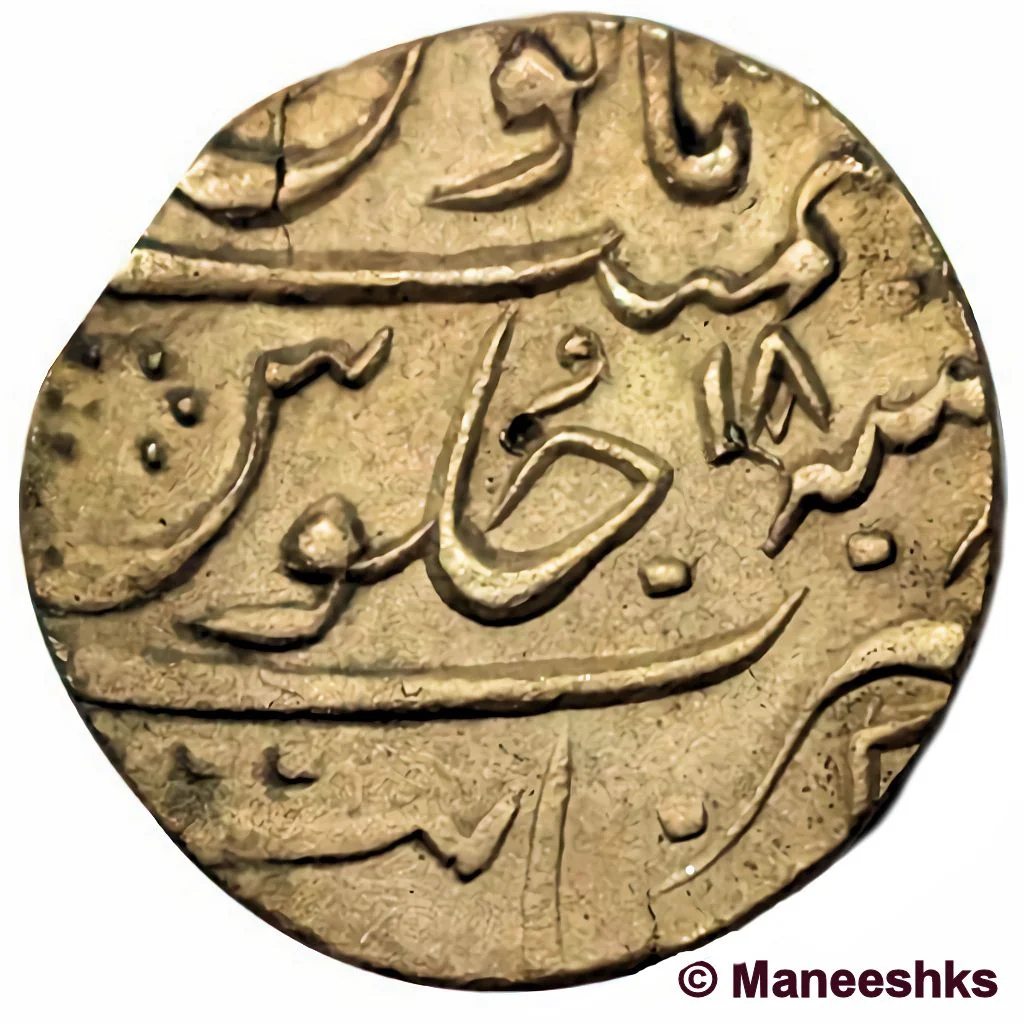
Description:
Bottom: Mint name
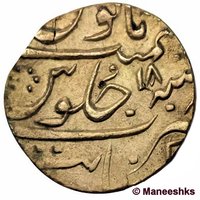
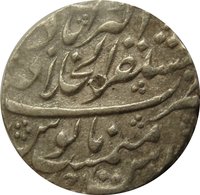
Inscription: zarb sana manus memanat
Alternate: sana 11 julus, zarb Kanbayat Regnal Year
Inscription: zarb sana manus memanat
Alternate: sana 11 julus, zarb Kanbayat Regnal Year
Edge
Plain
Mintings
| Year | Mint Mark | Mintage | Quality | Collection |
|---|---|---|---|---|
| 1719 | — | — | ||
| 1720 | — | — | ||
| 1721 | 113x | — | ||
| 1721 | — | — | ||
| 1723 | — | — | ||
| 1725 | — | — | ||
| 1726 | — | — | ||
| 1728 | 11xx | — | ||
| 1729 | 11xx | — | ||
| 1730 | 11xx | — | ||
| 1730 | — | — | ||
| 1731 | — | — | ||
| 1732 | — | — | ||
| 1734 | 11xx | — | ||
| 1735 | 11xx | — | ||
| 1738 | 11xx | — | ||
| 1742 | — | — | ||
| 1743 | 115x | — | ||
| 1746 | — | — | ||
| 1747 | 11xx | — | ||
| 1748 | — | — |
Historical background
By 1719, the Mughal Empire's currency system, once a pillar of its economic strength, was under severe strain, reflecting the broader political decay following Emperor Aurangzeb's death in 1707. The standard silver rupee, notably the sicca rupee minted in current-year design, remained the primary unit of account and trade. However, the central authority's control over the imperial mints (sikkas) was rapidly eroding. Provincial governors and rebellious local rulers began issuing their own coins, leading to a proliferation of currencies of varying weight and purity. This fragmentation undermined the uniform monetary system that had previously facilitated seamless trade across the empire.
The period was marked by a critical shortage of silver, the lifeblood of the Mughal coinage. Continuous warfare, both succession conflicts at the centre and campaigns against the Marathas and others, drained the imperial treasury. The outflow of silver to pay for imports and the disruption of trade routes reduced the bullion available for minting. Consequently, the purity and weight of coins from even official mints often declined, while the circulation of older, full-weight rupees became more selective. The gold mohur, primarily a prestige and hoarding coin, saw limited transactional use, and copper dam coinage for small-scale trade was increasingly debased and localized.
This monetary instability directly fueled economic distress. The uncertainty over coin values hampered revenue collection (jama) and state expenditure, weakening the empire's fiscal foundation. Merchants and bankers (sarrafs), while gaining influence as arbiters of exchange rates, faced increased risk. In essence, the currency chaos of 1719 was both a symptom and a cause of the empire's disintegration, as control over money—a key symbol of sovereignty—slipped from the emperor's hands into those of regional powers, accelerating the Mughal Empire's transition from a centralized state to a patchwork of contested territories.
The period was marked by a critical shortage of silver, the lifeblood of the Mughal coinage. Continuous warfare, both succession conflicts at the centre and campaigns against the Marathas and others, drained the imperial treasury. The outflow of silver to pay for imports and the disruption of trade routes reduced the bullion available for minting. Consequently, the purity and weight of coins from even official mints often declined, while the circulation of older, full-weight rupees became more selective. The gold mohur, primarily a prestige and hoarding coin, saw limited transactional use, and copper dam coinage for small-scale trade was increasingly debased and localized.
This monetary instability directly fueled economic distress. The uncertainty over coin values hampered revenue collection (jama) and state expenditure, weakening the empire's fiscal foundation. Merchants and bankers (sarrafs), while gaining influence as arbiters of exchange rates, faced increased risk. In essence, the currency chaos of 1719 was both a symptom and a cause of the empire's disintegration, as control over money—a key symbol of sovereignty—slipped from the emperor's hands into those of regional powers, accelerating the Mughal Empire's transition from a centralized state to a patchwork of contested territories.
✨ Legendary