

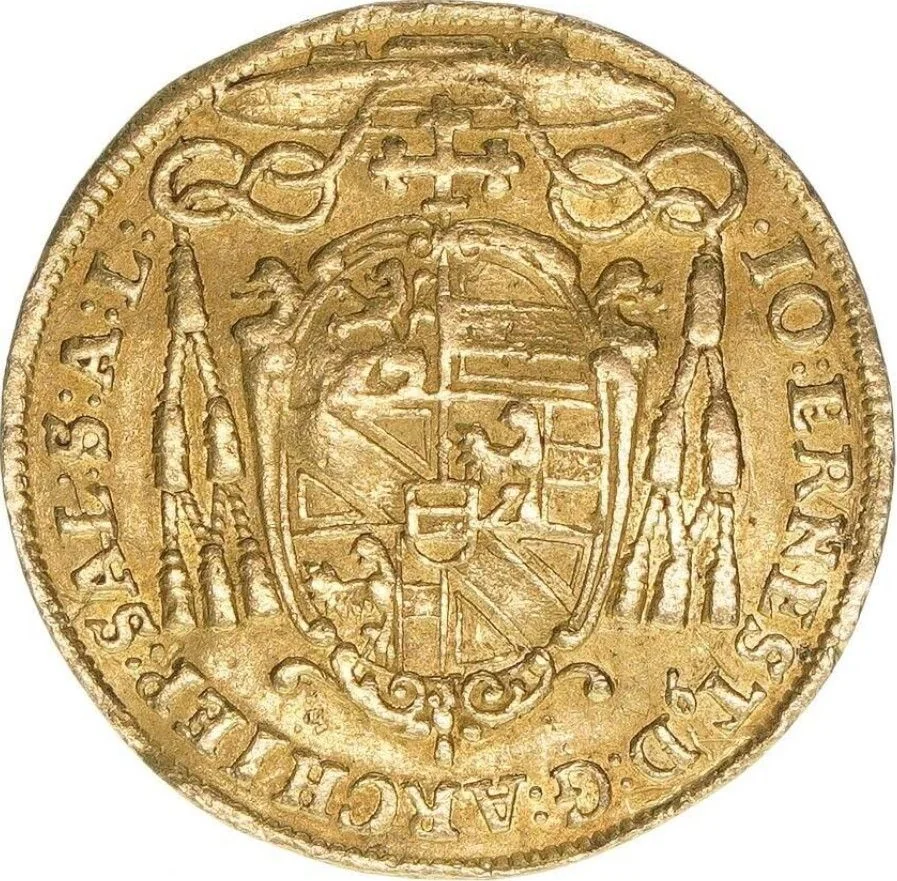
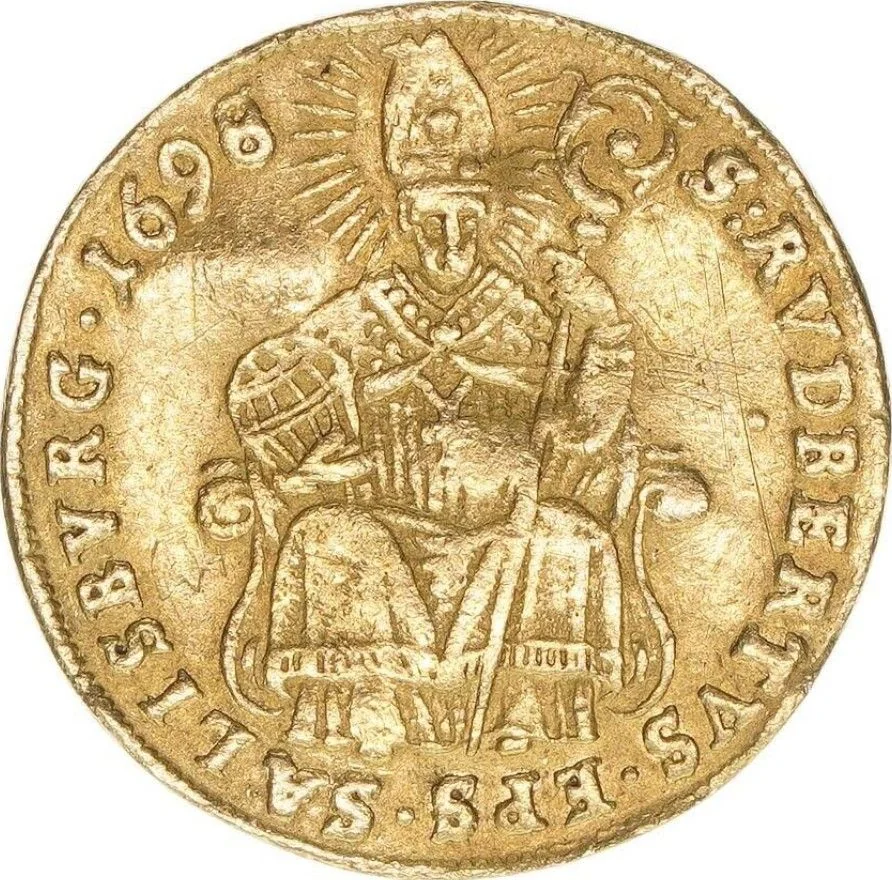
Obverse
Description:
St. Rupert seated, facing left, holding a crozier and salt box. Sun rays emanate from his head.
Inscription:
S RVDBERTVS EPS SALISBVRG 1696
Script: Latin
Reverse
Description:
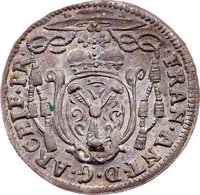
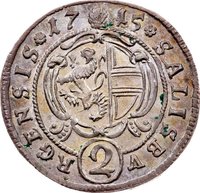
Oval shield with cross, cardinal's hat, and tasseled cords.
Inscription:
IO ERNEST D G ARCHIEP SAL S A L
Script: Latin
Edge
Mintings
| Year | Mint Mark | Mintage | Quality | Collection |
|---|---|---|---|---|
| 1696 | — | — | ||
| 1697 | — | — | ||
| 1698 | — | — |
Historical background
In 1696, the Prince-Archbishopric of Salzburg operated within the complex and fragmented monetary landscape of the Holy Roman Empire. The right of coinage (Münzrecht) was a cherished sovereign privilege, and Salzburg’s rulers had minted their own currency for centuries. However, the value and stability of these coins were not determined in isolation. Salzburg was part of the Bavarian monetary circle (Bayerischer Münzkreis), an agreement among several South German states to standardize coin weights and silver content, which aimed to facilitate trade and reduce the economic chaos caused by thousands of different circulating coins.
The late 17th century was a period of significant monetary stress across Europe, driven by the costs of near-continuous warfare, such as the Nine Years' War (1688-1697). This pressure often led states to engage in coin debasement—reducing the precious metal content in coins while maintaining their face value—to generate short-term revenue. While Prince-Archbishop Johann Ernst von Thun (ruled 1687-1709) was generally a prudent administrator, the broader economic environment posed challenges. The integrity of Salzburg’s currency in 1696 would have been under constant threat from the influx of inferior coins from neighboring regions engaging in debasement, a practice that caused inflation and eroded public trust.
Therefore, the currency situation in Salzburg in 1696 was one of careful balancing. The mint likely produced its own standard silver coins, such as Gulden and Kreuzer, in accordance with regional agreements. Yet, the monetary reality for merchants and citizens was a daily struggle with a mixed circulation of coins of varying origin and intrinsic value. The stability of Salzburg's currency depended less on its own minting policy and more on the Archbishop’s ability to defend its standards against the inflationary currents sweeping through the Empire, safeguarding both state finances and the local economy.
The late 17th century was a period of significant monetary stress across Europe, driven by the costs of near-continuous warfare, such as the Nine Years' War (1688-1697). This pressure often led states to engage in coin debasement—reducing the precious metal content in coins while maintaining their face value—to generate short-term revenue. While Prince-Archbishop Johann Ernst von Thun (ruled 1687-1709) was generally a prudent administrator, the broader economic environment posed challenges. The integrity of Salzburg’s currency in 1696 would have been under constant threat from the influx of inferior coins from neighboring regions engaging in debasement, a practice that caused inflation and eroded public trust.
Therefore, the currency situation in Salzburg in 1696 was one of careful balancing. The mint likely produced its own standard silver coins, such as Gulden and Kreuzer, in accordance with regional agreements. Yet, the monetary reality for merchants and citizens was a daily struggle with a mixed circulation of coins of varying origin and intrinsic value. The stability of Salzburg's currency depended less on its own minting policy and more on the Archbishop’s ability to defend its standards against the inflationary currents sweeping through the Empire, safeguarding both state finances and the local economy.
✨ Legendary