

Obverse
Description:
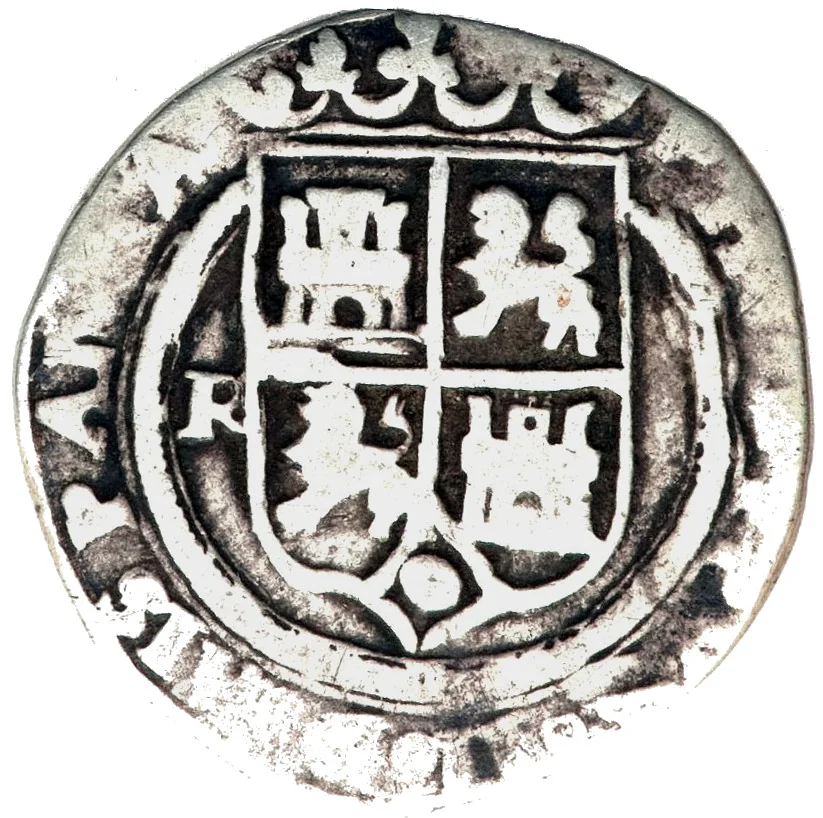
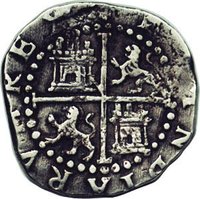
Lions and castles in quarters. Assayer's mark R left.
Inscription:
PHILIPVS II D HISPANIA
Script: Latin
Reverse
Description:
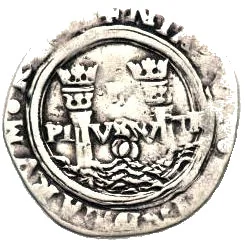
P mintmark, 1 point between pillars on waves. Motto: PLVS VLTRA
Inscription:
NIARVM ET INDIARVM REX
Script: Latin
Edge
Mints
| Name | Mark |
|---|---|
| Lima | P |
Mintings
| Year | Mint Mark | Mintage | Quality | Collection |
|---|---|---|---|---|
| — | PR | — | ||
| 1570 | PX | — |
Historical background
In 1568, the currency situation in the Viceroyalty of Peru was defined by a chaotic duality between official Spanish coinage and a thriving, disruptive black market in crude, indigenous coins known as macacos or moneda de la tierra. The Spanish Crown, through the recently established Lima Mint (Casa de Moneda, founded in 1565), sought to impose order by producing standardized silver reales and escudos from the immense wealth of the Potosí mines. However, the mint's output was still insufficient for the booming local economy, leading to severe shortages of official currency for everyday transactions, especially outside major administrative centers.
This scarcity fueled the proliferation of macacos—irregularly shaped silver pieces, often chopped from bars, which were privately minted and stamped with simple marks by merchants and hacendados (landowners). While illegal, these coins became the lifeblood of local and regional trade, filling the void left by the scarce royal coinage. Their value was based purely on silver weight and the credibility of the assayer's mark, creating a decentralized and unreliable system rife with debasement and counterfeiting. This effectively created a two-tier monetary system: royal coinage for large-scale and international trade, and crude macacos for the internal market.
The situation presented a major challenge for the colonial administration under Viceroy Francisco de Toledo, who arrived in 1569. The widespread use of macacos undermined royal authority, siphoned seigniorage away from the Crown, and caused constant commercial disputes. Toledo's subsequent comprehensive reforms would directly address this, aiming to suppress the black-market coinage, increase the output and circulation of royal currency, and fully integrate Peru's silver wealth into the formal imperial fiscal system, thereby strengthening Crown control over the colony's economic life.
This scarcity fueled the proliferation of macacos—irregularly shaped silver pieces, often chopped from bars, which were privately minted and stamped with simple marks by merchants and hacendados (landowners). While illegal, these coins became the lifeblood of local and regional trade, filling the void left by the scarce royal coinage. Their value was based purely on silver weight and the credibility of the assayer's mark, creating a decentralized and unreliable system rife with debasement and counterfeiting. This effectively created a two-tier monetary system: royal coinage for large-scale and international trade, and crude macacos for the internal market.
The situation presented a major challenge for the colonial administration under Viceroy Francisco de Toledo, who arrived in 1569. The widespread use of macacos undermined royal authority, siphoned seigniorage away from the Crown, and caused constant commercial disputes. Toledo's subsequent comprehensive reforms would directly address this, aiming to suppress the black-market coinage, increase the output and circulation of royal currency, and fully integrate Peru's silver wealth into the formal imperial fiscal system, thereby strengthening Crown control over the colony's economic life.
✨ Legendary