

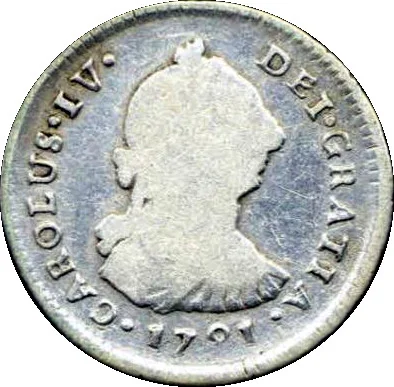

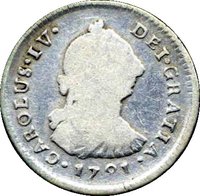
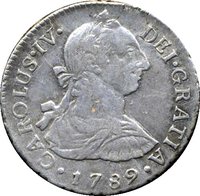
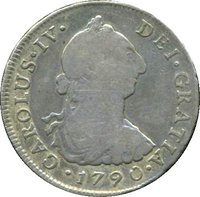
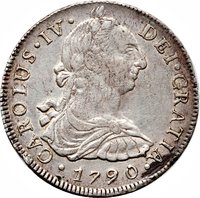
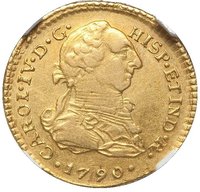
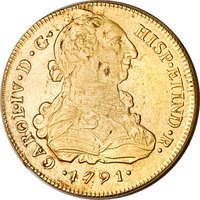
Obverse
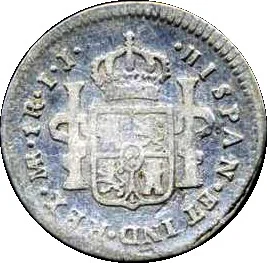
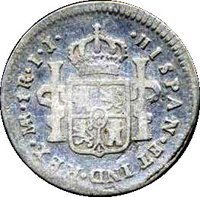
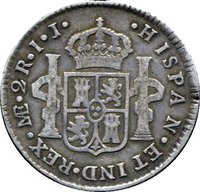
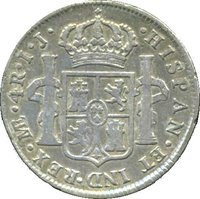
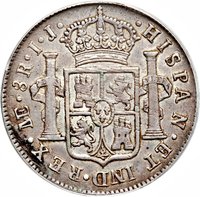
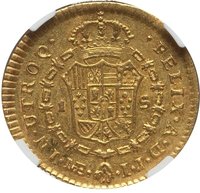
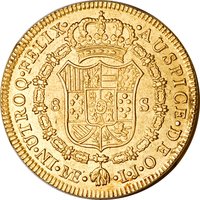
Reverse
Description:
Crowned arms between pillars.
Inscription:
HISPAN • ET IND • REX • IE • IR • I • J
Script: Latin
Edge
Mintings
| Year | Mint Mark | Mintage | Quality | Collection |
|---|---|---|---|---|
| 1789 | IJ | — | ||
| 1790 | IJ | — | ||
| 1791 | IJ | — |
Historical background
In 1789, the Viceroyalty of Peru operated under a complex and strained monetary system inherited from Spanish colonial rule. The official currency was based on the silver real, with eight reales equaling one peso (or "piece of eight"), and gold escudos used for higher-value transactions. The heart of this system was the legendary silver from the Potosí mines (in modern Bolivia), which minted much of the coinage circulating not only in Peru but throughout the Americas and beyond. However, by the late 18th century, Potosí's output was in decline, leading to periodic coin shortages that hampered local commerce.
The monetary landscape was further complicated by a chronic shortage of small-denomination coins for everyday transactions, leading to the widespread use of makeshift solutions. To facilitate small-scale trade, merchants and communities often used clipped or cut segments of silver coins, tokens, or even barter. Furthermore, a vast quantity of debased and counterfeit coins, known as "moneda feble" (weak money), circulated alongside full-weight royal coinage, causing confusion and loss of public trust. This effectively created a dual system where coins were valued not just by face value but by their actual weight and suspected purity.
This unstable currency environment existed within a context of profound fiscal pressure from the Spanish Crown. Under the Bourbon Reforms, aimed at centralizing authority and increasing revenue, taxes were raised and tighter control was exerted over colonial economies. The need to remit vast sums of silver to Spain, combined with the local scarcity of sound coinage, stifled economic growth and bred resentment among Peruvian merchants and elites. Thus, in 1789, Peru's currency was not merely a medium of exchange but a symbol of the colonial economy's structural weaknesses, growing inefficiencies, and the increasing strain between the colony and the metropole.
The monetary landscape was further complicated by a chronic shortage of small-denomination coins for everyday transactions, leading to the widespread use of makeshift solutions. To facilitate small-scale trade, merchants and communities often used clipped or cut segments of silver coins, tokens, or even barter. Furthermore, a vast quantity of debased and counterfeit coins, known as "moneda feble" (weak money), circulated alongside full-weight royal coinage, causing confusion and loss of public trust. This effectively created a dual system where coins were valued not just by face value but by their actual weight and suspected purity.
This unstable currency environment existed within a context of profound fiscal pressure from the Spanish Crown. Under the Bourbon Reforms, aimed at centralizing authority and increasing revenue, taxes were raised and tighter control was exerted over colonial economies. The need to remit vast sums of silver to Spain, combined with the local scarcity of sound coinage, stifled economic growth and bred resentment among Peruvian merchants and elites. Thus, in 1789, Peru's currency was not merely a medium of exchange but a symbol of the colonial economy's structural weaknesses, growing inefficiencies, and the increasing strain between the colony and the metropole.
Series: 1789 Peru circulation coins
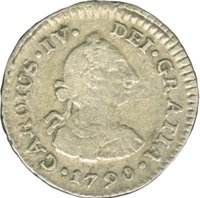
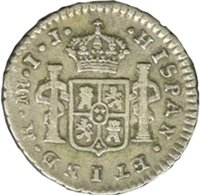
💎 Extremely Rare