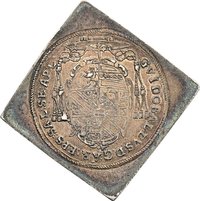
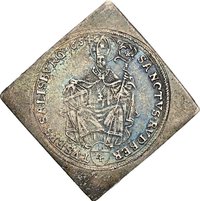
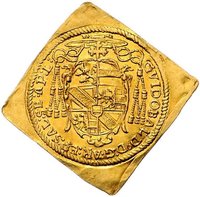
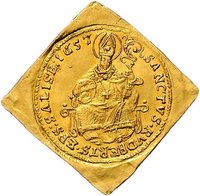
In 1654, the Bishopric of Salzburg operated within the complex and fragmented monetary landscape of the Holy Roman Empire. As an independent ecclesiastical principality, it possessed the right of coinage (
Münzregal), which it exercised through its mint. However, its currency was not isolated; it circulated alongside and in competition with the coins of neighboring states and empires, most notably the ubiquitous Reichsthaler, the standard large silver coin of the Empire. The value and acceptance of Salzburg's own coinage, such as the
Salzburger Gulden and its subdivisions, depended heavily on their precise silver content and the economic credibility of the prince-archbishop.
The period was one of significant monetary instability across Europe, still feeling the effects of the Kipper und Wipper crisis of the early 1620s—a devastating episode of currency debasement and inflation. While the worst was over, maintaining stable coinage required constant vigilance. Prince-Archbishop Guidobald von Thun, ruling from 1654 to 1668, faced the ongoing challenge of funding his court and projects while ensuring his minted coins retained their declared value to facilitate both local trade and broader commerce. Debasement (reducing the precious metal content) was a constant temptation for rulers needing revenue but risked destroying economic confidence.
Therefore, the currency situation in Salzburg in 1654 was defined by this delicate balance: asserting monetary sovereignty for political and economic prestige, while necessarily conforming to imperial monetary ordinances to ensure wider usability. The bishopric's coins had to be trusted equivalents to those of other German states, meaning their production was tied to the fluctuating supply of silver and the prince-archbishop's fiscal discipline. The stability of its currency was less a technical minting issue and more a direct reflection of the principality's broader financial health and administrative integrity.