

1 Rupee – Mughal Empire
India
Context
Years: 1658–1707
Country: India 
Issuer: Mughal Empire
Ruler: Aurangzeb
Currency:
(1540—1842)
Demonetized: Yes
Material
References
KM: #Click to copy to clipboard300.9
Numista: #478659
Value
Bullion value: $33.07
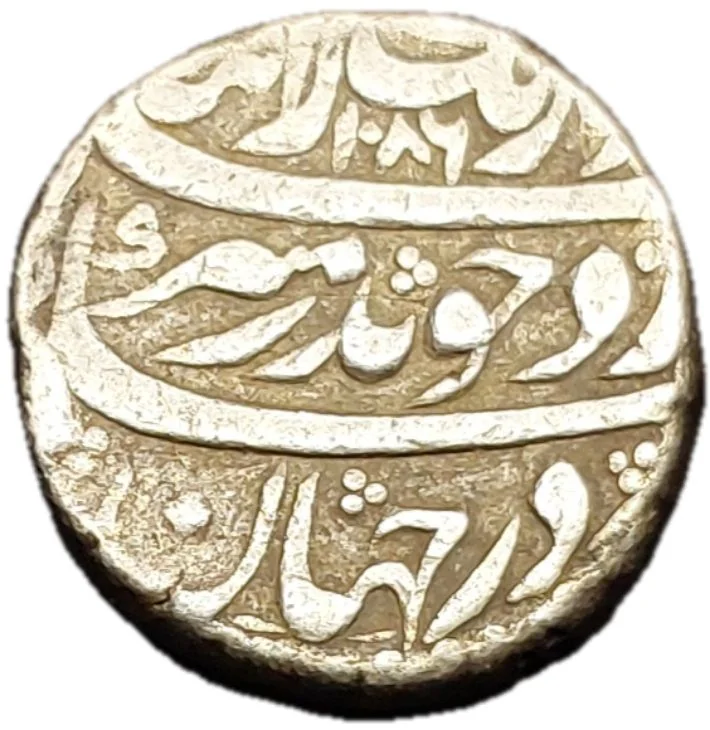
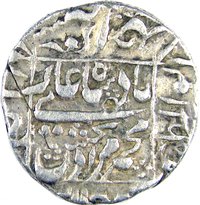
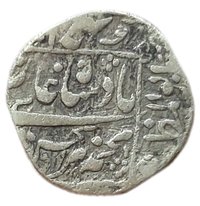
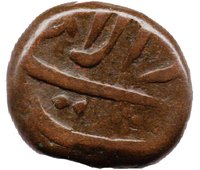
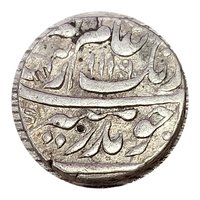
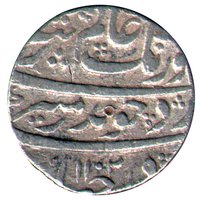
Obverse
Description:
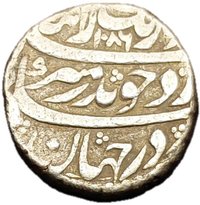
Badr Munir, King. Couplet, AH date.
Inscription:
Bad shah aurangzeb Alamgir 1086 (AH)
Sikkae zad Jo bedr munir
Dar-e-Jahan
Sikkae zad Jo bedr munir
Dar-e-Jahan
Script: Persian
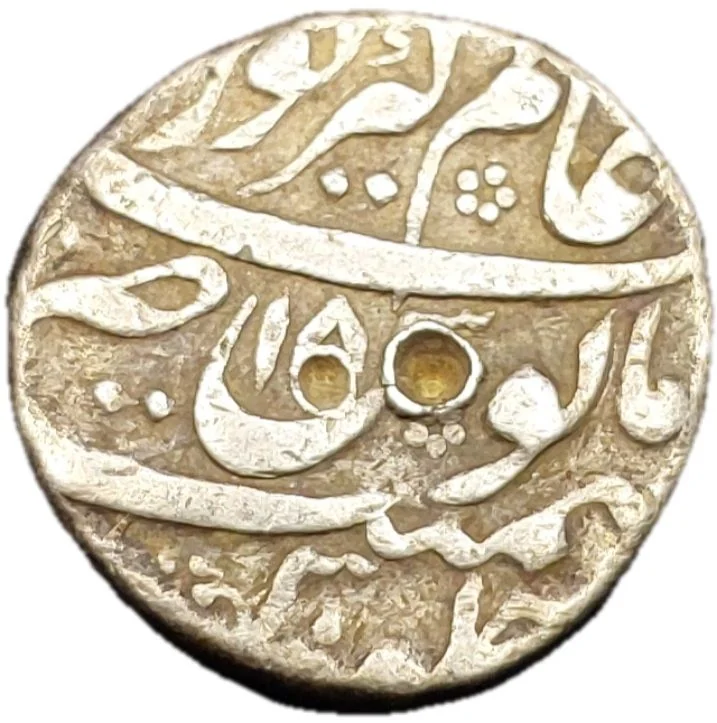
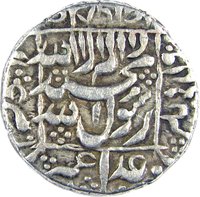
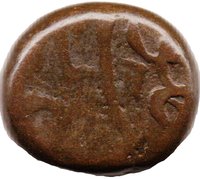
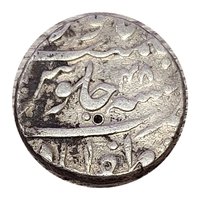
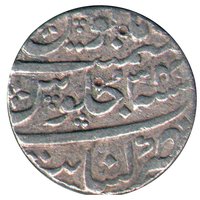
Reverse
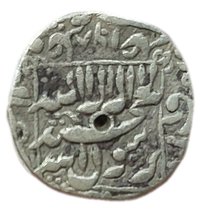
Description:
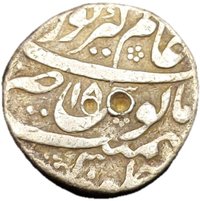
Year 18, Alamgirpur mint.
Inscription:
Zarb Alamgirpur
Jaloos Manoos Memanat RY#18
Jaloos Manoos Memanat RY#18
Edge
Mintings
| Year | Mint Mark | Mintage | Quality | Collection |
|---|---|---|---|---|
| — | — | — | ||
| 1662 | — | — | ||
| 1663 | — | — | ||
| 1668 | — | — | ||
| 1675 | — | — | ||
| 1679 | — | — | ||
| 1680 | — | — | ||
| 1684 | — | — | ||
| 1685 | — | — | ||
| 1686 | — | — | ||
| 1687 | — | — | ||
| 1688 | — | — | ||
| 1689 | — | — | ||
| 1690 | — | — | ||
| 1696 | — | — | ||
| 1703 | — | — | ||
| 1704 | — | — | ||
| 1705 | — | — | ||
| 1706 | — | — |
Historical background
By 1658, the Mughal Empire's currency system was a well-established and sophisticated bimetallic structure, underpinning one of the world's largest economies. The system was anchored by two primary coins: the silver rupee (rupya) and the gold mohur. The rupee, struck from high-purity silver, was the standard unit of account and the workhorse for revenue collection, trade, and daily transactions. The gold mohur, while in circulation, was used more for hoarding, large-scale transfers, and ceremonial purposes. These coins were complemented by a smaller copper coin, the dam, which facilitated local bazaar trade. Crucially, the empire maintained a remarkable degree of uniformity and purity in its coinage, particularly the rupee, across its vast territories, thanks to a network of imperial mints (dar-ul-zarb) operating under strict regulations.
This monetary stability was a direct legacy of administrative reforms, most notably those of Emperor Akbar (r. 1556–1605), which were continued and refined by his successors. The system faced a significant test during the reign of Shah Jahan (1628–1658), whose extravagant building projects and military campaigns, including the costly war for Balkh in Central Asia, placed immense strain on the treasury. While the intrinsic value of the coinage remained largely intact, the state increasingly relied on revenue demands in cash, which could lead to local liquidity shortages. Furthermore, 1658 itself was a year of profound political crisis—the bloody War of Succession between Shah Jahan's sons—which disrupted trade routes, diverted bullion to war chests, and created regional uncertainties in the financial markets, even if the core currency system itself was not yet debased.
Looking ahead, the currency situation in 1658 stood at a crossroads. The victorious prince, Aurangzeb, would inherit a robust monetary framework but also the fiscal pressures of his father's reign. His policies would determine its future. While Aurangzeb initially maintained the standards, his later prolonged and expensive Deccan campaigns (from the 1680s onward) would ultimately lead to a gradual decline in the weight and purity of the rupee, a shortage of silver, and the increased circulation of lower-quality regional coinage. Thus, in 1658, the Mughal currency system, though temporarily strained by political upheaval, remained a pillar of imperial strength, yet one that would face increasing challenges in the decades to come.
This monetary stability was a direct legacy of administrative reforms, most notably those of Emperor Akbar (r. 1556–1605), which were continued and refined by his successors. The system faced a significant test during the reign of Shah Jahan (1628–1658), whose extravagant building projects and military campaigns, including the costly war for Balkh in Central Asia, placed immense strain on the treasury. While the intrinsic value of the coinage remained largely intact, the state increasingly relied on revenue demands in cash, which could lead to local liquidity shortages. Furthermore, 1658 itself was a year of profound political crisis—the bloody War of Succession between Shah Jahan's sons—which disrupted trade routes, diverted bullion to war chests, and created regional uncertainties in the financial markets, even if the core currency system itself was not yet debased.
Looking ahead, the currency situation in 1658 stood at a crossroads. The victorious prince, Aurangzeb, would inherit a robust monetary framework but also the fiscal pressures of his father's reign. His policies would determine its future. While Aurangzeb initially maintained the standards, his later prolonged and expensive Deccan campaigns (from the 1680s onward) would ultimately lead to a gradual decline in the weight and purity of the rupee, a shortage of silver, and the increased circulation of lower-quality regional coinage. Thus, in 1658, the Mughal currency system, though temporarily strained by political upheaval, remained a pillar of imperial strength, yet one that would face increasing challenges in the decades to come.
✨ Legendary