

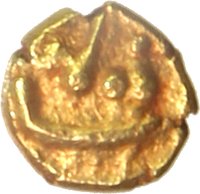
1 rupee – Mughal Empire
Add to wishlist
India
Context
Years: 1754–1759
Country: India
Issuer: Mughal Empire
Ruler: Alamgir II
Currency:
(1540—1842)
Demonetized: Yes
Material
References
KM: #
Numista: #478658
Value
Bullion value: $27.50
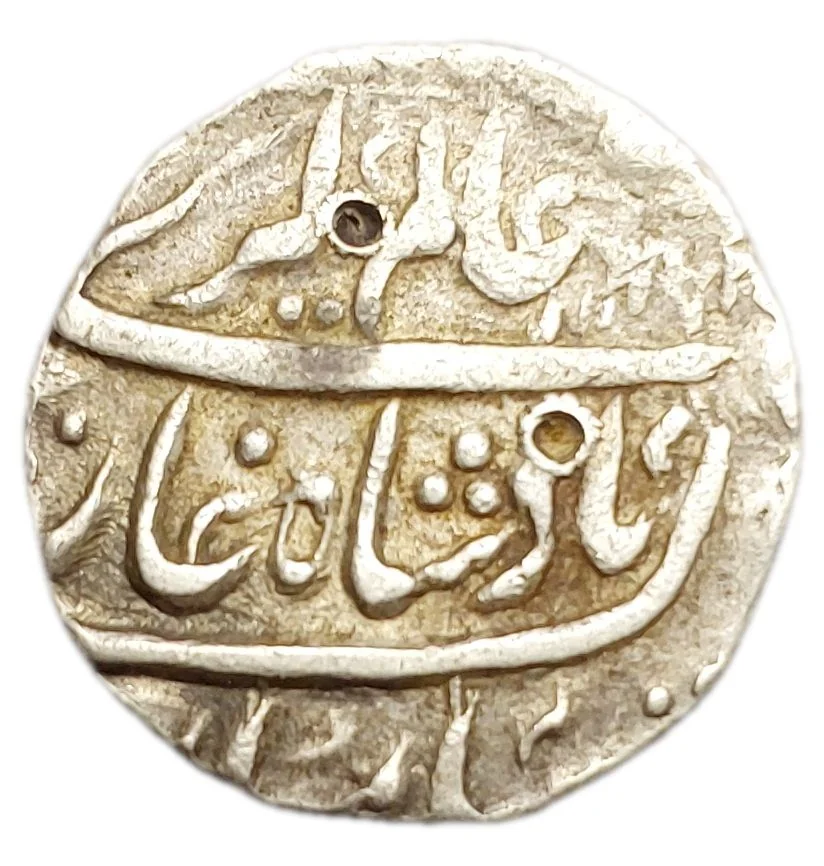
Obverse
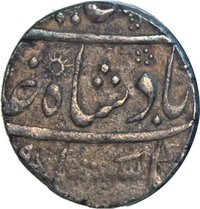
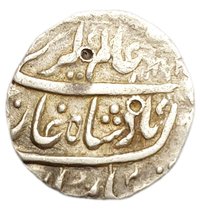
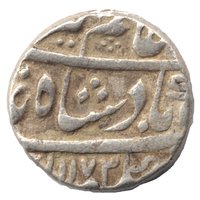
Description:
Alamgir, AH [year]
Inscription:
(bottom to top)
Sikka Mubarak Badshah Gazi Alamgir 11XX
Sikka Mubarak Badshah Gazi Alamgir 11XX
Script: Persian
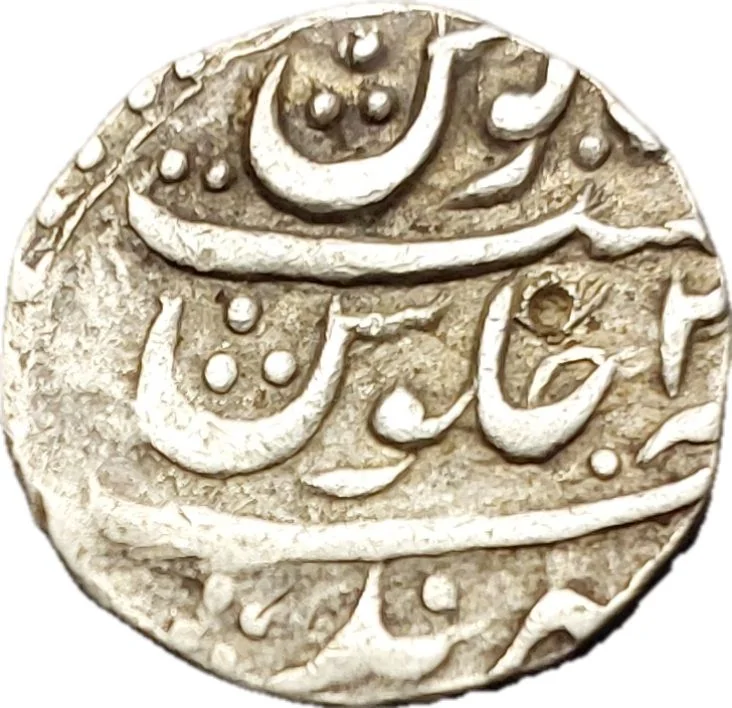
Reverse
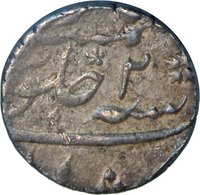
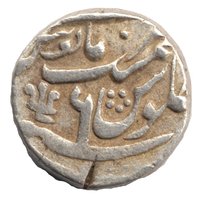
Description:
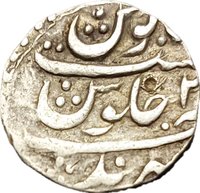
Year 2, Sarhind mint.
Inscription:
Sana 2 Juloos Manoos Memanat
Mint Sarhind
Mint Sarhind
Script: Persian
Edge
Mintings
| Year | Mint Mark | Mintage | Quality | Collection |
|---|---|---|---|---|
| — | — | — | ||
| 1755 | — | — | ||
| 1756 | — | — | ||
| 1757 | — | — | ||
| 1758 | — | — | ||
| 1759 | — | — |
Historical background
By 1754, the Mughal Empire's currency system, once a pillar of its imperial authority and economic integration, was under severe strain and fragmentation. The central silver rupee, notably the Nisar rupee of Emperor Ahmad Shah Bahadur, remained the nominal standard, but its purity and weight were increasingly unreliable due to the financial desperation of the Delhi court. Decades of ruinous invasions, notably by Nader Shah in 1739 and Ahmad Shah Durrani from 1748 onwards, had drained the imperial treasury, leading to debasement and irregular minting to meet immediate military and administrative costs.
Political decentralization critically undermined the monetary system. Powerful regional successor states like Bengal, Awadh, and Hyderabad, while offering nominal allegiance, operated their own mints and issued distinct local rupees. These currencies, such as the Sicca rupee of Bengal or the Hyderabadi rupee, often maintained higher purity to foster local trade, effectively creating competing currency zones. Furthermore, the Maratha Confederacy, which by 1754 was exacting chauth (tribute) from vast territories, also circulated its own coins, further diluting the Mughal monetary monopoly.
Consequently, the currency landscape was one of confusing heterogeneity, where the value of a coin depended heavily on its mint of origin, its year of issue, and the authority backing it. Money changers (sarrafs) became indispensable economic intermediaries, assessing and exchanging a bewildering variety of coins. This monetary fragmentation mirrored the empire's political disintegration, hindering large-scale commerce and revenue collection, and signifying the erosion of central power into a patchwork of regional economies, each with its own fiscal and monetary priorities.
Political decentralization critically undermined the monetary system. Powerful regional successor states like Bengal, Awadh, and Hyderabad, while offering nominal allegiance, operated their own mints and issued distinct local rupees. These currencies, such as the Sicca rupee of Bengal or the Hyderabadi rupee, often maintained higher purity to foster local trade, effectively creating competing currency zones. Furthermore, the Maratha Confederacy, which by 1754 was exacting chauth (tribute) from vast territories, also circulated its own coins, further diluting the Mughal monetary monopoly.
Consequently, the currency landscape was one of confusing heterogeneity, where the value of a coin depended heavily on its mint of origin, its year of issue, and the authority backing it. Money changers (sarrafs) became indispensable economic intermediaries, assessing and exchanging a bewildering variety of coins. This monetary fragmentation mirrored the empire's political disintegration, hindering large-scale commerce and revenue collection, and signifying the erosion of central power into a patchwork of regional economies, each with its own fiscal and monetary priorities.

✨ Legendary