Logo Title
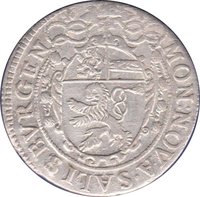
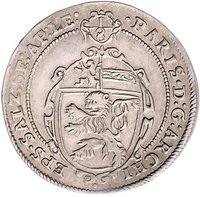
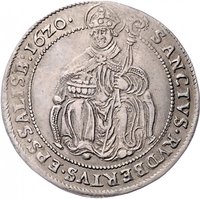
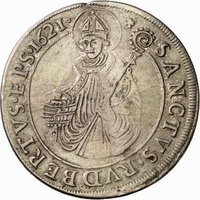
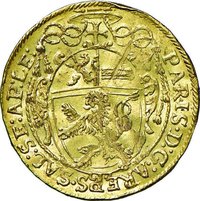
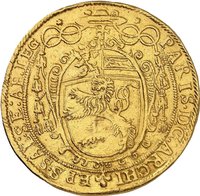
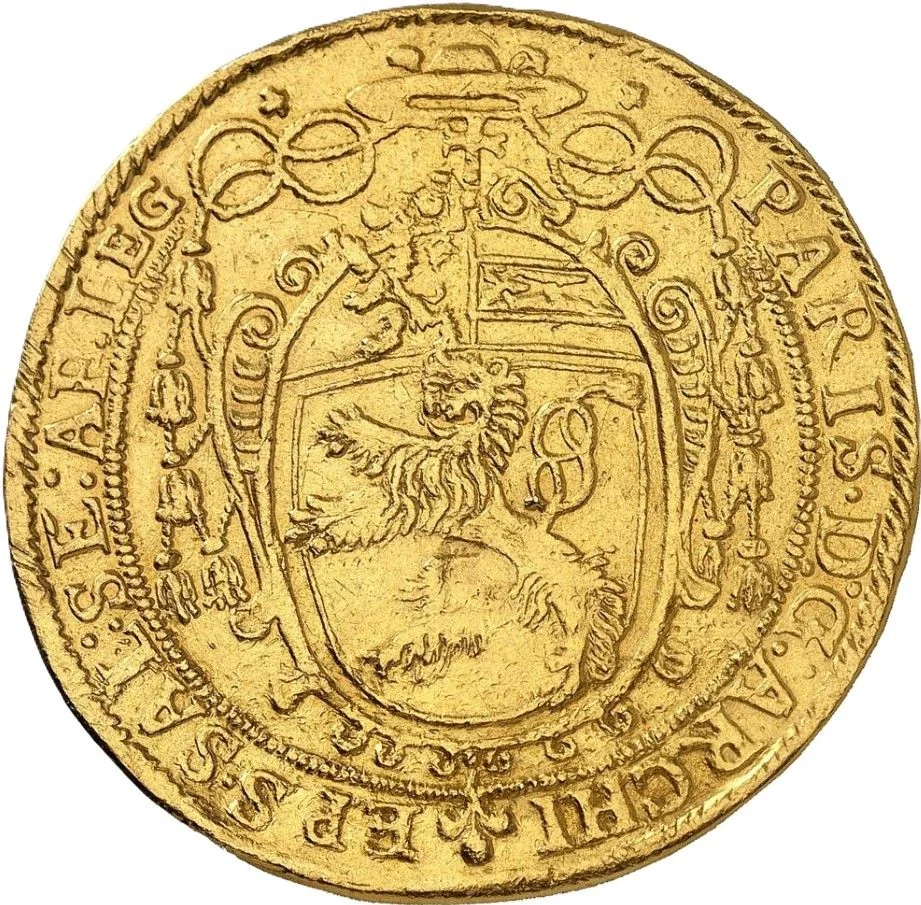
obverse
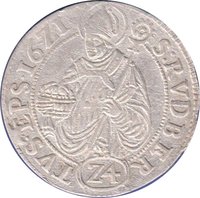
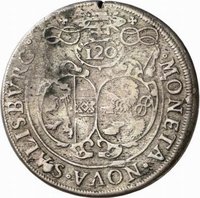
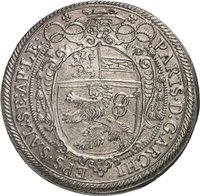
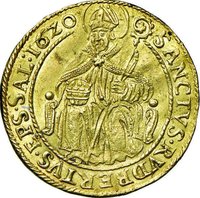
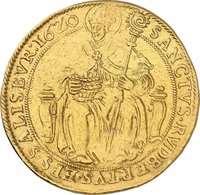
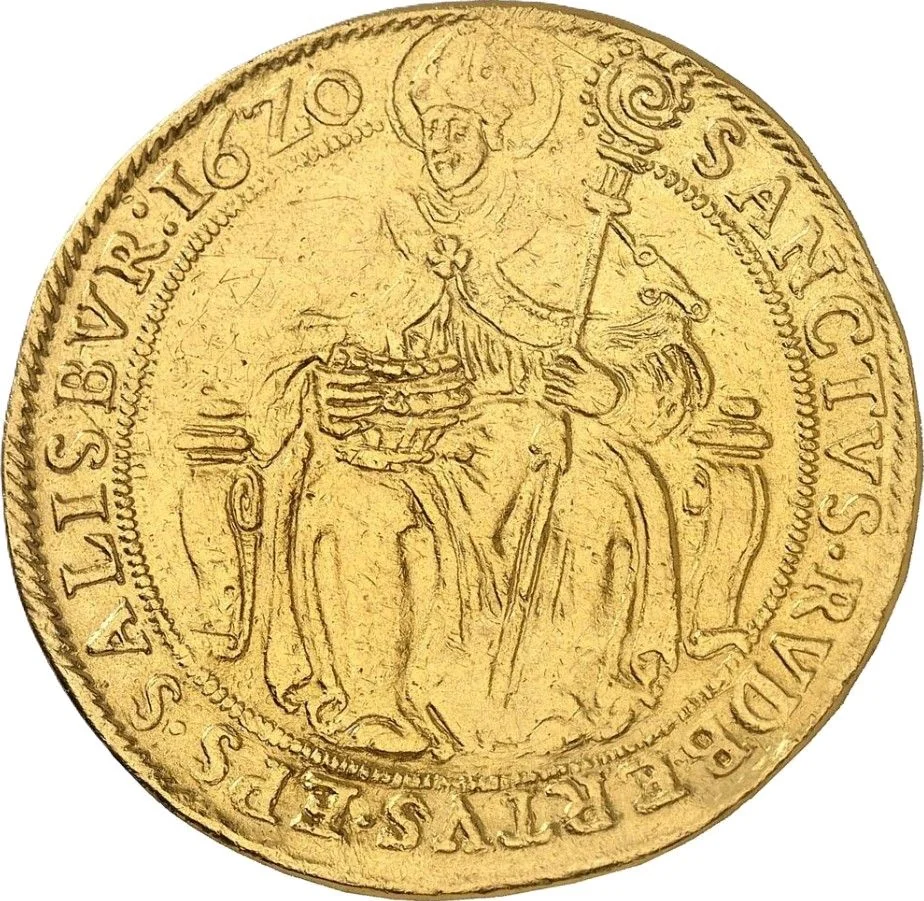
reverse
Fritz Rudolf Künker GmbH & Co. KG, Osnabrück and Lübke & Wiedemann KG, Leonberg
Context
Years: 1620–1622
Country: Austria Country flag
Currency:
Demonetized: Yes
Material
Diameter: 40 mm
Weight: 27.32 g
Gold weight: 27.32 g
Shape: Round
Composition: Gold
Magnetic: No
References
KM: #Click to copy to clipboard70
Numista: #478500
Value
Bullion value: $4566.41

Obverse

Description:
Oval shield beneath an archbishop's hat.
Inscription:
⸰ PARIS · D : G: ARCHI EPS · SAL · SE : AP : LE :
Script: Latin

Reverse

Description:
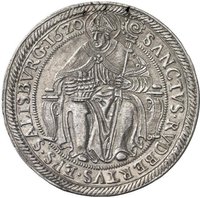
St. Rupert holding a salt box in his right hand and a crozier in his left.
Inscription:
SANCTVS · RVDBERTVS · EPS · SALISBVRG : 16Z0
Script: Latin

Edge

Mintings

YearMint MarkMintageQualityCollection
1620
1622

Historical background

In 1620, the Prince-Archbishopric of Salzburg, while a sovereign ecclesiastical state within the Holy Roman Empire, was deeply entangled in the financial and monetary turmoil of the early Thirty Years' War. The conflict placed immense strain on public finances across the Empire, as territories were forced to raise armies and pay for fortifications. Like many contemporary German states, Salzburg resorted to debasing its coinage to generate immediate revenue, a practice that eroded the value of its currency and contributed to widespread inflation and economic uncertainty.

The situation was exacerbated by the complex monetary landscape of the Empire itself. Salzburg's currency circulated alongside those of neighboring states, and the varying degrees of debasement created chaotic exchange rates and a loss of public trust. "Bad money" from states aggressively reducing their silver content often drove "good money" out of circulation, as people hoarded older, purer coins. This phenomenon, known as Gresham's Law, made sound commerce difficult and harmed the local economy, which relied on mining, trade, and pilgrimage.

Internally, Prince-Archbishop Paris von Lodron (r. 1619-1653), who had just ascended to the throne, faced this crisis directly. While a skilled diplomat who would later famously keep Salzburg neutral and largely unscathed from physical warfare, the monetary instability of 1620 presented an urgent fiscal challenge. His administration would have been preoccupied with managing the practical effects of currency devaluation—soaring prices for goods and supplies, discontent among the populace, and the need to stabilize state income—all while the war raged beyond its borders.
Legendary