


Obverse
Description:
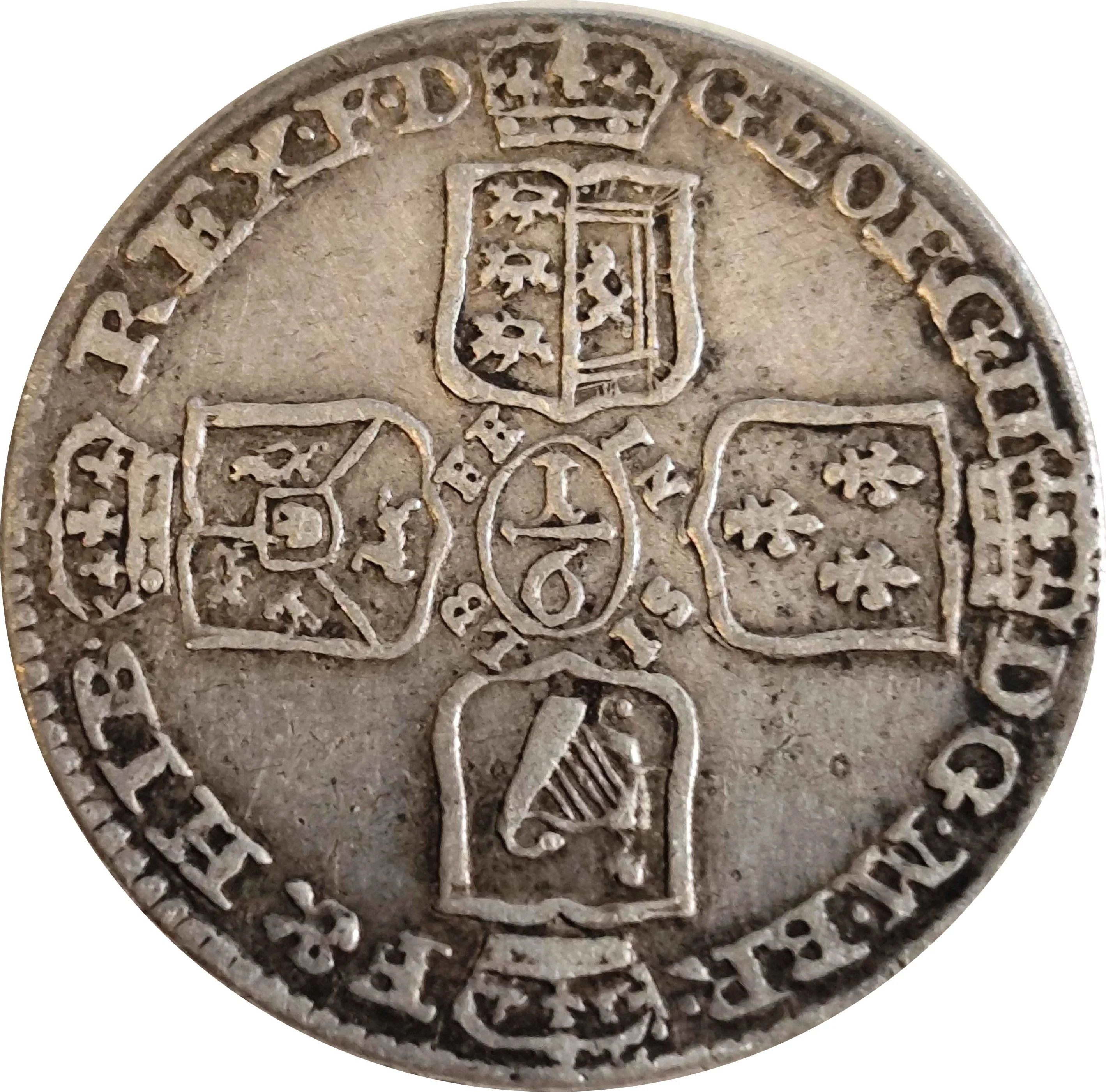
Four quartered shields.
Inscription:
GEORG·II D·G·M·BR· F & HIB· REX·F·D
LB FE IN SI
(1/6)
LB FE IN SI
(1/6)
Script: Latin
Reverse
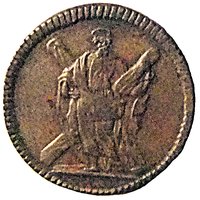
Description:
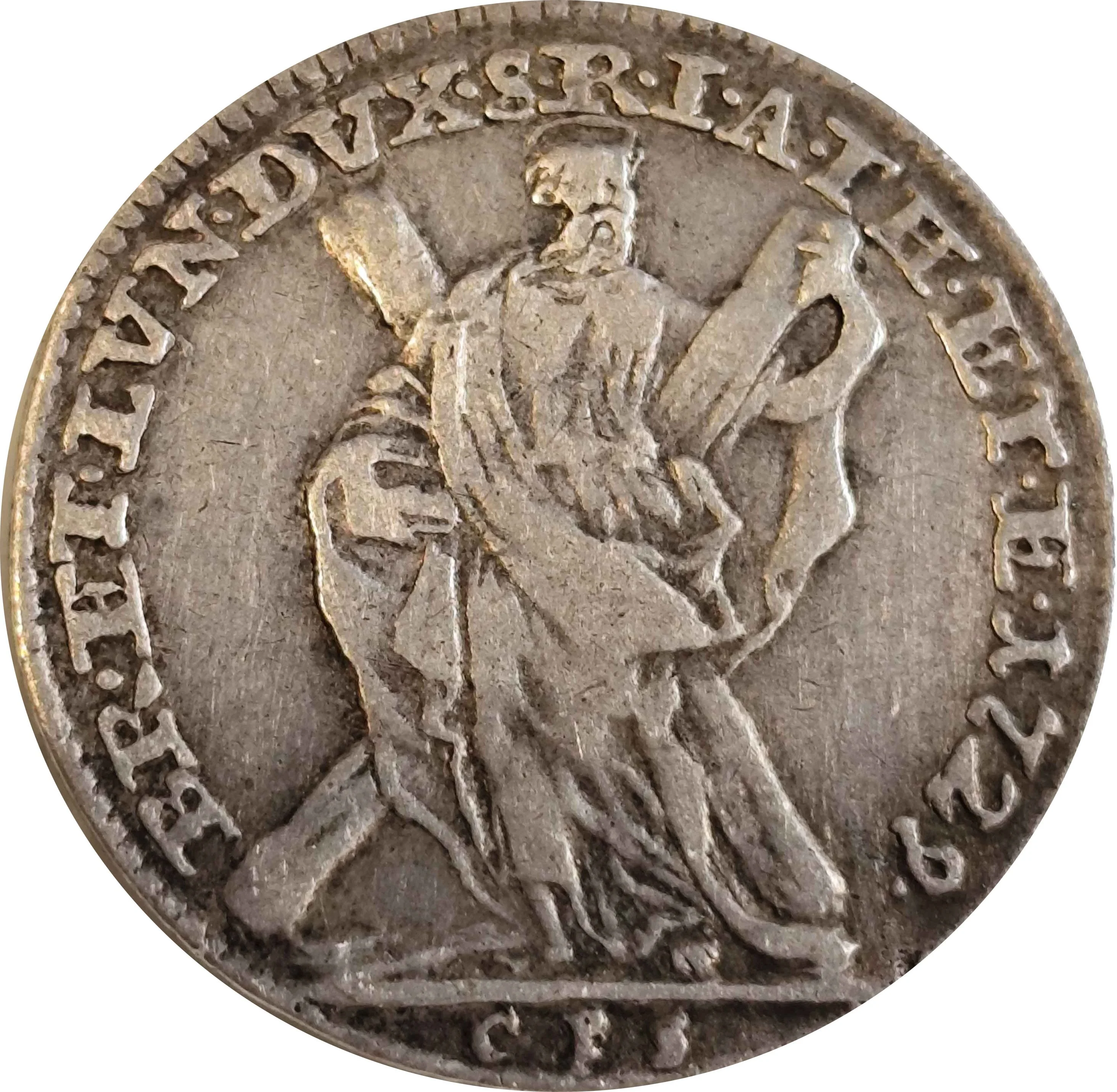
Patron saint of Scotland
Inscription:
BR·ET·IVN·DVX·S·R·I·A·TH·ET·E·1729·
CPS
CPS
Script: Latin
Edge
Plain
Categories
| Symbols> Coat of Arms |
Mintings
| Year | Mint Mark | Mintage | Quality | Collection |
|---|---|---|---|---|
| 1729 | — | — |
Historical background
In 1729, the currency situation in the Duchy of Brunswick-Lüneburg, specifically the Principality of Calenberg (with its capital in Hanover), was characterized by significant complexity and instability. The region was part of the Holy Roman Empire's intricate monetary landscape, where numerous states issued their own coinage. Within Brunswick-Lüneburg itself, different sub-principalities often pursued independent monetary policies, leading to a circulation of diverse coins from Brunswick-Wolfenbüttel, Lüneburg-Celle, and Calenberg-Hannover itself. This proliferation created a chaotic system where values fluctuated and trade was hampered by constant need for exchange and valuation.
The core problem was a chronic shortage of high-value, full-weight specie (Reichsthaler) due to the practice of debasement. To fund state expenditures, particularly for the ambitious court of Elector George II (who was also King of Great Britain and Ireland), the minting of inferior, low-denomination coins like Gute Groschen was increased. This led to Gresham's Law in action: "bad money drives out good." Full-weight silver coins were hoarded or exported, leaving the economy flooded with depreciated small change, causing inflation and eroding public trust in the currency.
Recognizing the crisis, the year 1729 was a point of attempted reform. The authorities in Calenberg-Hannover, influenced by the need for stable finances to support their dynastic ambitions and military commitments, were actively working toward establishing a standardized Kurantgeld (standard money) system. The goal was to stabilize the Reichsthaler as a reliable accounting unit and curtail the arbitrary minting of small change. These efforts would culminate in more concrete ordinances in the following years, aiming to bring order to the monetary chaos and facilitate more predictable trade and taxation within the principality.
The core problem was a chronic shortage of high-value, full-weight specie (Reichsthaler) due to the practice of debasement. To fund state expenditures, particularly for the ambitious court of Elector George II (who was also King of Great Britain and Ireland), the minting of inferior, low-denomination coins like Gute Groschen was increased. This led to Gresham's Law in action: "bad money drives out good." Full-weight silver coins were hoarded or exported, leaving the economy flooded with depreciated small change, causing inflation and eroding public trust in the currency.
Recognizing the crisis, the year 1729 was a point of attempted reform. The authorities in Calenberg-Hannover, influenced by the need for stable finances to support their dynastic ambitions and military commitments, were actively working toward establishing a standardized Kurantgeld (standard money) system. The goal was to stabilize the Reichsthaler as a reliable accounting unit and curtail the arbitrary minting of small change. These efforts would culminate in more concrete ordinances in the following years, aiming to bring order to the monetary chaos and facilitate more predictable trade and taxation within the principality.
✨ Legendary