

5 Grani – Malta
Malta
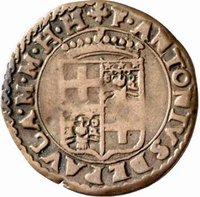
Obverse
Description:
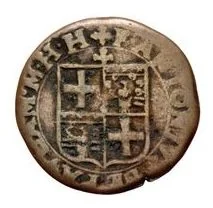
De Paule coat of arms (peacocks) and Order arms on a shield encircled by text.
Inscription:
F . ANTONIVS DE PAVLA . M . M . H . H
Script: Latin
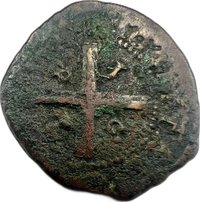
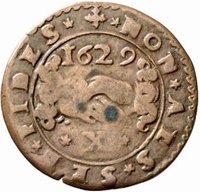
Reverse
Edge
Mintings
| Year | Mint Mark | Mintage | Quality | Collection |
|---|---|---|---|---|
| 1629 | — | — |
Historical background
In 1629, Malta’s currency situation was complex and problematic, characterized by a severe shortage of official coinage and a chaotic circulation of diverse foreign currencies. As a key trading hub in the central Mediterranean and a fortress of the Knights of St. John, the island attracted merchants and corsairs whose business brought a flood of coins from Spain, Italy, France, and the Ottoman Levant. The most common and trusted of these was the Spanish piece of eight (real de a ocho), but the actual money in daily use was a bewildering mix of silver and copper coins of varying weights and purities, leading to constant confusion and disputes in commerce.
The root of the crisis lay in the fact that these foreign coins, particularly the smaller denomination copper piccioli and Spanish blancas, were often heavily debased or clipped. This drove the better-quality Maltese and Sicilian silver coins out of circulation, as they were either hoarded or exported, a classic example of Gresham’s Law ("bad money drives out good"). The Knights’ government, while minting some local copper grani and tari, lacked the bullion reserves to issue sufficient high-value silver currency to stabilize the system. Consequently, everyday transactions became fraught with difficulty, as buyers and sellers had to negotiate not just prices but the actual value and acceptability of each coin.
Recognizing the economic damage, Grand Master Antoine de Paule and the Order’s council attempted a reform in 1629. They issued an official proclamation, a bando, which fixed the exchange rates for dozens of the most commonly circulated foreign coins in an effort to impose order. However, this fix was largely artificial and struggled to be enforced. Without controlling the influx of debased coinage or having the means to replace it with a strong, unified currency, the proclamation had limited effect. Thus, in 1629, Malta remained in a state of monetary instability, where the official rates on paper conflicted with the practical realities of a market dependent on unreliable foreign specie.
The root of the crisis lay in the fact that these foreign coins, particularly the smaller denomination copper piccioli and Spanish blancas, were often heavily debased or clipped. This drove the better-quality Maltese and Sicilian silver coins out of circulation, as they were either hoarded or exported, a classic example of Gresham’s Law ("bad money drives out good"). The Knights’ government, while minting some local copper grani and tari, lacked the bullion reserves to issue sufficient high-value silver currency to stabilize the system. Consequently, everyday transactions became fraught with difficulty, as buyers and sellers had to negotiate not just prices but the actual value and acceptability of each coin.
Recognizing the economic damage, Grand Master Antoine de Paule and the Order’s council attempted a reform in 1629. They issued an official proclamation, a bando, which fixed the exchange rates for dozens of the most commonly circulated foreign coins in an effort to impose order. However, this fix was largely artificial and struggled to be enforced. Without controlling the influx of debased coinage or having the means to replace it with a strong, unified currency, the proclamation had limited effect. Thus, in 1629, Malta remained in a state of monetary instability, where the official rates on paper conflicted with the practical realities of a market dependent on unreliable foreign specie.
✨ Legendary