Logo Title
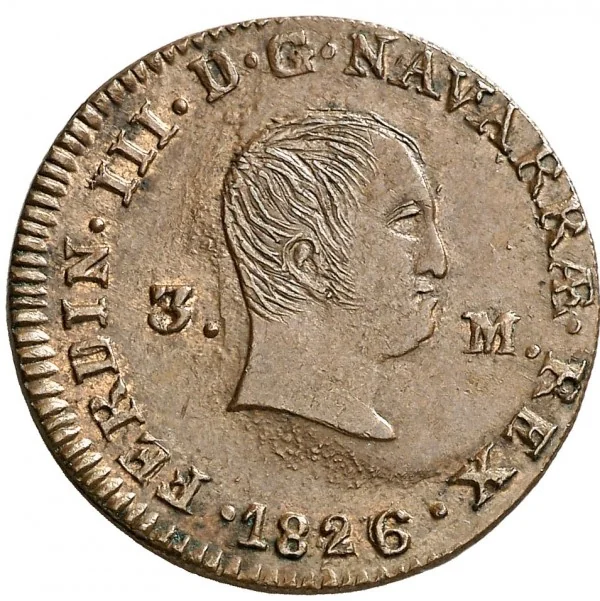
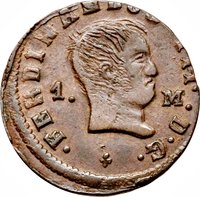
obverse
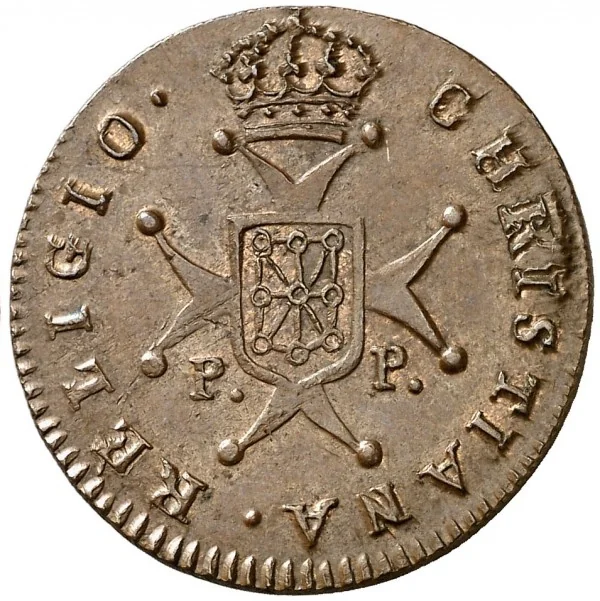
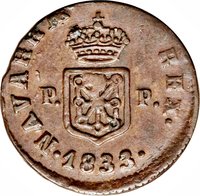
reverse
Aureo & Calicó S.L., subastas numismáticas

3 Maravedis – Kingdom of Navarre

Spain
Context
Years: 1825–1826
Country: Spain Country flag
Currency:
Demonetized: Yes
Material
Diameter: 26 mm
Weight: 6 g
Shape: Round
Composition: Copper
Magnetic: No
Technique: Milled
References
Numista: #104069

Obverse

Description:
Go right
Inscription:
FERDINANDUS III D G NAVARRAE REX 1826

3 M
Translation:
FERDINAND III BY THE GRACE OF GOD KING OF NAVARRA 1826

3 MARAVEDIS
Script: Latin
Languages: Latin, Spanish

Reverse

Description:
Arms with a crown.
Inscription:
CHRISTIANA RELIGIO

P P
Script: Latin

Edge

Mints

NameMark
Pamplona

Mintings

YearMint MarkMintageQualityCollection
1825PP
1826PP

Historical background

By 1825, the currency situation in the Kingdom of Navarre was a complex and transitional one, deeply influenced by its recent political history. Following the Peninsular War and the restoration of absolutist monarch Ferdinand VII in 1814, Navarre had lost its separate fueros (autonomous laws) in 1822, a change confirmed by the end of the Trienio Liberal in 1823. This political centralization directly impacted its monetary system, as the kingdom was being integrated into the broader Spanish currency framework. The official currency was the Spanish real, with coins minted by the Royal Spanish Mint, but the legacy of older, local systems and foreign coins still lingered in circulation.

The practical circulation was a mixture of official and unofficial specie. While coins bearing the stamp of Ferdinand VII were the legal tender, older Spanish coins from previous reigns, and even French francs and other European currencies from the turbulent Napoleonic period, remained in use, particularly in border regions and among merchants. This created a fragmented monetary environment where the value of coins was often judged by their metal content (silver or gold) and weight rather than solely by their face value, leading to complexities in trade and accounting.

Economically, the period was one of difficulty, which strained the currency system. The post-war economy was recovering, and the state finances of Spain were precarious. This often led to a shortage of small-denomination coinage (calderilla), causing hardship for everyday transactions among the populace. Furthermore, the suppression of Navarre's traditional institutions meant that local control over monetary policy and the adjustment of exchange rates—once a privilege under the fueros—was now entirely directed from Madrid, symbolizing the kingdom's diminishing autonomy in fiscal as well as political matters.
💎 Extremely Rare