Log In
Sign Up
Aureo & Calicó S.L., subastas numismáticas
1 maravedi
– Navarre
Add to wishlist
Standard circulation coins
Spain
Context
Years:
1825–1826
Country:
Spain
Issuer:
Navarre
Period:
Kingdom
Ruler:
Ferdinand III
Currency:
Real
Demonetized
: Yes
Material
Weight:
2 g
Shape:
Round
Composition:
Copper
Magnetic:
No
Technique:
Milled
References
KM:
#
Click to copy to clipboard
121
Numista:
#104067
Obverse
Description:
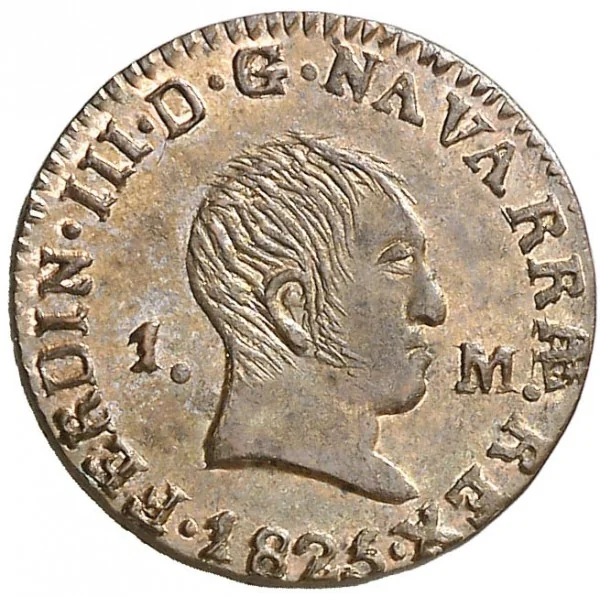
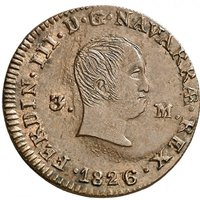
Right legend. Bottom date. Head divides value.
Inscription:
FERDIN·III·D·G·NAVARRAE·REX
1.M.
·1825·
Translation:
FERDINAND III BY THE GRACE OF GOD KING OF NAVARRE
1 M
1825
Script:
Latin
Languages:
Latin
,
Spanish
Reverse
Description:
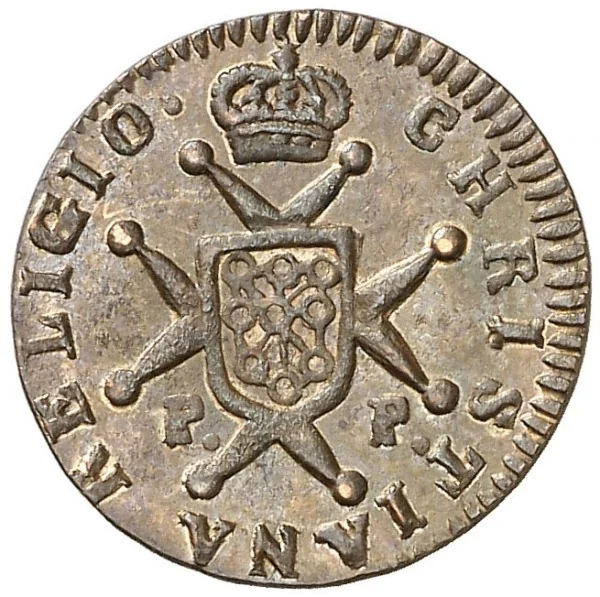
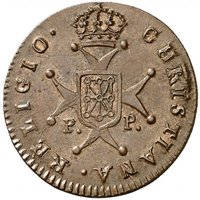
Crowned arms between mintmarks, legend surrounding.
Inscription:
CHRISTIANA RELIGIO.
Translation:
Christian Religion.
Script:
Latin
Language:
Latin
Edge
Mints
Name
Mark
Pamplona
—
Mintings
Year
Mint Mark
Mintage
Quality
Collection
1825
PP
—
+
1826
PP
—
+
Navigation
Standard circulation coins of Navarre
Previous
6 maravedis
1819-1820
Next
3 maravedis
1825-1826
💎
Extremely Rare