

1 Conventionsthaler – Öttingen-Spielberg
Germany
Context
Year: 1759
Country: Germany 
Issuer: Öttingen-Spielberg
Ruler: John Aloysius I
Currency:
Subdivision: 1 Conventionsthaler = ⅒ Cologne Mark
Demonetized: Yes
Material
References
KM: #Click to copy to clipboard18
Numista: #47248
Value
Bullion value: $55.76
Obverse
Description:
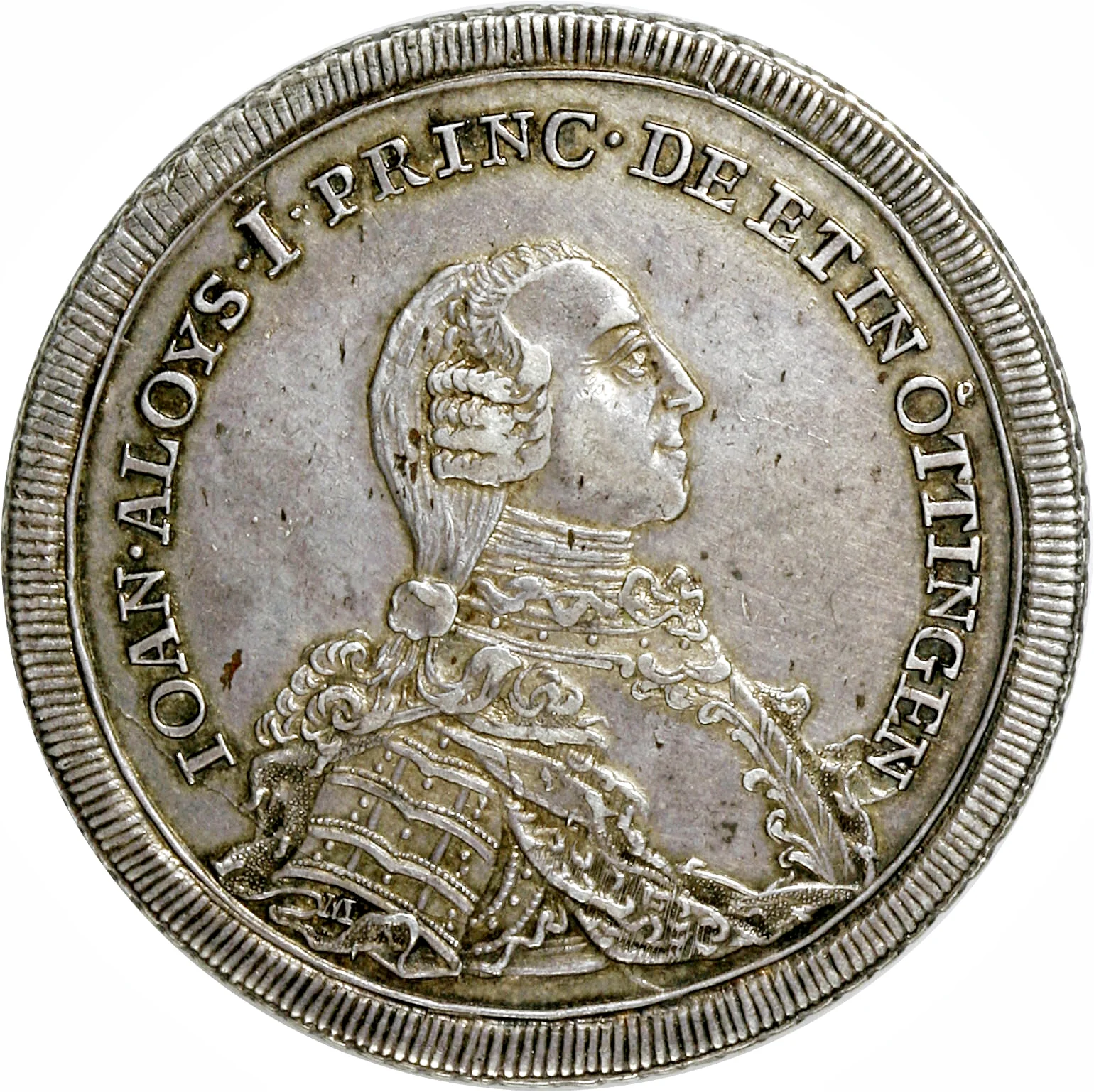
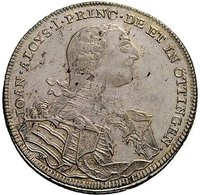
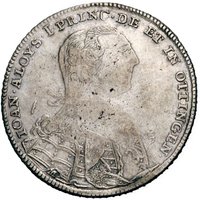
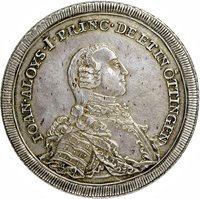
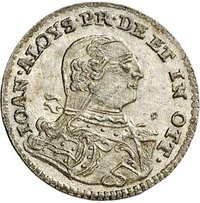
Bust of Johann Aloys I right, surrounded by legend.
Script: Latin
Reverse
Description:
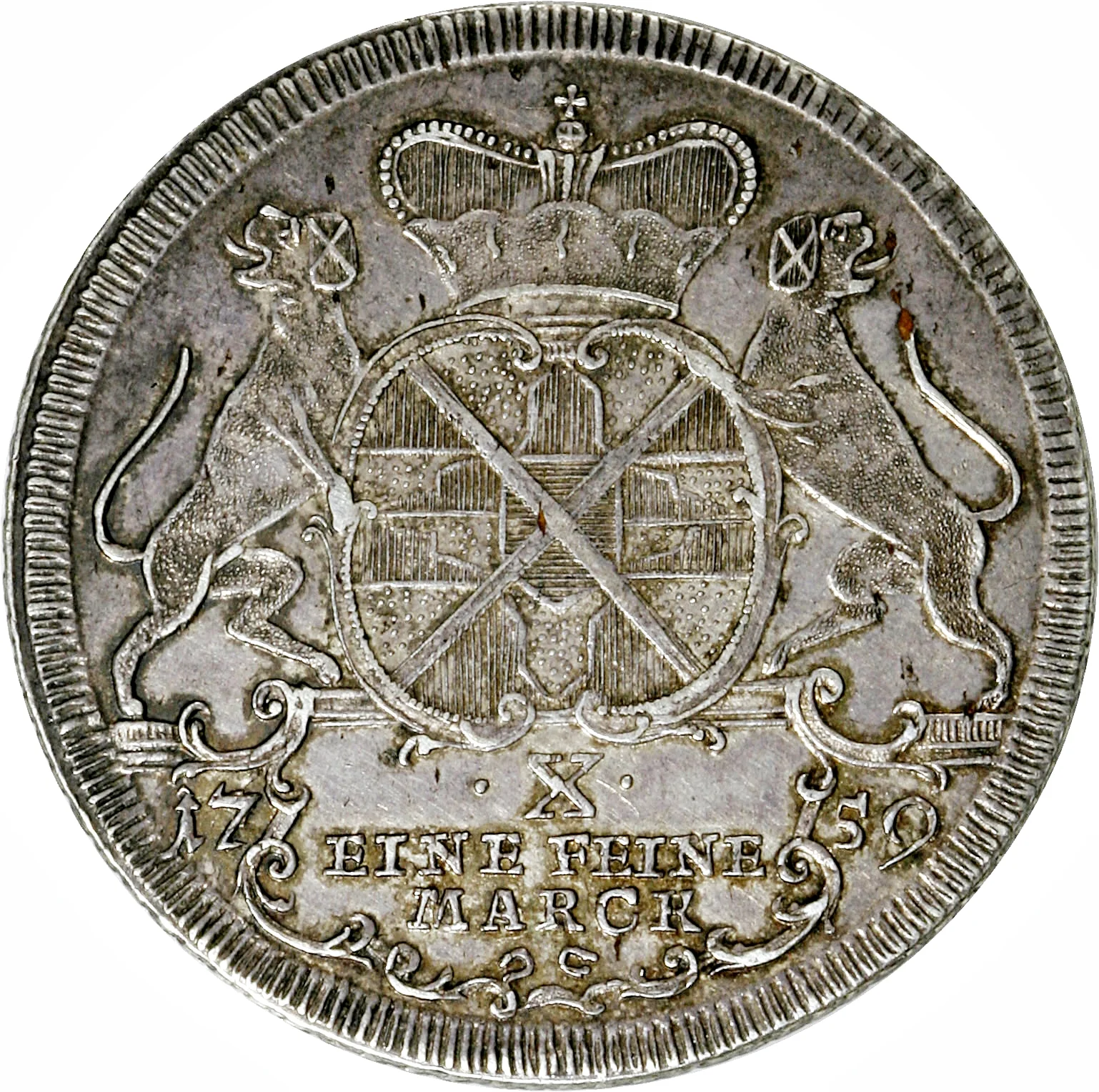
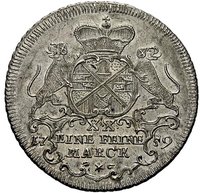
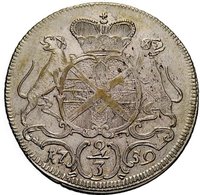
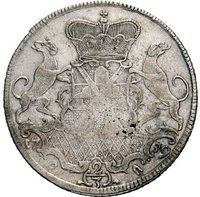
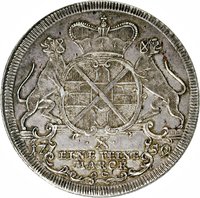
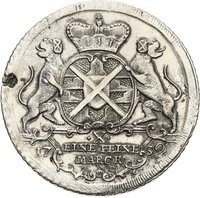
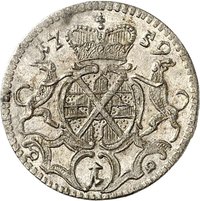
Crowned coat of arms flanked by lions, value and date beneath.
Script: Latin
Edge
Mintings
| Year | Mint Mark | Mintage | Quality | Collection |
|---|---|---|---|---|
| 1759 | — | — |
Historical background
In 1759, the County of Öttingen-Spielberg, a small German territory within the Holy Roman Empire, was entangled in the vast economic and logistical strains of the Seven Years' War (1756-1763). Like many minor states, it faced severe financial pressure from maintaining troops, paying war contributions, and navigating the demands of larger belligerents. This dire need for revenue led the ruling Count, Johann Alois I, to engage in a common but disruptive practice: the debasement of coinage. By reducing the precious metal content in coins while maintaining their face value, the county could produce more currency from its limited silver stocks, creating a short-term fiscal stopgap.
The specific instrument of this policy was the issuance of Reichsthaler and Kreuzer coins with a significantly lower silver fineness than officially mandated by imperial law. These debased coins, often minted hastily and in large quantities, were then used to pay soldiers and settle debts, flooding the local and regional economy. This practice was not unique to Öttingen-Spielberg; it was part of a wider "Kipper- und Wipperzeit" phenomenon during the war, where numerous states manipulated their currency, leading to monetary chaos across the Empire.
The consequences were economically corrosive. Trust in Öttingen-Spielberg's currency collapsed, as merchants and neighboring territories heavily discounted the debased coins or refused them altogether. This triggered severe inflation, harming local subjects who saw the purchasing power of their money evaporate. Furthermore, the county risked the ire of the Imperial authorities, as such coinage violated the monetary ordinances of the Reich and undermined the stability of the Holy Roman Empire's already-fragmented monetary system, making everyday commerce a matter of speculation and dispute.
The specific instrument of this policy was the issuance of Reichsthaler and Kreuzer coins with a significantly lower silver fineness than officially mandated by imperial law. These debased coins, often minted hastily and in large quantities, were then used to pay soldiers and settle debts, flooding the local and regional economy. This practice was not unique to Öttingen-Spielberg; it was part of a wider "Kipper- und Wipperzeit" phenomenon during the war, where numerous states manipulated their currency, leading to monetary chaos across the Empire.
The consequences were economically corrosive. Trust in Öttingen-Spielberg's currency collapsed, as merchants and neighboring territories heavily discounted the debased coins or refused them altogether. This triggered severe inflation, harming local subjects who saw the purchasing power of their money evaporate. Furthermore, the county risked the ire of the Imperial authorities, as such coinage violated the monetary ordinances of the Reich and undermined the stability of the Holy Roman Empire's already-fragmented monetary system, making everyday commerce a matter of speculation and dispute.
✨ Legendary